Rotate Rings on Android and iOS: When Touch Controls Get in the Way
Analysis byAppsAward
Phone operating systems keep changing the terms of a simple game. Bigger screens, gesture-first navigation, tighter privacy controls, and more careful battery management all shape how a puzzle feels between errands or during a short break. Rotate Rings has an unusually clear test under those conditions: its central action is already a gesture. The question is not whether Android or iOS can make it look more modern, but whether each platform can make turning a ring feel immediate without getting in the way.
That makes this a useful game to assess through an update lens, even when the most meaningful changes come from the device around it rather than a dramatic redesign inside the game. A puzzle built on rotation should fit touchscreens naturally. Yet that apparent simplicity leaves little room to hide friction. A missed drag, an awkward thumb reach, or an interruption that breaks concentration matters more here than it would in a game with long levels or a complex control scheme.
What a changing phone gives the puzzle
Android and iOS have moved toward larger displays, more expressive touch input, and system gestures that claim the edges of the screen. For Rotate Rings, those shifts bring both opportunity and risk. A larger display can give the puzzle more breathing room, making the circular pieces easier to distinguish and the board less cramped. At the same time, edge gestures and one-handed use put pressure on where the game places its controls and how forgiving its touch targets are.
The strongest platform gain is not a new feature badge. It is reliable, unambiguous touch. When a player drags a ring, the game should respond at once and make it clear which part is moving. Modern phones can provide precise touch tracking, but that precision only helps if the game’s hit areas and visual feedback are designed around it. An OS update cannot fix a confusing puzzle rule; it can make a good control feel more dependable.
There is also a practical benefit to the way mobile operating systems handle brief sessions. People increasingly move between apps, respond to a notification, and return minutes later. A ring puzzle suits that pattern because the basic idea is easy to pick back up. The platform’s job is to preserve the current state and let the player re-enter without a long loading wait or a fresh round of interruptions.
What players notice first
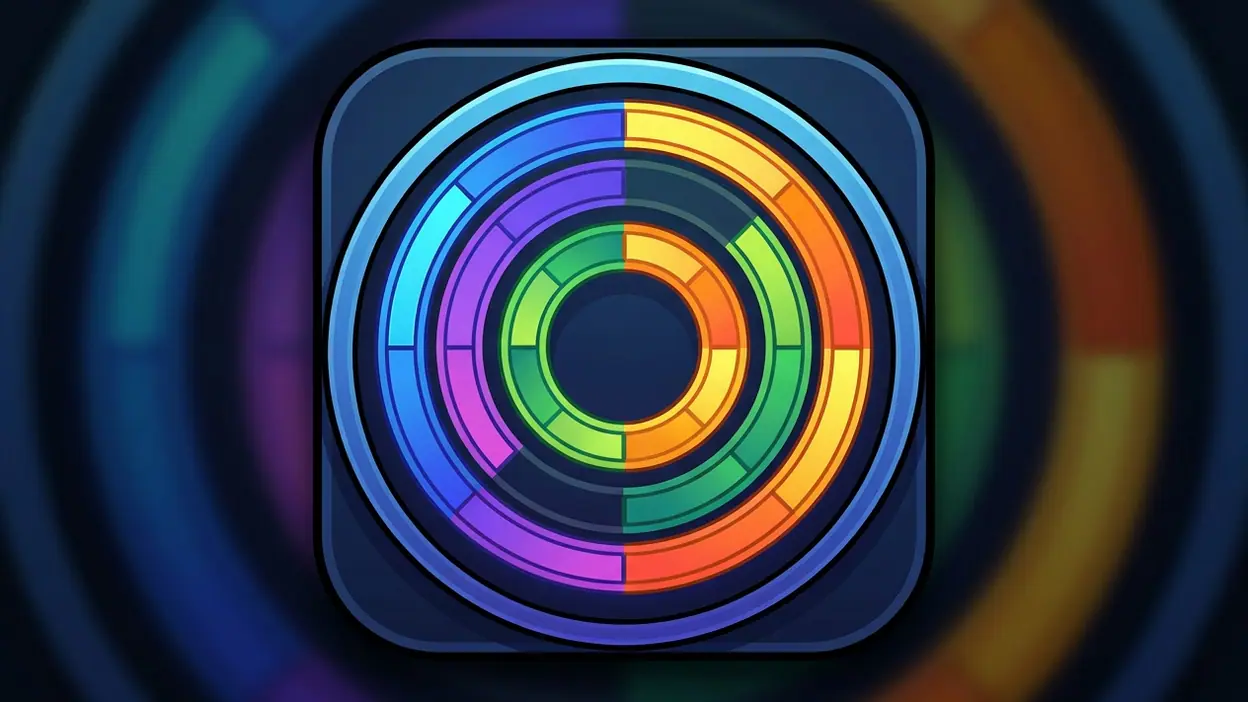
On first launch, the appeal is the clean premise: rotate rings until their pieces or markings line up. It is a visual problem rather than a vocabulary test or a management simulation, so the board asks for attention before it asks for a tutorial. The hand learns the main action quickly. A turn, a check, another turn: the loop has the satisfying directness of a physical dial, translated into a fingertip.
That directness also makes the first few moves a control test. If the ring follows the finger cleanly, the player can focus on the arrangement. If a swipe is mistaken for a tap, or a ring moves more than expected, the puzzle’s logic becomes harder to read because the input itself is now in doubt. On touch devices, clarity is not a polish layer. It is part of the rules.
The rhythm is deliberately compact. Rotate, inspect, adjust, and try again. There is no need to memorize a long chain of commands, and the visual board gives the player a natural place to look. That makes the game an easy companion for a short pause. It is less suited to someone seeking a sprawling campaign or a story that rewards long, uninterrupted sessions.
The day-to-day shift: play in the gaps
Current phone habits favor games that tolerate interruption. A quick puzzle can fit into a commute wait, a queue, or the last few minutes before bed, but it still needs to respect the player’s attention. Rotate Rings works best when a session feels complete in itself: the player can make progress, see the result, and put the phone down without feeling that a timer or live event is about to punish them.
That quality becomes more important as operating systems make notifications, focus modes, and app switching more visible parts of daily use. A notification arriving over a ring at the wrong moment can turn a calm move into a frustrating misfire. The game benefits from the basic platform behavior players now expect: a clean pause, retained progress, and a return that does not demand needless repetition. These are modest expectations, but in a low-pressure puzzle they define whether the game feels companionable or fussy.
Screen shape also changes the feel of a familiar action. Tall phones leave less comfortable space for a thumb to reach the upper corners, while larger devices invite two-handed play. A well-adapted layout should keep the important rings central and avoid placing essential controls where system navigation competes for the same edge. That is not glamorous design work; it is the difference between a puzzle that disappears into the hand and one that keeps reminding you that you are holding a phone.
Where the ecosystem helps—and where it does not
Modern Android and iOS devices bring useful consistency: responsive touchscreens, high-contrast displays, and system-level options for text size, brightness, and accessibility. Those strengths can make a visual puzzle easier to approach across a wider range of devices. Still, the game must supply enough contrast between ring elements and enough feedback to show the result of a move. Display quality cannot rescue low-contrast art or a vague animation.
Battery life is another quiet part of the experience. A short, mostly static puzzle should not need to behave like a demanding action game, so players will reasonably expect modest power use and little heat. The operating system can suspend background activity, but the game’s own performance and advertising behavior, if present, determine whether a brief session stays light. Without detailed device-by-device testing, it would be unfair to claim that every build handles power identically. The sensible point is that this kind of game should be a low-cost passenger in a phone’s day.
Compatibility friction usually appears at the edges: older devices with slower touch response, different aspect ratios, and system settings that alter animation or display scale. A ring puzzle does not need flagship hardware, but it does need accurate input and a board that remains legible. If either falters, the same design that feels elegant on a recent phone can become cramped or imprecise elsewhere. Players should check the store listing for current OS and device requirements rather than assume every older handset will behave alike.
Platform updates can also expose a game’s maintenance habits. A changed permission prompt or a new navigation convention should not leave a puzzle stuck behind an unexpected overlay. This is where small studios and lightweight games sometimes feel the pressure of mobile development: the core mechanic may be stable, while the surrounding OS keeps shifting. Consistent updates matter less as a headline than as reassurance that the game still launches, saves, and responds after the phone itself changes.
What other mobile games reveal
Comparisons help clarify what Rotate Rings is—and is not—trying to do. Word Search Explorer builds satisfaction from scanning a field of letters; its central interaction is recognition and selection. Township asks for repeated management, collection, and planning, creating reasons to return over a much longer horizon. Neither is a direct competitor in feel, but both show how mobile games can use daily habits to extend engagement.
Rotate Rings takes the opposite route. Its appeal rests on the immediate puzzle, not a town that needs attention or a grid that rewards word knowledge. That restraint is an advantage for players who want a contained mental task. It is also a limit on replay value: once the player understands the game’s patterns, fresh challenge depends on the variety and quality of its puzzle layouts. A rotation mechanic can stay pleasurable, but it cannot manufacture depth by itself.
Even apps such as ChatGPT and Uber - Request a ride sharpen the platform contrast. They are built around tasks that can change between sessions—asking a new question, requesting a new trip—whereas a puzzle needs its own progression or variation to keep returning play fresh. Rotate Rings does not need to imitate those services’ constant streams of new information. It does need to make each board feel worth solving, rather than asking players to repeat a gesture for its own sake.
A clue about mobile’s next direction
There is a broader lesson in this small game: as phones become more capable, the best mobile experiences will not necessarily add more layers. They will use device conventions well and get out of the way. For a ring puzzle, that means thoughtful touch zones, legible motion, dependable state saving, and considerate behavior when the player leaves. The OS may provide better hardware and more controls, but the design still has to choose what deserves the player’s attention.
This is also why accessibility should be treated as part of the game’s future, not an afterthought. Clear visual separation, motion that can be followed, and controls that do not demand perfect dexterity can widen the audience without diluting the puzzle. Platform accessibility tools help, but they cannot replace choices made in the game itself. A tactile mechanic ought to feel welcoming, not like an unspoken test of thumb accuracy.
For the right player, the shift toward gesture-led, interruption-friendly phones suits this format. If you enjoy small spatial problems and prefer to think for a minute rather than commit to a long session, Rotate Rings has a sensible place in your app library. If you want elaborate progression, social competition, or a large supply of changing objectives, its compact loop may feel thin. That is not a failure of the premise; it is a boundary the game needs to acknowledge.
The next update worth watching is not necessarily a visual overhaul. I would look for better adaptation across screen sizes, clearer feedback when a ring turns, robust resume behavior, and options that make the board comfortable for more hands and eyes. Those improvements would answer the real platform question: can a simple puzzle remain effortless as phones change around it? Rotate Rings works when the screen feels like a natural surface for thought. Its future depends on protecting that feeling, not piling on features that make the turn harder to see.
More articles
View all