- Award score
- 3.5Rating
- 500,000,000+installs
- Free
App information
- Version
- 0.433.1
- Updated
- Requires
- 9
- Price
- Free, in-app purchases
- Developer
- Niantic, Inc.
- Content rating
- Everyone
Screenshots





 Analysis byAppsAward
Our review of Pokémon GO
I like Pokémon GO most when I treat it less like a game to sit down and finish, and more like a reason to make an ordinary walk feel purposeful. A nearby stop, a Pokémon I have not seen in a while, or a small personal goal can turn a familiar route into a short adventure. That idea is still the game’s biggest strength: progress happens alongside real-world movement, rather than entirely on a screen.
Developed by Niantic, Inc., this free adventure game has been around since July 6, 2016. Its reach is enormous, with over 500 million installs, while its average rating sits at 3.5 from around 15 million ratings. Those figures suggest a game that has remained widely played but also asks a lot from people who want to keep up with it. My experience is that it works best when I set my own pace instead of treating every activity as something I must complete.
Small goals make the first walks rewarding
At the beginning, the appeal is easy to understand: step outside, look around the map, and see what appears. The real-world setting gives simple actions a bit of discovery. A short trip to a shop can become a chance to check the map, while a longer walk can give me time to explore more deliberately. Unlike a conventional adventure game, the route itself matters; the game is most engaging when I am willing to move rather than stay in one place.
That makes Pokémon GO approachable for casual players, but it also changes what “a quick session” means. If I only have a few minutes indoors, I can open the game and see what is nearby, yet the more satisfying play usually comes from going somewhere. I would recommend it to someone who already enjoys walking or wants a light nudge to get out. If you want a complete adventure that can be played comfortably on a sofa, a traditional mobile RPG is likely a better fit.
A useful early habit is to choose one modest aim before leaving home: explore a nearby area, look for a Pokémon you want, or simply make a familiar walk feel less repetitive. This prevents the map from becoming a stream of distractions. The game can offer more things to notice than I can reasonably pursue during one outing, so a self-imposed focus makes the experience calmer and more satisfying.
There is also a practical distinction between playing while walking and playing while travelling. I get more out of it when I can pause safely and pay attention to my surroundings. It is not a game I would recommend staring at while crossing streets or trying to navigate a crowded place. The outdoor premise is part of the fun, but it also means the player has to make sensible choices about when to look at the screen.
Progress feels clearest when I notice the small wins
The game’s progression is not just about one dramatic finish line. I find it more motivating when I pay attention to gradual changes: a collection becoming more varied, an outing producing something I had not encountered recently, or a personal routine becoming easier to maintain. These are softer rewards than a tightly scripted story’s next chapter, but they suit a game built around returning to real places.
One non-obvious way to make progress feel less scattered is to keep a simple mental shortlist of what I care about this week. If I am collecting, I can focus on filling gaps rather than reacting to every appearance. If I mainly want an excuse to walk, the distance and destination can matter more than the specific catch. This flexible approach helps because the game does not need to dictate a single definition of success for every player.
It is also worth separating a satisfying session from a productive-looking one. A walk can be worthwhile even if it does not deliver the exact Pokémon I hoped to find. That is a real trade-off of location-based play: the world may feel lively, but it is not a carefully staged sequence where each step guarantees a new story beat. I enjoy it more when I treat unexpected results as part of the outing rather than a failure to follow a plan.
For someone wondering whether they can play without making it a major hobby, I think the answer is yes. The game can fit around a commute on foot, a weekend stroll, or a short break outside. The caveat is that the sense of advancement is strongest when play happens regularly enough for the small goals to connect. If you open it rarely and expect a self-contained, polished session every time, it may feel more like checking in than embarking on an adventure.
The challenge rises through patience, not just ambition
Pokémon GO’s difficulty is tied to how much time and attention I choose to invest. A casual player can enjoy discovering Pokémon without needing to turn every outing into a test. Someone aiming for broader progress will need more patience and a willingness to return. That creates a gentle entry point, but it can also make the long-term challenge feel uneven: the game may be easy to sample, while meaningful advancement can depend on repeated visits and sustained interest.
My advice is to resist comparing your progress with people who play more often. The game’s outdoor structure makes personal circumstances matter: available walking routes, free time, weather, and whether a place is convenient can all affect how naturally it fits into a routine. A player with a good local route may find it easy to return, while someone who mostly stays indoors may find the same loop inconvenient. That is not a lack of commitment; it is a genuine limitation of this particular format.
When I want a more focused challenge, I do better by choosing a target that can survive a change of plans. A broad aim such as exploring a different route is more dependable than building an entire session around one hoped-for encounter. This is one of the game’s quiet strengths: it can reward curiosity without requiring every walk to be optimized. It is also one of its weaknesses for players who prefer predictable challenge design and clear, guaranteed milestones.
Compared with a standard location-free adventure game, Pokémon GO trades authored pacing for a connection to the places around you. A conventional game can control the sequence of encounters and make difficulty climb in a deliberate arc. Here, the experience is less controlled and more dependent on the world you move through. I would choose Pokémon GO for an active, flexible outing; I would choose a conventional RPG when I wanted a reliable story, a fixed challenge curve, or play that does not depend on going outside.
Returning is rewarding, but it can become pressure
The same open-endedness that makes the game easy to revisit can also create pressure. There is always another reason to check in, and I have to be careful not to let a pleasant walk turn into a checklist I feel obliged to clear. My best sessions are the ones where I decide in advance how long I want to play and stop when the walk is over. That boundary keeps the game in the role of companion rather than taskmaster.
There is another trade-off in its free-to-play model. Pokémon GO is free to download, but it includes optional in-app purchases ranging from $0.99 to $99.99 per item. I would approach those purchases with a clear budget and avoid buying simply because I feel behind. The game’s core appeal is its outdoor discovery, and spending is not the same thing as enjoying that loop. If you prefer games with one fixed upfront cost and no purchase prompts, this arrangement may not suit you.
For a family deciding whether it is appropriate, the age rating is Everyone, which makes it broadly accessible. I would still treat outdoor play as a shared common-sense matter: younger players may benefit from an adult helping choose safe routes and reminding them to stay aware of traffic and other people. The game can give a family a shared reason to take a walk, but it should not replace attention to the actual surroundings.
Version 0.433.1 is the current version, and the minimum operating system is 9. Before installing, I would check that the device meets that requirement and consider whether the player has regular access to safe outdoor places. Those practical details matter more here than they would for a game that can be enjoyed entirely offline at home. If the basic setup is convenient, it is much easier to make the game a pleasant routine rather than an occasional frustration.
Who will enjoy its rhythm—and who may not
I would recommend Pokémon GO to people who like collecting, enjoy exploring familiar streets with a new purpose, or want a playful companion for walks. It is especially good for someone who does not need a fixed story to keep going. The game’s goals can be personal and small, which makes it easy to fit around everyday life when the player is comfortable with its outdoor focus.
I would be more cautious about recommending it to anyone who wants long, uninterrupted sessions, tightly controlled challenge, or a game that rewards every planned action predictably. It is also a weaker fit if safe and convenient walking space is hard to find. In those cases, a regular turn-based adventure or a story-driven mobile game will probably provide more dependable progress without asking the player to adapt their plans to the real world.
There is no need to turn every outing into a dedicated expedition. One realistic routine is to open the game during a walk already planned for another reason, choose one small objective, and put the phone away whenever the surroundings demand attention. That workflow keeps the game useful without letting it dictate the route. It also makes it easier to judge whether the game genuinely adds enjoyment, rather than relying on the idea that more play must always mean better progress.
My verdict on its long-term progression
Pokémon GO remains an unusual adventure because its most meaningful progression is partly made by the player: choosing where to go, what to notice, and how much time to give it. I like that it can turn routine movement into exploration, and that a short session does not have to become a major commitment. Its weaknesses are just as clear: progress can be irregular, outdoor access matters, and the free-to-play structure may not appeal to everyone.
Overall, I would suggest giving it a try if the idea of collecting Pokémon while exploring your neighborhood sounds enjoyable, especially if you already walk regularly. I would not install it expecting a conventional campaign or a perfectly balanced challenge curve. For me, it works when I set a modest goal, stay alert outside, and let the game add a little curiosity to a route I would take anyway. That is when Pokémon GO feels less like a demand for constant attention and more like a genuinely fun reason to explore.
Pros
- Outdoor exploration makes everyday walks more engaging.
- Frequent events provide new goals throughout the year.
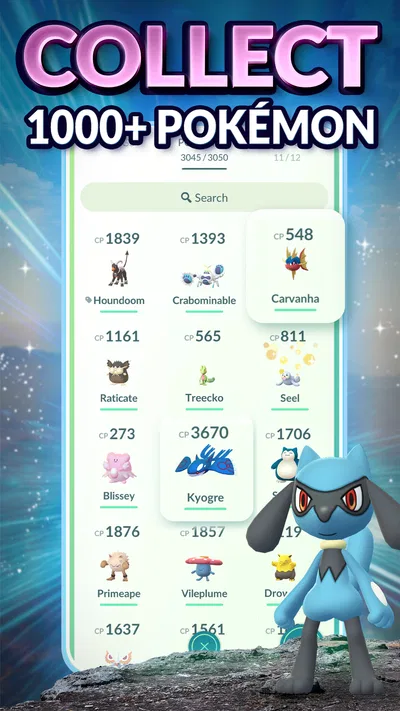
- Trading gives players another way to complete their Pokédex.
- Team-based raids encourage cooperation with nearby players.
- Buddy Pokémon add a personal touch to the collecting experience.
Cons
- GPS issues can make movement and interactions unreliable.
- Some features work best in areas with many nearby players.
- Limited storage can require careful inventory management.
- PokéCoins are slow to earn through gym defense alone.
- Playing outdoors can drain a phone battery quickly.
Best Adventure Game 2026
Our verdict
Discover Pokémon worldwide
Frequently Asked Questions
What do you do in Pokémon GO?
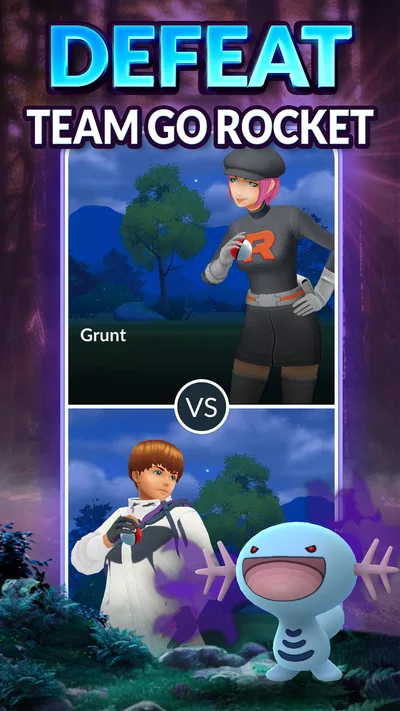
Pokémon GO is a location-based mobile game in which you explore your surroundings to find and catch Pokémon. The game uses your device’s GPS and, for some features, its camera. You can visit PokéStops for items, battle at Gyms, join raids, complete research tasks, and take part in events. Its features and Pokémon availability can change over time and may vary by location.
Is Pokémon GO free to play?
You can download and play Pokémon GO without paying, and you can earn some in-game items through regular play. The game also offers optional purchases, such as PokéCoins and item bundles, which can make certain activities more convenient. Purchases are not required to explore or catch Pokémon, but it is worth checking your device’s payment settings and setting spending limits if children will be playing.
Does Pokémon GO require an internet connection and location access?
Yes. Pokémon GO relies on an internet connection and your device’s location services to place Pokémon, PokéStops, and Gyms in the real world. GPS accuracy, mobile coverage, and battery-saving settings can affect how well it works. Some activities may be limited when the connection is weak or location access is disabled, so check the app’s permissions and data use before playing away from Wi-Fi.
Is Pokémon GO safe for children to play?
Pokémon GO can be enjoyed by children, but it encourages players to move around outdoors, so adult guidance is important. Remind young players to stay aware of traffic and their surroundings, avoid entering private or unsafe places, and never meet strangers alone. The game includes social and location-related features, so review account privacy settings, parental controls, and purchase permissions before allowing a child to play.
Can you play Pokémon GO without walking, and does it work everywhere?
Walking is a central part of Pokémon GO because exploring can reveal Pokémon, hatch eggs, and support other activities. Some features can be used from a stationary location, but progress may be limited, and the game is not equally convenient everywhere. Access to PokéStops, Gyms, events, and certain Pokémon depends on your location, local conditions, and the game’s current features.