Artmate Makes Drawing Together the Main Event
Analysis byAppsAward
Creative apps have spent years making individual work faster: better brushes, smarter templates, instant image generation. The next challenge is making creativity feel social without turning it into another feed. Artmate: Drawing Together points toward that shift by putting shared drawing at the center. Its most interesting idea is not that people can make pictures on a phone; it is that the act of making one can become the reason to open the app together.
That distinction matters because the art-app baseline has risen sharply. A usable canvas, a handful of tools, and a way to save an image no longer make a product feel complete. People expect low-friction creation, quick ways to improve a result, and an easy path from making something to showing it. Canva has normalized polished templates and AI-assisted editing for everyday users. Newer generative tools such as Vidix-AI Photo Video Generator and Nexus - AI Video Generator promise to turn a prompt or an image into a finished moving piece. Google Flow pushes the same broad expectation: creative software should help users move from an idea to a presentable result without demanding a professional workflow.
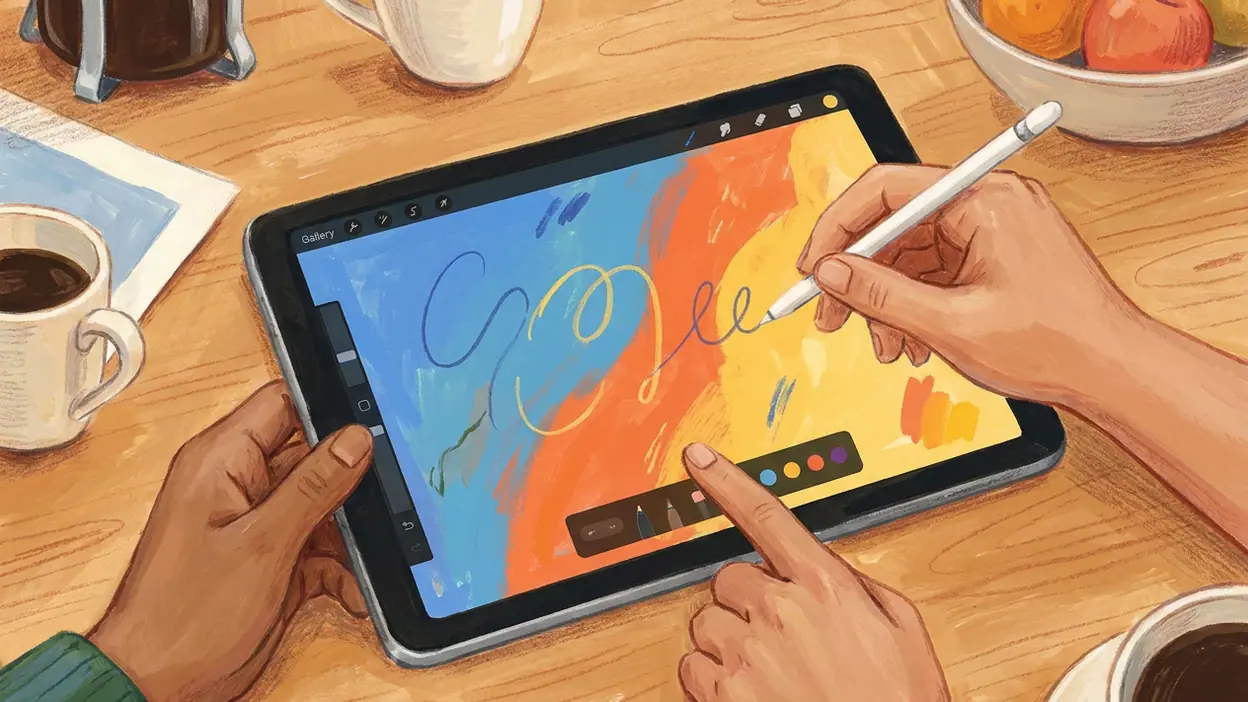
Against that backdrop, Artmate's strongest signal is its emphasis on drawing as a shared activity. Many creative products treat collaboration as an export step: finish a design, send it to someone, and collect comments. Drawing together changes the order. Another person is part of the working surface, not merely the audience at the end. That can make a small sketch feel like a conversation, with each mark prompting a response and the unfinished state becoming an invitation rather than a flaw.
The appeal is practical as well as social. A blank page can be intimidating, especially for someone who does not think of themselves as an artist. A shared session supplies a prompt without requiring a formal lesson: one person starts, another adds, and the result develops through turns. The value lies less in producing a portfolio piece than in lowering the cost of beginning. That makes Artmate potentially useful for friends, families, and casual creative groups who want an activity that is more participatory than scrolling but less demanding than learning a full illustration suite.
In other ways, the app follows familiar conventions. It belongs to the mobile-first model in which creation should be immediate and approachable, and it asks users to treat a phone or tablet as a legitimate creative space. That is now standard, not revolutionary. Canva's broad toolkit has trained people to expect that a mobile app can handle real work, while AI image and video products have taught them to expect help at the point where ideas stall. Artmate also inherits the category's central promise: you should be able to make something worth sharing without mastering complex software first.
The convention it challenges is the assumption that creative value is measured mainly by the final artifact. A polished graphic, a striking generated clip, or a refined illustration is easy to display and judge. A collaborative drawing session is harder to reduce to a single finished image because much of its worth is in the exchange. It may be lopsided, silly, or visibly unfinished. In a category increasingly optimized for output, Artmate makes the process itself a plausible destination.
That difference also sets a useful limit on comparisons. Canva is strongest when a user needs a finished design with dependable structure. Vidix-AI Photo Video Generator and Nexus - AI Video Generator speak to people who want a transformation or a generated result. Google Flow belongs to a wider movement toward AI-supported visual production. These products sharpen the question Artmate asks: should creative software help people make a better object, or help them enjoy making anything at all? Neither answer replaces the other, but they serve different moods and needs.
Across the category, the emerging standard is becoming a combination of fast creation, guided assistance, and easy participation. AI can suggest, generate, or refine; templates can remove setup work; collaboration can bring another person into the process. The strongest products will not necessarily pack every capability into one interface. They will understand where friction is useful and where it merely stops people from starting. Artmate's social premise is a reminder that not every blank space needs an algorithm to fill it. Sometimes another person is the more compelling prompt.
There is still a gap between the promise of collaborative creativity and the realities of mobile use. Shared work depends on clear coordination: people need to know who is drawing, what has changed, and how to contribute without crowding one another. Small screens can make fine detail awkward, and casual collaboration can lose its charm if sessions feel empty or if participants do not have a natural reason to return. The concept also needs enough structure to help hesitant users, without making the experience feel like a chore or a lesson. Artmate's core idea is strongest when the social loop is lively; it is less persuasive if a user is simply left alone with a canvas.
That is the category's broader weakness, too. Many creative apps make starting easy, but fewer make the habit of creating feel sustainable. Generative features can produce a burst of novelty, yet novelty alone does not build attachment. Templates can save time, but they can also make the work feel interchangeable. Collaboration can create a genuine reason to return, but only if the product makes it easy to find a partner and turn a one-off session into a recurring ritual. Artmate points toward that problem without making it disappear.
For users, the consequence is a welcome expansion of what an art app can be. You do not have to arrive with a clear brief, a finished idea, or confidence in your drawing skills. You can arrive with someone else and see what happens. That is a different kind of usefulness from Canva's production efficiency or an AI generator's speed, and it deserves to be judged by whether it makes people want to participate, not by whether every result looks immaculate.
As a category signal, Artmate is more revealing than its feature list alone suggests. The next generation of creative apps will be judged not only by how convincingly they automate craft, but by how well they make creativity accessible, social, and worth repeating. Artmate: Drawing Together makes a strong case for process as the product. Its lasting importance will depend on how reliably it turns that idea into a lively shared habit, but the direction is clear: the best creative tool may not always make the most polished thing. Sometimes it is the one that gets two people making something together.
More articles
View all