- Award score
- 4.7Rating
- 100,000,000+installs
- Free
App information
Screenshots
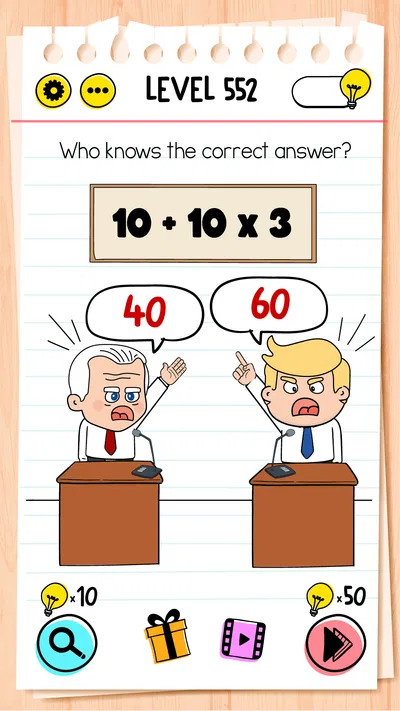
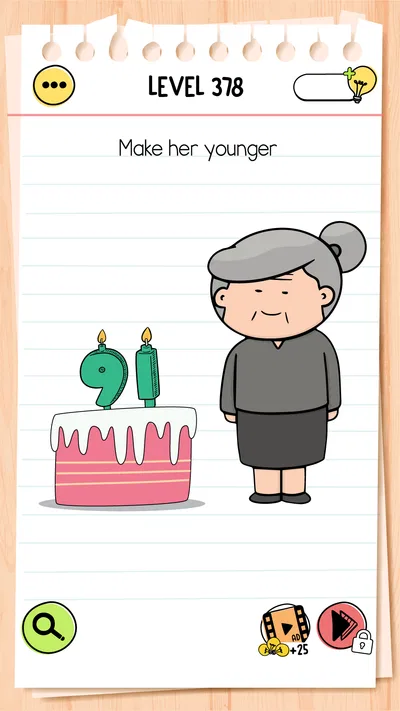
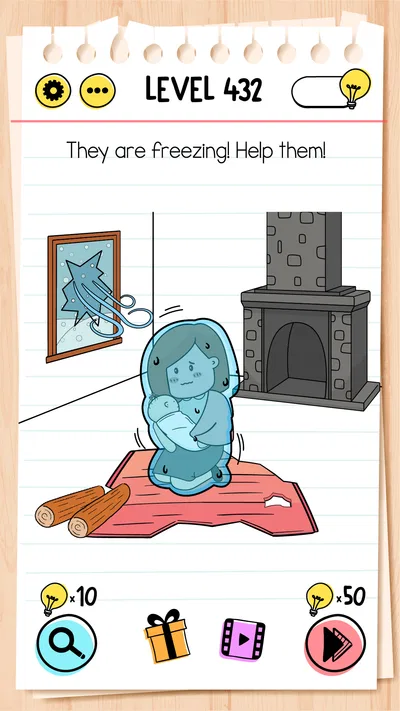
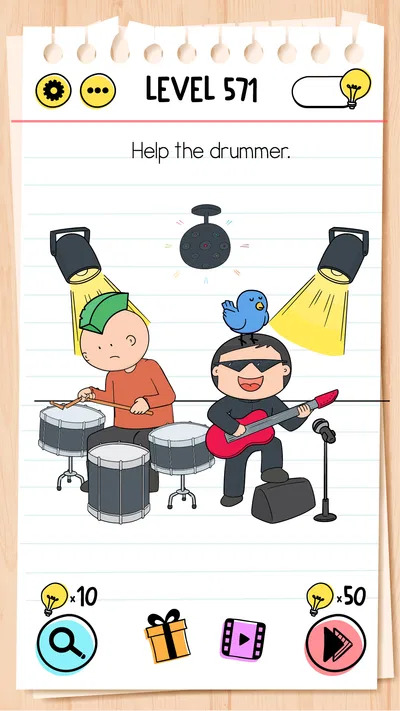
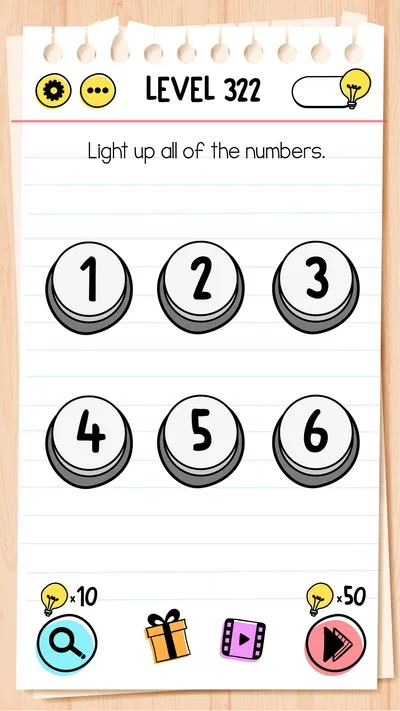
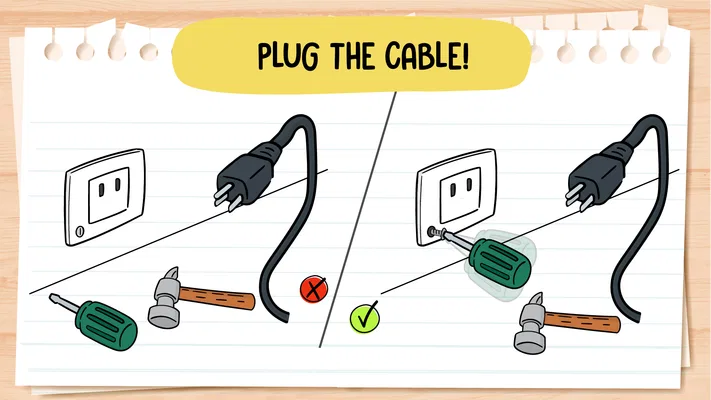
 Analysis byAppsAward
Our review of Brain Test: Tricky Puzzles
Some trivia games reward what you already know; Brain Test: Tricky Puzzles is more interested in how you think when the obvious answer might be wrong. Its central appeal is a collection of brain teasers that invite you to test your reasoning, notice details, and rethink your first instinct. I like that focus: instead of making the experience feel like a quiz about memorized facts, it turns each puzzle into a small challenge to your assumptions.
A trivia game built around tricky thinking
Made by Unico Studio, this free trivia game has a simple premise: take on funny, tricky brain puzzles and see whether you can work out what they are asking. That sounds straightforward, but the pleasure comes from the gap between an answer that seems obvious and the solution a puzzle is steering you toward. You are encouraged to look closely, consider the wording, and ask whether you are approaching the problem too literally.
That is the capability worth understanding before you download it. Brain Test puts the emphasis on flexible thinking rather than conventional question-and-answer trivia. A puzzle can make you pause, reconsider the situation, and try a different interpretation. When I enjoy a brain teaser, it is usually because it makes me feel that the answer was within reach all along; this game’s tricky framing is designed to create that kind of satisfying moment.
Articles related to Brain Test: Tricky Puzzles
The approach also gives the game an easy-to-grasp identity. You do not need to be a trivia expert to see the appeal, because the challenge is not simply recalling obscure information. It is about paying attention and resisting the urge to settle on the first plausible response. That makes the game feel approachable while still leaving room for a puzzle to catch you off guard.
Why the twist matters
In many quiz games, a player’s progress depends on how much they know about a subject. Here, the fun comes from questioning how a prompt should be read. A familiar-looking question may reward a less familiar way of thinking, so getting stuck does not necessarily mean you lack knowledge. It may mean you need to take another look and change your perspective.
I find that distinction important. It makes Brain Test a better fit for someone who wants a light mental challenge than for someone seeking a serious knowledge test. The game’s funny, tricky premise signals that it is meant to surprise and entertain, not to serve as a formal measure of intelligence. You can approach it with curiosity rather than feeling that every answer is an exam.
How the puzzles play on your assumptions
In practice, the experience is built around engaging with a puzzle, forming an idea about what it wants from you, and deciding whether that idea holds up. The key is to read carefully and examine the situation before committing to an answer. If your first attempt does not work, the useful response is often to reconsider the question rather than repeat the same reasoning.
That loop gives each brain teaser a small arc: first comes the quick guess, then the moment of doubt, and finally the satisfaction of seeing the puzzle differently. The game does not need a complicated premise to make that process engaging. A carefully framed question can be enough to make you stop for a moment and challenge your own assumptions.
It is also a style that suits short sessions. You can focus on a puzzle without needing to prepare for a long, uninterrupted play session. If you have a few spare minutes, a tricky question can provide a compact change of pace. When you have more time, you can keep going for the pleasure of seeing what the next brain teaser will make you reconsider.
For the best experience, I would avoid rushing. The game’s appeal depends on noticing what you might otherwise skim past. Read the question again, look for an unexpected interpretation, and give yourself permission to try an idea that initially seems too simple or unusual. That habit makes the challenge feel more like a playful exchange than a test with one obvious route to the answer.
The best moments to play
Brain Test works particularly well as a casual pick-up game: something to open when you want a small mental diversion rather than a long, involved activity. Its brain-puzzle focus can suit a quiet break, a commute, or a moment when you want to occupy your attention with a question instead of scrolling passively. The appeal is the quick shift from “I know this” to “wait, maybe I should think again.”
It can also be a fun choice for people who enjoy sharing puzzles. A tricky question naturally invites discussion: one person offers an answer, another spots a different angle, and the group tests which interpretation makes sense. That social possibility comes from the puzzle format itself, rather than from needing to treat the game as a competitive trivia tournament.
Still, the strongest fit is likely someone who enjoys being surprised by a question and does not mind having to rethink an answer. Players who mainly want factual quizzes may find the experience different from what they expect from the word “trivia.” Those who enjoy lateral thinking, playful misdirection, and small moments of discovery are more likely to appreciate its particular style.
Where the design asks for patience
The same trickiness that makes the puzzles appealing can also be a source of friction. If you prefer questions with a direct, conventional answer, an unexpected interpretation may feel less satisfying than a straightforward quiz. And if you get attached to your first idea, a puzzle that encourages you to reconsider can become frustrating before it becomes fun.
There is a balance to strike between a clever twist and a confusing one. The best moments are when the answer feels surprising but understandable once you see it. When a player does not spot the intended angle, the experience can briefly feel like guessing what the puzzle expects. That is a tradeoff inherent in this style of brain teaser: it prizes surprise, and surprise does not land equally well for everyone.
It helps to treat a wrong answer as a prompt to explore another reading, not as a verdict on your ability. The game’s light, funny framing supports that attitude. If you can laugh at a misread and try again with fresh eyes, the challenge stays enjoyable. If you want every question to be unambiguous on the first pass, the playful trickery may wear thin.
Brain Test is free to play, with in-app purchases ranging from $0.99 to $7.99 per item. It is rated for Everyone, and its minimum operating system requirement is Android 7.0. Those practical details make it straightforward to assess whether it suits your device and expectations before you begin. The game was released on November 21, 2019, and has built a substantial audience, with over 100 million installs and an average rating of 4.7 from around 10 million ratings.
Who gets the most from Brain Test
The game is a natural fit for curious players who like a compact challenge and enjoy discovering that a question can be read in more than one way. It can also work for casual players who want a brain puzzle game that does not depend on specialist knowledge. If you enjoy noticing small details, testing an unusual idea, and getting a laugh when your first assumption falls apart, its core concept should make sense quickly.
It may be less appealing if your ideal trivia game is a steady stream of factual questions with clear, familiar answers. Brain Test takes a different route: it asks you to interpret, reconsider, and think beyond the most immediate response. Knowing that distinction helps set the right expectation. It is not trying to be a conventional general-knowledge quiz; it is offering a playful test of perspective.
For me, the best reason to try it is the way a simple prompt can turn into a satisfying little moment of discovery. The game’s identity stays focused on tricky, funny puzzles, and that focus is its main strength. When a question nudges me away from my first guess and the answer suddenly clicks, the result feels rewarding without demanding a major time commitment.
Overall, Brain Test: Tricky Puzzles is an inviting choice for anyone who wants to challenge their assumptions in a lighthearted way. Its central idea is easy to understand, its puzzles encourage flexible thinking, and its casual style makes it suitable for brief breaks. The twist-driven approach will not suit every trivia fan, but players who enjoy lateral thinking and playful surprises are likely to find plenty to like. If you are looking for a free trivia game that asks you to think differently rather than simply remember more, Brain Test is well worth considering.
Pros
- Short levels make the game easy to play in spare moments.
- Creative solutions reward players who think beyond the obvious.
- Hints help players move forward when a puzzle feels too difficult.
- The playful art style keeps the experience lighthearted.
- Many puzzles offer a satisfying surprise when solved.
Cons
- Some answers rely on wordplay that may feel unclear.
- Frequent ads can interrupt the flow between puzzles.
- Hint options may be limited without watching ads or making a purchase.
- Later levels can become repetitive.
- The game requires an internet connection for some features.
Best Trivia Game 2026
Our verdict
Do you want to test your IQ? Here is the funny and tricky brain puzzle!
Frequently Asked Questions
What kind of game is Brain Test: Tricky Puzzles?
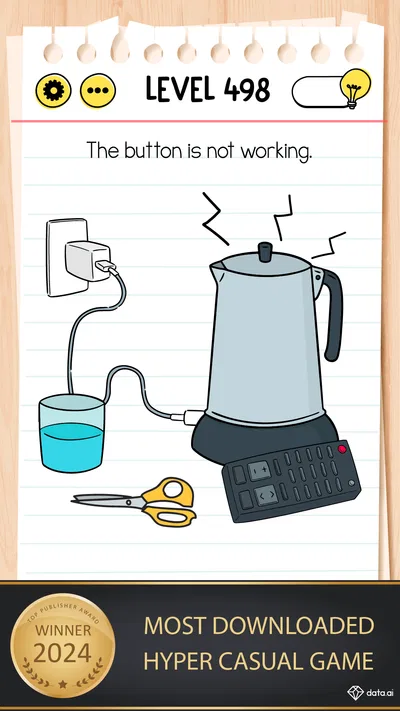
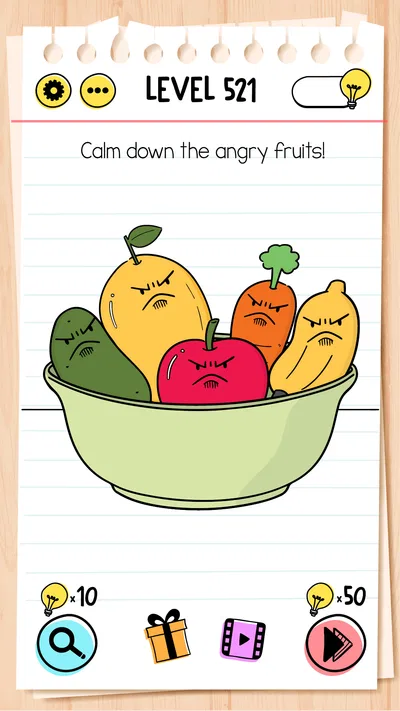
Brain Test: Tricky Puzzles is a casual puzzle game built around short riddles and visual challenges. Many levels ask you to tap, drag, rotate, or combine objects, and the intended solution may depend on interpreting the wording in an unexpected way. It is designed for quick play rather than a long story or complex strategy, so it can suit brief breaks as well as longer puzzle sessions.
Is Brain Test: Tricky Puzzles suitable for children?
The game’s simple controls and cartoon-style presentation make it approachable for many younger players, and its riddles can encourage creative thinking. However, difficulty varies, and some puzzles rely on wordplay or trial and error, so children may sometimes need a hint or help from an adult. Parents should also check the current store listing and device settings for age guidance, advertising, and any available purchase controls.
Does Brain Test: Tricky Puzzles work offline?
Many of the core levels can generally be played without a continuous internet connection, which makes the game convenient for travel or places with unreliable service. Internet access may still be needed for features such as advertisements, rewarded hints, or other online content, and availability can vary by version. If offline play matters, install and open the game while connected first, then test it in airplane mode.
Are there hints, and do I have to pay to solve difficult puzzles?
Brain Test: Tricky Puzzles includes help options for players who get stuck, and some versions let you earn or receive hints through in-game activities such as watching an advertisement. The exact options and costs can change with updates, region, or platform. You can often try different interactions before using a hint, but check the app’s current store page and in-game menus for any optional purchases.
Does Brain Test: Tricky Puzzles contain ads or in-app purchases?
The game may show advertisements, and it may offer optional in-app purchases depending on the version and platform. Ads can appear between levels or be connected to rewards such as hints, which may affect how uninterrupted a session feels. Purchases are not necessarily required to access the basic puzzle experience, but availability and pricing can change. Review the store listing and device purchase settings before downloading.