- Award score
- 4.1Rating
- 10,000,000+installs
- Free
App information
- Version
- 30.2.2
- Updated
- Requires
- 7.0
- Price
- Free, in-app purchases
- Developer
- Rollic Games
- Content rating
- Everyone 10+
Screenshots
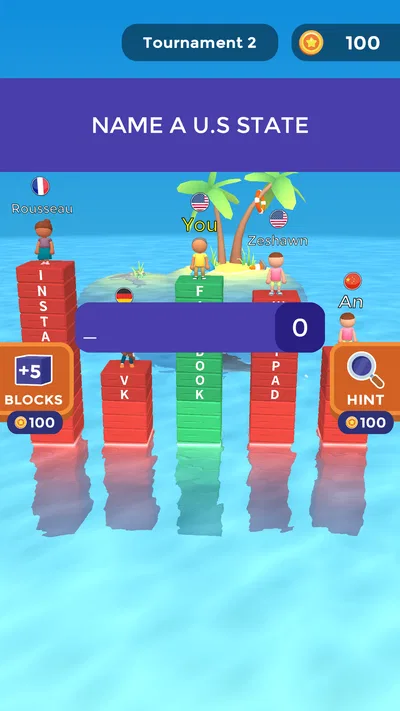
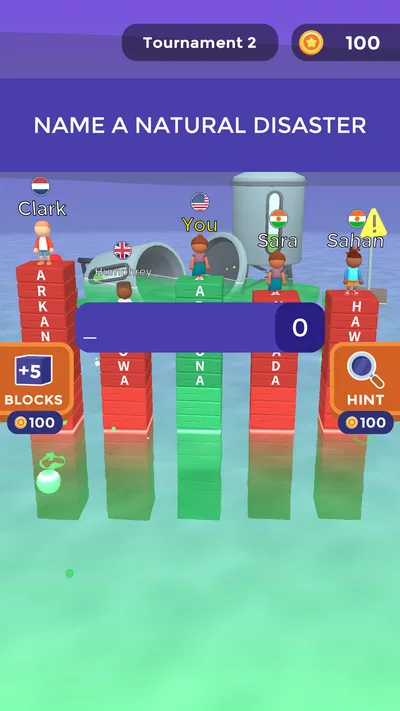
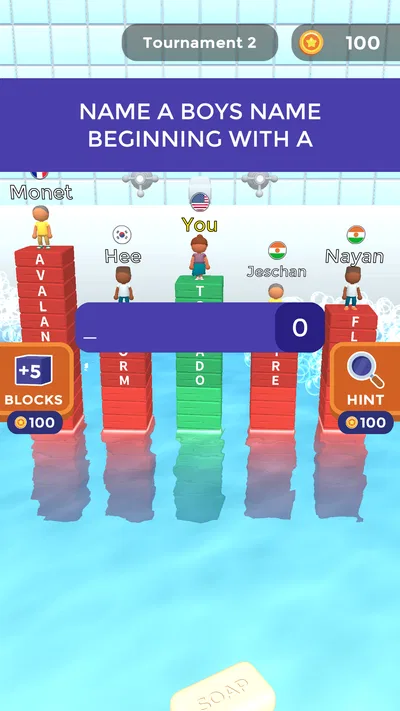
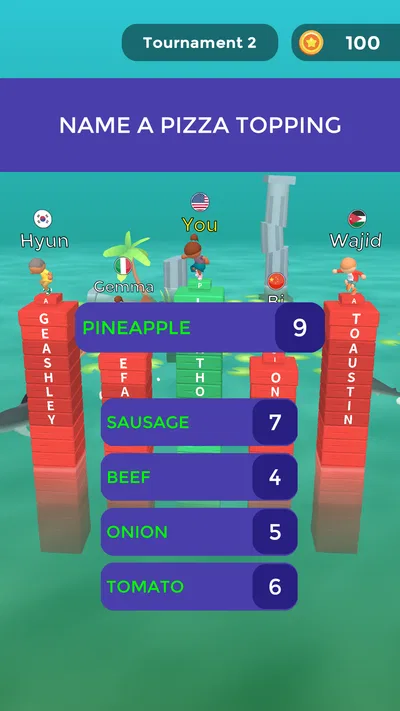
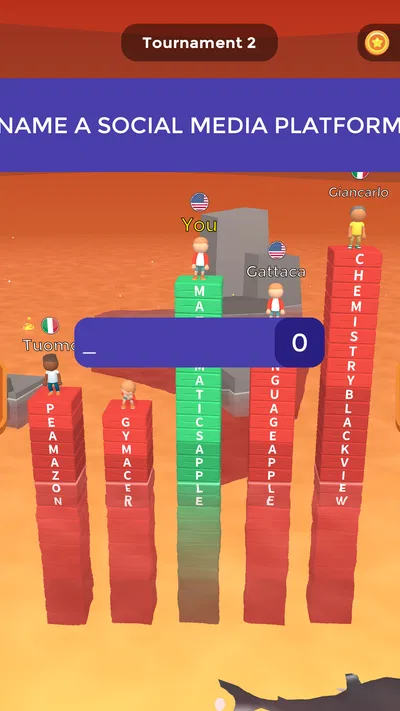
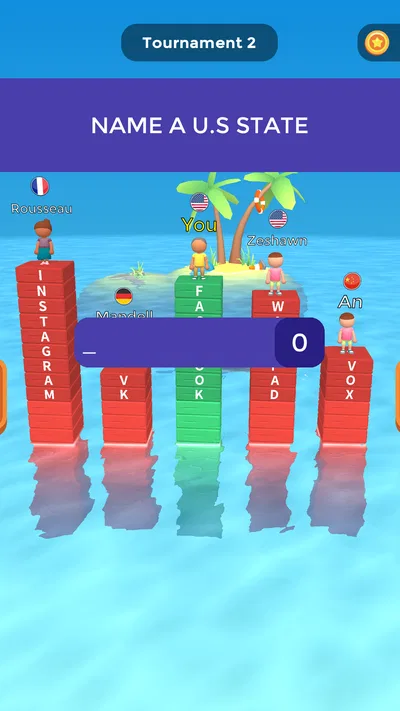
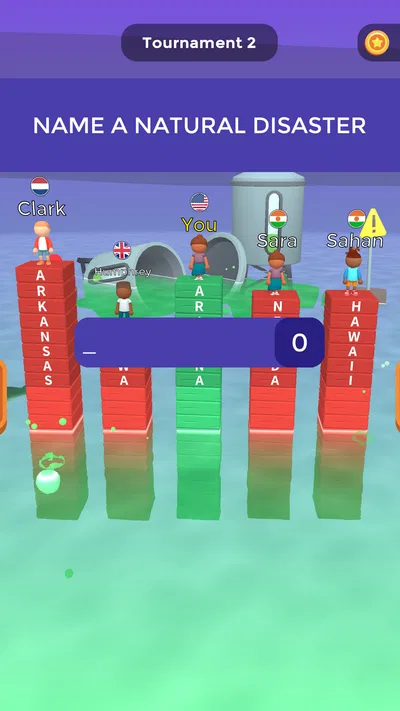
 Analysis byAppsAward
Our review of Text or Die
The first thing that caught my attention in Text or Die is how neatly its word-game premise fits its perilous setup: answers are not just a test of vocabulary, but a way to keep a character above the water while sharks wait below. That gives a familiar trivia question a simple, immediate consequence. I found it easy to understand what each turn asks of me, and the playful danger makes even an ordinary prompt feel like a small race against a bad answer.
It is a free trivia game from Rollic Games, rated Everyone 10+, and its popularity is substantial: it has over 10 million installs and an average rating of 4.1 from around 285,000 ratings. Those figures suggest a broad audience, but the more useful question is whether its particular mix of wordplay and pressure suits you. I think it works best for people who enjoy brainstorming under a little time pressure, rather than players looking for a deep puzzle campaign or a quiet vocabulary lesson.
Why the word-game setup makes a strong first impression
The central challenge is to type a long answer that fits the prompt. That changes the usual trivia instinct. Instead of reaching for the first correct response, I have to pause and ask which valid answer might give me more words. A prompt about a category can invite a quick mental scan: think of several possibilities, compare their lengths, then enter the one that seems both suitable and safely spelled.
That extra decision is the game’s most interesting little twist. In a conventional quiz, speed and correctness often dominate. Here, vocabulary breadth matters, but so does knowing when to stop searching. A familiar, clearly relevant answer can be a better choice than an ambitious one I might mistype or second-guess. I would treat each turn as a balance between length and confidence, not as an invitation to produce the longest phrase at any cost.
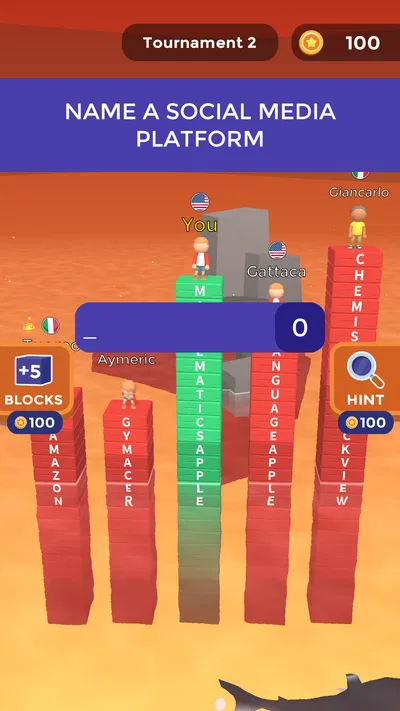
The shark-and-water framing gives that calculation a visible payoff. It makes the stakes legible without requiring a complicated story to explain them: a stronger answer helps keep danger at bay, while a weak one feels risky. I like that the setting supports the word challenge instead of distracting from it. The game can be picked up quickly, which makes it a natural choice for a short break, a casual contest with someone nearby, or a few rounds while waiting for an appointment.
A bright, readable world built around one clear threat
The game’s visual language is easy to read because it centers the action on a simple contrast: players build upward with words while sharks represent the threat below. That is a useful design choice for a trivia game. I do not need to decode a busy screen before I can focus on the prompt, and the setting gives the abstract idea of “a better answer” a more immediate visual meaning.
There is a light, cartoonish quality to the premise rather than a serious survival mood. That keeps the danger amusing and helps the game remain approachable for its Everyone 10+ audience. It also means the atmosphere is not likely to satisfy someone seeking a richly detailed world, dramatic narrative, or elaborate character development. The setting is there to make each answer feel consequential, not to become a separate adventure.
One practical benefit of this focused presentation is that it encourages attention to the actual wording of a prompt. In a word game, a small misunderstanding can lead to a perfectly good answer that does not fit the category. I recommend reading the question carefully before typing, especially when several interpretations seem possible. The visual stakes may push you to hurry, but a brief pause to identify the category is often more valuable than rushing into a long answer.
The same simplicity has a trade-off. If you mainly want a language-learning tool, this is not the experience I would choose: the game turns word knowledge into a competitive survival challenge, rather than offering structured lessons or detailed explanations. If, on the other hand, you want a casual way to exercise recall and discover how many examples you can think of under pressure, its playful setting gives that familiar activity a clearer sense of momentum.
Sound and pacing: pressure without a complicated rulebook
The mood depends more on the question-and-answer rhythm than on a sprawling plot. A prompt arrives, I scan for possibilities, choose a response, and see how that decision affects the situation. That short cycle is a good fit for casual play: there is little conceptual overhead, and the danger gives me a reason to care about the next answer. The game’s title and premise establish the tone before I have to learn much else.
I would not recommend approaching every turn as a pure speed test. The most satisfying moments come when I can quickly sort possible answers into two groups: ones I know are relevant, and ones that might be longer but feel uncertain. That mental routine is a small, useful improvement over typing the first idea that comes to mind. It also helps keep the pressure playful rather than frustrating.
In everyday use, I can imagine opening it while a friend is waiting for food or during a quiet stretch on a commute, then comparing how differently we interpret the same kind of prompt. One person may immediately recall familiar examples; another may search for less obvious possibilities. That makes the basic format easy to share conversationally, even if you are not trying to turn the session into a serious competition.
The pacing is less suited to someone who wants uninterrupted, contemplative problem-solving. The shark premise deliberately gives answers a sense of urgency, and some players may find that pressure motivating while others find it irritating. If I am tired or simply want to browse at my own speed, a crossword or a relaxed word-search game would be a better fit. Here, the appeal lies in making decisions while the stakes are visible.
Where the mechanics reward judgment, not just vocabulary
The central mechanic makes answer selection more nuanced than “know a fact, type it in.” A longer response can be valuable, but only if it matches the prompt and I can enter it confidently. My practical tip is to favor a dependable answer when a category is broad or ambiguous, and save riskier, longer ideas for prompts where the connection is obvious. That is a more reliable approach than trying to impress the game with an obscure possibility every time.
A second useful habit is to think in clusters. If a prompt asks for examples from a broad subject, mentally group familiar answers—such as places, foods, or objects—before settling on one. This reduces the chance of repeating the same mental path or getting stuck after the first obvious response. It is not a special feature; it is simply a way to get more out of the game’s word-recall challenge.
A third trade-off is that spelling and typing become part of the test. A player may know the answer but still lose momentum while trying to enter it accurately. I would choose a slightly shorter word I can type without hesitation over a longer one that could become a typo. That advice matters particularly when playing on a small screen, where correcting a mistaken entry can interrupt the flow.
As a trivia game, it occupies a different niche from conventional multiple-choice quizzes. Those usually reward recognizing the right option from a short list; this game asks me to generate an answer and consider its length. Compared with a crossword, it is less about gradually filling a grid and more about quick recall under pressure. Compared with a word-search, it asks for more active retrieval and category judgment. If you prefer careful deduction, a crossword may suit you better; if you enjoy fast idea generation, this format has a clearer hook.
Its audience size and store reception offer context, not a guarantee that every player will enjoy it. The game has around 22,000 written reviews, and that number reflects a sizable conversation around it, but my recommendation depends more on your taste for its core loop. I would suggest it to casual trivia fans who like coming up with answers, and to people who want a compact game that can prompt friendly debate. I would skip it if you dislike typing on a phone, find competitive urgency stressful, or want detailed educational feedback after each answer.
What to expect before installing
The game is free to install, with in-app purchases ranging from $0.99 to $24.99 per item. I would go in expecting the basic word-game premise to be the main attraction, rather than assuming that spending is necessary to enjoy the idea. If you are considering a purchase, check the options shown in the app store and decide whether they add something you personally value; the listed range alone does not tell you which items are right for your play style.
Its current version is 30.2.2, and it requires Android 7.0 or later. The release date was August 14, 2021, which places it among games that have had time to find an audience rather than a brand-new experiment. I would still check that your device meets the operating-system requirement before installing. On iOS, availability and compatibility should be checked in the relevant app store for your device.
One question people often have about a game like this is whether it is worth opening for only a few minutes. I think that is one of its strongest use cases: the basic prompt-and-answer rhythm is easy to understand quickly, so it can fit into a short idle moment. Another is whether it works for a group. The format gives people an easy topic to compare—what counts as a fitting answer and which response seems longer—though anyone who dislikes being put on the spot may prefer a slower word game.
It is also worth being clear about what kind of “trivia” it offers. This is not mainly a test of memorized dates or obscure facts in the style of a traditional quiz. Its appeal comes from retrieving words that match a category and weighing their length against the risk of an uncertain entry. That distinction is important: players who want factual explanations and a learning path should look elsewhere, while people who enjoy spontaneous category games may find the format more entertaining than another set of multiple-choice questions.
My atmosphere verdict: a focused game for quick word challenges
What I appreciate most is how the water-and-shark premise gives a simple vocabulary task a memorable mood. The setting, visible danger, and short answer cycle all point in the same direction: think quickly, choose carefully, and see whether your words can keep you safe. That coherence does not make the game deep, but it does make its central idea easy to grasp and easy to recommend to the right person.
My recommendation is to try it if you enjoy word recall with a playful competitive edge. It is particularly well suited to short sessions and casual challenges where the fun comes from comparing answers, not studying a long rulebook. It is a weaker choice for players who want a calm puzzle, a serious story, detailed trivia lessons, or an experience built around careful solo planning.
Overall, Text or Die has a clear identity: it turns the search for a long, fitting answer into a small survival scene. I would keep it in mind for a spare few minutes or a lighthearted game with friends, while choosing a crossword, a slower quiz, or a dedicated learning app when I want a different kind of challenge. Its premise is simple, but the best play comes from a real judgment call—how far to reach for a longer word before confidence gives way to risk.
Pros
- Simple controls make each round easy to pick up.
- Timed answers keep matches lively.
- Different topics give rounds variety.
- Longer answers can earn a competitive advantage.
- The game works well for short play sessions.
Cons
- Some prompts may feel repetitive over time.
- Typing errors can cost a life.
- Answer lengths can favor players with broad vocabulary.
- Ads may interrupt the flow between rounds.
- A stable internet connection may be needed for online play.
Best Trivia Game 2026
Our verdict
Texting trivia word game! Type the longest word and save yourself from sharks!
Frequently Asked Questions
What is Text or Die, and how do you play it?
Text or Die is a word game built around quick trivia-style prompts. Each round asks you to type a word or answer that fits the question, and longer valid answers can help your character build a taller stack of blocks. The height matters because rising water threatens to eliminate players with shorter stacks. Its simple controls make it easy to start, though some prompts may reward knowing unusual or lengthy words.
Can I play Text or Die offline?
Text or Die is primarily designed as an online multiplayer game, so you should expect to need an internet connection for its main matches and related online features. Availability of practice modes or other offline content can depend on the version and platform, so do not assume the full game works without a connection. If you plan to play while travelling, check the current store listing and test the game before relying on offline access.
Is Text or Die free to download and play?
The game is generally offered as a free download, but free access does not necessarily mean every part of the experience is free of interruptions or optional purchases. The app may include advertisements, in-app purchase options, or other monetization features, and these can change with updates or by platform. Review the Google Play or App Store listing before installing to confirm current costs, purchase details, and any limits that may apply.
Is Text or Die suitable for children?
Text or Die is based on word prompts and competition, which can make it suitable for players who enjoy casual quiz games, but parents should still check the current age rating and store details. Online play may involve interactions with other players, and advertising or purchase options may also be present. Review the app’s privacy information and device permissions, and consider supervision or parental controls for younger children.
Why might Text or Die reject an answer that seems correct?
Answers are typically checked against the game’s accepted responses, so a word that makes sense to you may not be recognized if it is missing from the game’s answer data or differs from the expected spelling. Singular and plural forms, hyphens, spaces, and alternate names can also affect whether an entry is accepted. Try a common, clearly spelled answer, and remember that the game may not accept every reasonable response to a prompt.