Award score
- Award score
- 4.8Rating
- 10,000,000+installs
- Free
App information
- Version
- 2.14.106
- Updated
- Requires
- 7.1
- Price
- Free, in-app purchases
- Developer
- Quiz & Trivia Games by Mno Go Apps
- Content rating
- Everyone
Screenshots




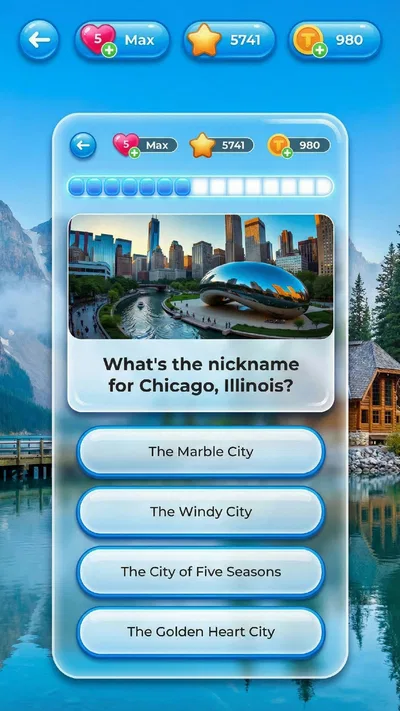
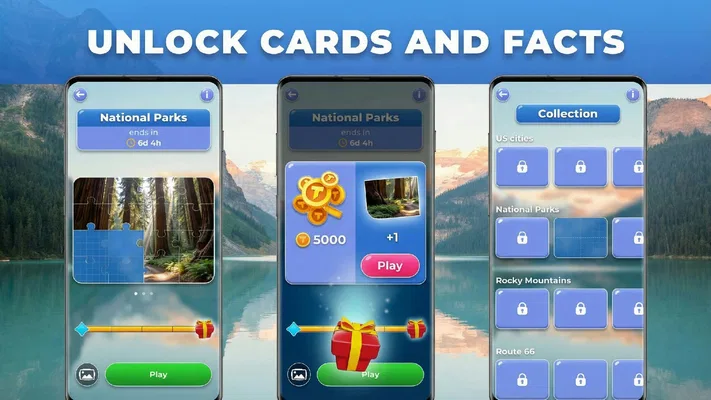
 Analysis byAppsAward
Our review of IQ & brain test: Triviascapes
I like trivia games best when they fit into the spare minutes of a day rather than demanding a long, uninterrupted session. IQ & brain test: Triviascapes takes that quick-play idea and mixes general trivia with brain games, IQ-style tests, and logic puzzles. That blend gives me more variety than a quiz built only around remembering facts, though it also means the experience suits people who enjoy switching between different kinds of mental challenge.
Made by Quiz & Trivia Games by Mno Go Apps, this free trivia game has a 4.8 average from around 749,000 ratings and more than 10 million installs. Those figures suggest it has found a broad audience, but the more useful question is whether its format suits your habits. I see it as a casual way to test myself and pass a short break—not a formal IQ assessment or a substitute for a focused study tool.
Build a simple routine before chasing a score
My most useful approach is to treat each visit as a small session with a purpose. If I have only a few minutes, I choose one kind of challenge and give it my attention instead of jumping around just because the game offers different mental activities. Trivia rewards what I already know; logic puzzles ask me to slow down and work through a problem. Mixing them can keep a session lively, but separating them makes it easier to notice which style I actually enjoy.
A practical everyday scenario is waiting for a train or taking a short break between tasks. I would use that window for a brief round, then stop when the break ends rather than letting a casual game stretch into a distraction. For a longer, quieter moment, I would try a logic-focused activity and allow myself time to think. The distinction matters: rapid guessing may feel natural in a quick quiz, but it is less helpful when the point is to reason through a puzzle.
One habit I recommend is noticing why an answer went wrong. Was the question unfamiliar, did I rush, or did I misread the wording? That quick mental check turns a correct-or-incorrect result into something more useful. It can also help decide what to try next: if recall questions feel easy but puzzles are a struggle, spend the next session on reasoning rather than repeating the comfortable option.
The game’s broad mix is its main practical advantage, but it is not automatically the best format for everyone. If you want a single, carefully structured course in logic, a dedicated puzzle app may give you a more consistent progression. If you want a deep subject-specific quiz, a specialist trivia game may be a better fit. I would choose Triviascapes when variety and low-pressure mental activity matter more than sticking to one discipline.
Check the basics that affect your experience
Before settling into a routine, I would check the game’s available settings and make sure the experience feels comfortable on my device. In particular, look for any options that affect sound, notifications, or the way questions are presented, if those controls are available in your version. I would not assume a setting exists simply because other games offer it; a quick look through the menus is more reliable than building a routine around an unverified shortcut.
Notifications are worth considering in any casual game. If reminders interrupt work or quiet time, turn them off where the game or device allows it. That keeps the game available when you choose to open it, rather than letting it decide when to claim your attention. Likewise, if you prefer a silent session in a waiting room or before bed, check the audio controls first instead of discovering the issue mid-round.
It is also sensible to check the app’s age guidance and purchase details before handing a device to someone else. Triviascapes is rated for Everyone, which makes it broadly suitable from a content-rating perspective. The game is free to download, while optional in-app purchases range from about 69 cents to around 65 dollars per item. I would treat those purchases as a reason to review spending controls, particularly on a shared device, rather than assuming that a free download means every part of the experience costs nothing.
The current version is 2.14.106, and the listed minimum operating-system requirement is 7.1. If installation or performance is a concern, check your device’s compatibility through the app store before planning to use it. This is a small step, but it avoids confusing a device issue with a problem in the game itself.
Use repeatable patterns to get more from short sessions
The most effective “shortcut” I found is not a hidden button; it is a repeatable way of playing. Start with the type of challenge that matches your available time, read the prompt fully, and only then commit to an answer. In trivia, a familiar subject can tempt me to answer before I have taken in the exact wording. In a logic puzzle, a few seconds spent identifying what the question is asking can prevent a chain of avoidable guesses.
I also find it useful to alternate effort rather than treating every activity as a test of speed. After a demanding puzzle, a lighter trivia round can make a session feel less like work. Conversely, if a string of quick questions leaves me clicking without thinking, switching to a reasoning task can reset my attention. This is a personal pacing method, not a claim that the game automatically adapts to performance.
For anyone who likes to track improvement, use a modest standard: remember the kinds of questions that often trip you up and see whether you approach them more carefully next time. That is more meaningful than judging yourself by one unusually good or bad session. Since trivia knowledge depends heavily on what you have encountered before, a wrong answer does not necessarily reveal weak reasoning; it may simply be a fact you have not learned.
Another useful pattern is to stop when attention fades. A rapid sequence of careless answers can make a game feel harder than it is, and continuing out of frustration rarely turns a short break into a satisfying one. I would rather close the app and return later than mistake tiredness for lack of ability. That advice is especially relevant when alternating between recall and puzzles, because they ask for different kinds of concentration.
These habits make the mixed format more rewarding without pretending it has a universal training plan. The game can give me a reason to pause and think, but the quality of that session still depends on choosing an activity that fits my mood and time. If I want deliberate practice, I need to supply the structure myself by revisiting challenging types and resisting the urge to rush.
Where the format reaches its limits
The main trade-off is breadth. Triviascapes brings trivia, IQ-style tests, brain games, and logic puzzles together, so it can feel varied from one visit to another. That same variety may disappoint someone looking for a deep dive into a particular subject or a carefully ordered course with a clear learning path. I would not pick it as my only tool for exam preparation, specialist knowledge, or rigorous reasoning practice.
There is also a difference between an entertaining IQ-style activity and a professional assessment. I would treat any result as part of the game, not as a definitive measure of intelligence or a diagnosis. Performance can shift with familiarity, attention, and the particular questions presented. If you need a formal assessment, this casual trivia game is the wrong place to look.
Another limitation is that a large audience does not guarantee a perfect match for an individual player. The game has around 7,200 written reviews in addition to its ratings, but popularity cannot tell me whether I will enjoy the question mix or the pace. I would judge it by trying a few different challenge types and seeing whether the variety keeps me engaged. If I repeatedly prefer one mode, a dedicated alternative may serve that preference better.
Finally, free-to-play does not mean purchase details should be ignored. The available in-app items span a wide price range, so I would check what an item offers before buying and use device-level purchase safeguards if children share the device. That is a sensible precaution for any game with optional spending, not a reason to avoid this one outright.
Who will enjoy it, and who should choose differently
I would recommend Triviascapes to someone who wants a flexible mental break and likes alternating between knowledge questions and puzzles. It is especially appealing if you enjoy testing yourself casually without committing to a single topic. Its Everyone rating broadens its potential audience, and the free entry point makes it easy to see whether the mix suits you before spending anything.
I would steer a competitive quiz specialist toward a game focused on their favorite subject, and I would suggest a dedicated puzzle app to someone who wants sustained, structured problem-solving. People seeking a scientifically meaningful IQ result should also look elsewhere. Triviascapes is at its best when the aim is simple: spend a little time thinking, notice what kind of challenge you enjoy, and leave the session feeling entertained rather than evaluated.
A measured verdict for curious players
For me, the game’s strongest point is the choice between recall and reasoning in one casual package. The practical way to get value from it is to keep sessions short, choose a challenge that suits the moment, and pay attention to whether mistakes come from rushing or unfamiliar material. Those small habits make the experience feel more intentional without requiring a complicated strategy.
My recommendation is positive, with a clear boundary: download it for accessible, varied brain-teasing, not for a formal measure of ability or a comprehensive course. Its 4.8 average and 10 million-plus installs point to a widely used game, while the optional purchases are worth keeping in mind. If you enjoy a little variety in your trivia breaks, it is an easy game to try; if you want depth in one specific area, a more specialized alternative is likely the better choice.
Pros
- Offers a mix of quizzes and brain-training challenges.
- Short rounds make it easy to play during a break.
- Progression gives players a clear reason to keep going.
- Suitable for players who enjoy testing general knowledge.
- Works well as a casual solo game.
Cons
- Some questions may feel too easy for experienced quiz fans.
- Repeated question formats can become predictable.
- Progress may depend on completing many levels.
- Ads may interrupt the flow of play.
- It may not offer enough depth for dedicated brain-training users.
Best Trivia Game 2026
Our verdict
Challenge your mind with fun trivia, brain games, IQ tests, and logic puzzles!
Frequently Asked Questions
What is IQ & brain test: Triviascapes?
IQ & brain test: Triviascapes is a casual puzzle and trivia game built around short challenges that ask you to spot patterns, solve riddles, and use logic. It is designed for quick sessions, so you can play a few questions at a time rather than commit to a long game. The title suggests IQ testing, but its puzzles are best treated as entertainment, not as a scientifically valid measure of intelligence.
Is IQ & brain test: Triviascapes suitable for children?
The game’s brain teasers and trivia-style questions may appeal to older children and adults, but suitability depends on the content, difficulty, and advertising shown in the version available in your region. Parents should review the store listing, age rating, and privacy details before installing it for a child. It is also worth checking whether the app offers in-app purchases and discussing purchase approval settings on the device.
Does IQ & brain test: Triviascapes require an internet connection?
Whether you can play offline may depend on the current app version and which features you use. Some mobile puzzle games allow basic levels to load without a connection, while advertisements, rewards, updates, or other online features may require internet access. Check the developer’s store description and test a level with your device offline if this matters to you. A connection may also be needed when first launching the game.
Is IQ & brain test: Triviascapes free to play?
The app may be available to download without an upfront charge, but that does not necessarily mean every part of the experience is free. Games in this category can include advertisements, optional purchases, or features that require payment. Before installing, read the current Google Play or App Store listing for pricing and in-app purchase information. If a child will play, consider enabling purchase authentication to help prevent accidental spending.
Does IQ & brain test: Triviascapes measure your IQ accurately?
No casual mobile puzzle game should be relied on as an official IQ assessment unless it clearly explains that it uses a validated, standardized testing method administered under appropriate conditions. Triviascapes is more useful as a source of logic puzzles and trivia for entertainment or mental exercise. Your results can change with familiarity, attention, and the types of questions included, so they should not be treated as a diagnosis or a dependable measure of intelligence.