
- Award score
- 4.4Rating
- 50,000,000+installs
- Free
App information
- Version
- 4.10.5
- Updated
- Requires
- 7.0
- Price
- Free, in-app purchases
- Developer
- Microfun Limited
- Content rating
- Everyone
Screenshots


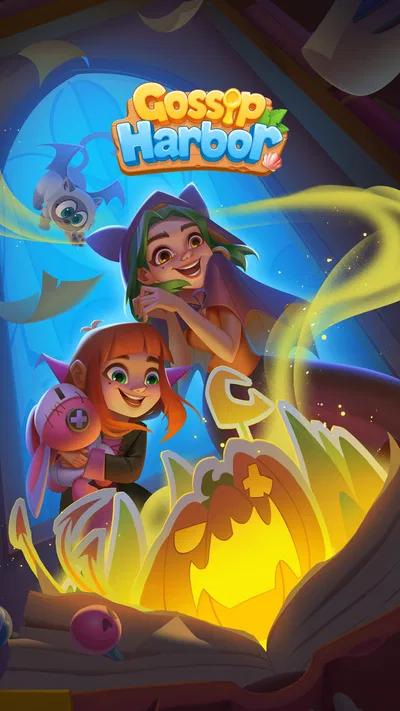
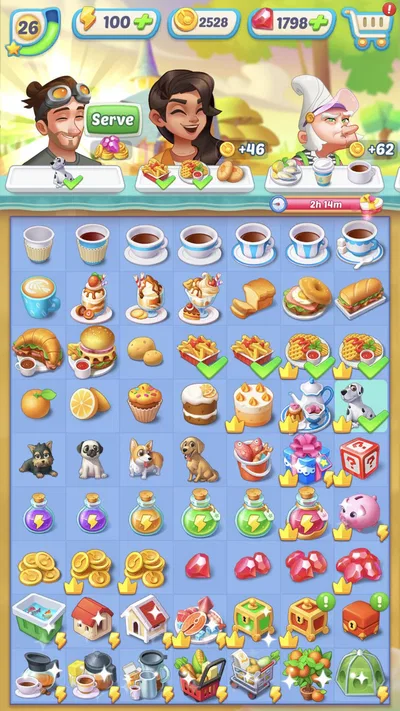
 Analysis byAppsAward
Our review of Gossip Harbor: Merge & Story
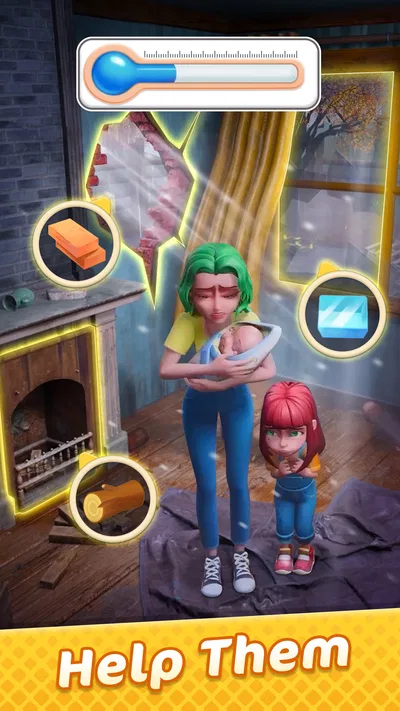
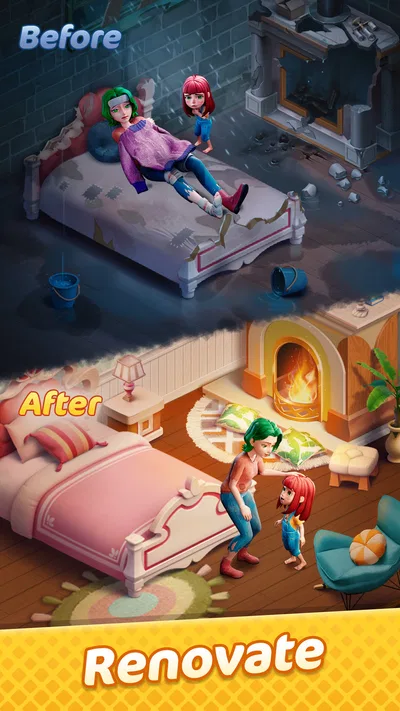
The first thing that stands out in Gossip Harbor: Merge & Story is how its puzzle play is tied to a place that needs attention. On Brimwave Beach, I’m not just matching items for their own sake: I’m working through a story, helping restore the setting, and following a mystery. That combination gives each task a clear purpose, though it also means the game asks you to enjoy both the puzzle loop and the unfolding plot.
Made by Microfun Limited, this free puzzle game is rated Everyone and is available on Android. It has a 4.4 average from around 728,000 ratings, with more than 50 million installs. The current version is 4.10.5, and in-app purchases range from $0.99 to $99.99 per item. Those purchases are worth keeping in mind if you prefer games with no spending prompts, but the basic appeal is easy to understand: make progress in short bursts by combining items and using the results to advance the beach story.
Small goals make it easy to get started
The opening appeal is the steady chain of understandable objectives. Rather than asking me to master a complicated ruleset, the game introduces its merge-and-restore premise through tasks that connect the puzzle board to Brimwave Beach. A completed goal can feel like a small step toward a more welcoming location, while the mystery gives the restoration a reason to matter beyond decoration.
That structure suits casual play. I can open the game with a few minutes to spare, decide which visible task I want to pursue, and make some progress without needing to remember a long sequence of controls. The board puzzle is the active part; the beach and story provide context for why I’m doing it. If you enjoy seeing a task lead to a change in a larger setting, that connection is more satisfying than a string of disconnected match puzzles.
The trade-off is that the two parts may not carry equal weight for every player. Someone who loves story-led games may want the mystery to move faster, while a puzzle fan may prefer a board that is the whole experience. Here, the appeal lies in switching between solving and seeing the broader project develop. If either side feels like an interruption to you, the blend may be less compelling than a dedicated puzzle game or a more story-focused title.
Use goals to choose what to work on
A practical way to approach the game is to check the available objectives before making merges. It is tempting to combine whatever is immediately convenient, but a little attention to what the game is asking for can make each board action feel more purposeful. I find this kind of goal-first habit especially useful when I’m only playing briefly: it helps me avoid spending a short session on combinations that don’t bring the story or restoration forward.
There is also a useful distinction between making activity and making progress. The board can invite you to keep combining items, but the more satisfying session is one where those combinations serve a visible goal. When I’m unsure what to do next, I treat the current task as a guide rather than trying to advance every possible thread at once. That keeps the experience focused and makes it easier to stop after a meaningful step.
Progress is visible, but the pace can vary
The beach setting gives progress a concrete frame: restoration is easier to care about when it belongs to a place with a story attached. The mystery adds another reason to continue, since the tasks are part of a larger narrative rather than purely a sequence of board objectives. I like that the game gives puzzle actions an outward purpose; it helps make a quick session feel connected to something that will still be there when I return.
Still, visible progress does not necessarily mean every session feels equally rewarding. A task may take more attention or more board work than a quick break allows. If I’m playing between errands, I prefer to aim for one manageable objective rather than expect to resolve a major story development. That expectation makes the pacing feel more comfortable and reduces the urge to keep playing just because I have not reached a dramatic payoff yet.
Compared with a conventional match-three game, this has a more involved sense of direction: the merge puzzle supports restoration and story rather than standing alone. Compared with a pure renovation game, the board is a more central part of the routine. The result is a middle ground that can work well for players who like both organizing combinations and watching a setting evolve. If you want a puzzle with no narrative pauses, a simpler standalone game may be a better fit.
How I handle a slower stretch
When progress feels gradual, I find it helps to set a modest stopping point before beginning: finish a particular task, make a useful set of merges, or spend a few minutes checking what the current objective needs. That keeps the game from turning a spare moment into an open-ended session. It also makes the rhythm easier to judge. If I’m enjoying the puzzle itself, I can continue; if I’m mainly waiting for the story to move, that is a sign to pause and return later.
This approach is especially helpful for players who are sensitive to waiting or repeated effort in mobile games. Gossip Harbor is designed around ongoing progress, not a single self-contained puzzle that is guaranteed to be finished in one sitting. I would not recommend starting it when you need a quick, definite conclusion. It is better suited to people who enjoy returning to the same board and setting over time.
Challenge and the pressure to keep going
The core challenge is not just solving a puzzle; it is managing attention between what is on the board and what the current goal requires. That gives the play a light planning element. I get more out of it when I pause long enough to consider which combination is useful, instead of treating every available merge as an automatic choice. This is a small but meaningful difference from puzzle games where the main test is simply reacting to a rapidly changing screen.
The difficulty can feel uneven depending on what you want from a session. If you are looking for intense, time-pressured problem-solving, this is unlikely to be the strongest choice. Its appeal is more relaxed and cumulative: make decisions, work toward tasks, and gradually connect those actions to the beach and its mystery. On the other hand, players who dislike goals that take more than one short visit may find the longer progression less satisfying.
As with many free mobile games, in-app purchases are part of the experience, and the listed prices span from $0.99 to $99.99 per item. I’d go in expecting optional spending to be a consideration, not a requirement I can promise away. If you are trying to keep mobile spending tightly controlled, decide on your own limit before playing and avoid treating a slow stretch as a reason to pay for momentum. The game is a better fit when you are comfortable letting progress happen at a casual pace.
There is a subtle retention pressure in any game that combines ongoing goals with a story: it is easy to think that one more session will bring the next reveal or visible change. I recommend using the story as a reason to return, not as a reason to ignore your own stopping point. A short planned session is a good everyday use case—say, winding down after dinner or filling a quiet wait—while leaving the game aside is sensible if you notice that you are playing from obligation rather than enjoyment.
Who will enjoy the routine—and who may not
I’d recommend it to someone who likes casual merge puzzles, appreciates a setting that changes as they progress, and wants a mystery to give the tasks some narrative shape. It is also a reasonable pick for players who prefer games they can visit in short sessions rather than complete in one sitting. The Everyone age rating makes the stated audience broad, though individual preferences about stories and mobile purchases still matter.
I would skip it if you mainly want a demanding logic puzzle, a fully self-contained round, or a game with no spending options. It may also disappoint players who want to decorate freely without working through puzzle objectives, or who expect a mystery to resolve quickly. For those tastes, a focused logic game or a more open-ended design title is likely to be a better match than this mix of board play, restoration, and narrative.
A progression loop that works best at your own pace
What keeps the game engaging for me is the link between an immediate board decision and a longer-term reason to continue. Early tasks give the experience direction; restoration makes progress visible; and the mystery gives the setting a thread to follow. That chain is appealing when I want a low-pressure game with more context than a bare puzzle. It is less effective if I want every session to deliver a large, immediate payoff.
My most useful tip is to treat each visit as a small project. Check the current objective, make choices with that goal in mind, and stop when the session has reached a satisfying point. This is more rewarding than chasing every possible action at once, and it makes the game easier to fit into a normal day. It also gives you a fair sense of whether the merge puzzle itself is enjoyable enough to support the slower story progression.
My verdict: Gossip Harbor: Merge & Story is a pleasant choice for players who want a casual puzzle routine tied to beach restoration and an unfolding mystery. Its strongest feature is the sense that small board tasks contribute to a larger place and story. Its main limitation is the same structure: progress is gradual, and the narrative-and-restoration loop will not suit someone looking for fast, standalone puzzles. If you like returning to a continuing project and are comfortable with optional purchases in a free game, I think it is worth trying; if you need a clean finish every time you play, choose a more self-contained alternative.
Pros
- Merge puzzles are easy to pick up during short breaks.
- New story chapters give progress a clear narrative goal.
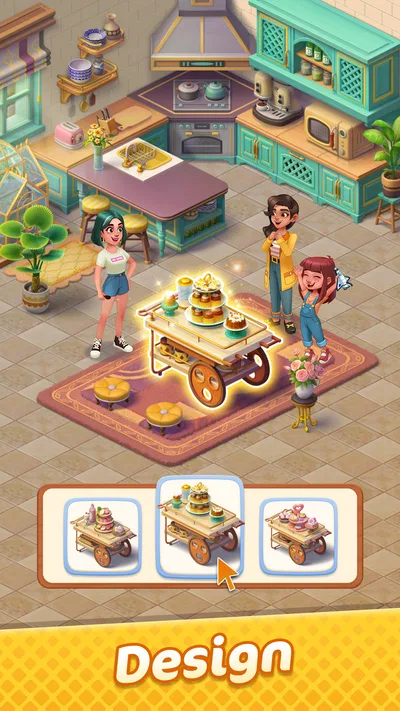
- Decor renovation adds visual rewards to puzzle progression.
- The interface makes objectives and available moves easy to follow.
- Optional purchases let players speed up some progress.
Cons
- Energy limits how many puzzle rounds you can play at once.
- Some story progress depends on collecting specific items.
- Later tasks can require repeated merges to finish.
- Timed events may pressure players to log in regularly.
- Ads and in-app purchases can interrupt the relaxed pace.
Best Puzzle Game 2026
Our verdict
Visit Brimwave Beach; merge, restore and design while you solve a fiery mystery.
Frequently Asked Questions
What is Gossip Harbor: Merge & Story about?
Gossip Harbor: Merge & Story combines a merge puzzle with a story about rebuilding a restaurant and uncovering secrets in a seaside town. You combine matching items to create upgraded dishes and supplies, then use them to complete customer orders and story tasks. As the plot progresses, you meet local characters, encounter rumors and relationship drama, and make choices that shape parts of the unfolding narrative.
How does the merging gameplay work?
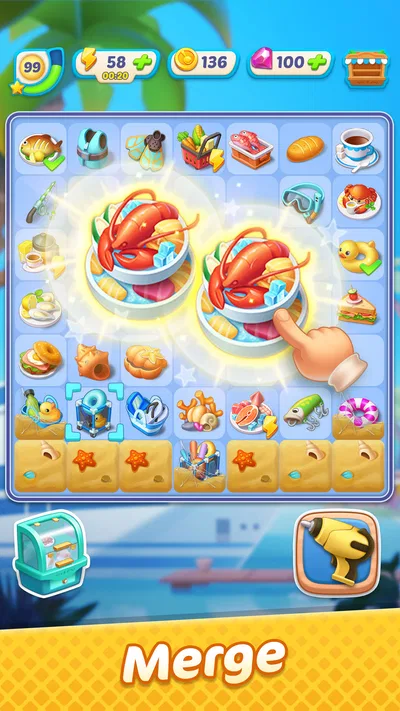
The main puzzle takes place on a board where you combine two matching items to make a higher-level item. Tapping certain generators produces ingredients or other objects, but their use and availability are limited by the game’s energy system. You then merge items into what orders require. The board can become crowded, so managing open spaces and deciding which chains to pursue are important parts of play.
Is Gossip Harbor: Merge & Story free to play?
The game can generally be downloaded and played without an upfront purchase, but it includes optional in-app purchases. These may offer items such as currency, energy, or other ways to make progress more quickly. Energy limits how often you can use generators, so progress may slow while it replenishes. Check the store listing and your device’s purchase settings for current pricing, purchase options, and parental controls.
Can I play Gossip Harbor: Merge & Story offline?
Some actions may work temporarily without a reliable connection, but you should not assume the game is fully playable offline. Features such as syncing progress, loading events, receiving updates, or completing online services may require an internet connection. Availability can vary by device version and current game features. For the most dependable experience and to protect your progress, launch the game while connected and confirm that your account is syncing.
Is Gossip Harbor: Merge & Story suitable for children?
The game is presented as a casual puzzle and story experience, but its plot includes gossip, family tensions, romance, and interpersonal conflict. It also contains optional in-app purchases, which may be relevant for younger players using a shared device. Suitability depends on a child’s age and your family’s preferences, so review the current age rating, store description, and purchase controls before downloading.