
- Award score
- 4.8Rating
- 10,000,000+installs
- Free
App information
- Version
- 1.1.6
- Updated
- Requires
- 7.1
- Price
- Free, in-app purchases
- Developer
- Nebula Studio
- Content rating
- Everyone
Screenshots

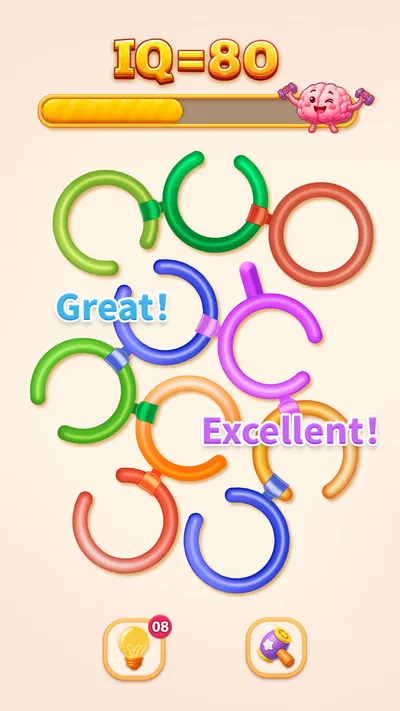
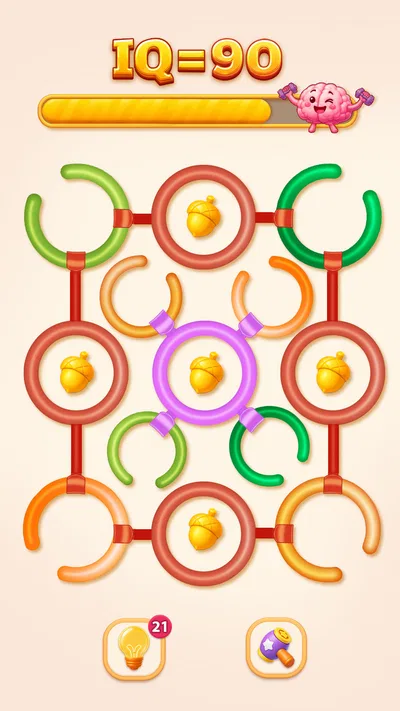
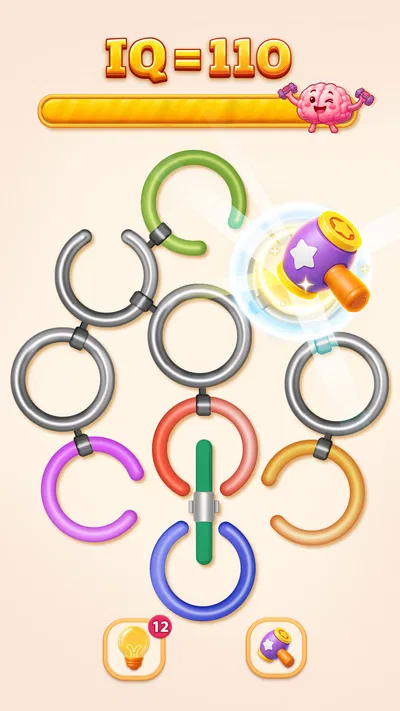
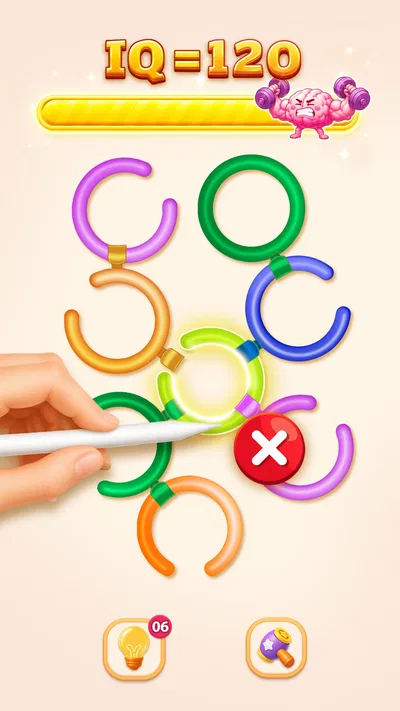
 Analysis byAppsAward
Our review of Rotate Rings
Some puzzle games pull me in with bright effects and busy boards; Rotate Rings takes a quieter route. Its central idea is easy to grasp: rotate rings and work through logic puzzles at a relaxed pace. That simplicity gives the game a clear identity from the start. Rather than asking for quick reactions, it invites me to pause, look at the arrangement, and consider what a small adjustment might do.
A calm first impression
The appeal is right there in the name and premise. Turning rings is the focus, so the puzzle itself stays in the foreground. I like that this kind of setup can make a short break feel purposeful without demanding a long commitment or an elaborate explanation. There is room to think, test an idea, and settle into the task at my own speed.
Rotate Rings is a free puzzle game from Nebula Studio, and it is rated for Everyone. Its store summary describes it as a relaxing logic puzzle and highlights offline brain training. Those points fit together neatly: the game is positioned as a low-pressure way to give the mind something to work on, rather than as a loud, competitive challenge. The mood is part of the attraction, not an extra decoration around the puzzle.
Articles related to Rotate Rings
That promise also sets a useful expectation. A ring-rotation puzzle depends on noticing relationships and thinking ahead, so even a compact action can invite careful attention. I find that appealing when I want a game that gives me a reason to focus but does not make every moment feel urgent. The basic concept is straightforward enough to approach casually, while the logic element gives each move a little weight.
A small idea with a clear identity
One strength of a focused puzzle concept is that it does not need a complicated premise to make sense. Rotate Rings can introduce its character through the act of turning rings and considering how the arrangement changes. That gives the game a practical, uncluttered starting point. I can understand the broad appeal before getting caught up in details: this is about observation, rotation, and patient problem-solving.
The game’s visual language matters especially in a format like this. When the main interaction is centered on rings, the presentation has the job of helping the puzzle read clearly and keeping attention on the task. A coherent art direction can make repeated turns feel inviting rather than monotonous, while a considered setting can give the board a distinct mood. The strongest fit for this kind of game is an atmosphere that supports concentration instead of competing with it.
I also appreciate that the premise sounds suited to different kinds of play. Someone might open it for a brief mental reset, while another player may prefer to settle in and examine a puzzle carefully. The same simple action can serve both approaches because the experience is shaped by how long I choose to think, not by a need to hurry through each decision. That makes the game’s relaxed identity easy to understand.
Visual mood and setting
For a logic game, visual clarity is more than a matter of polish; it is part of how the puzzle communicates. Rings need to remain legible as I consider their positions, and the overall presentation should make the important relationships easy to follow. When the art direction and the mechanics feel aligned, the screen can be calm without becoming visually empty. That balance is what helps a minimalist idea feel intentional.
The setting contributes to that same impression. A puzzle does not need an elaborate story to establish a sense of place, but its surrounding visual choices can still make the experience feel cohesive. Shapes, colors, and the way the board is framed can all support the patient mood implied by ring rotation and logic. In my view, a good atmosphere here should make me want to linger over a problem, not pull my eyes away from it.
There is also a nice creative challenge in making a repeated interaction feel satisfying. If the core action is simple, each turn has to remain readable and purposeful. The game’s identity benefits when the visual treatment reinforces that action, so the rings feel like the natural center of attention. That kind of design coherence can make a modest puzzle premise memorable without adding unnecessary complexity.
Sound and the pace of play
Sound can do a lot of quiet work in a puzzle game. A restrained audio mood can underline a move, create a sense of completion, or simply make a session feel more settled. For a game framed as relaxing, the best fit is sound that complements concentration instead of interrupting it. That is especially important when the player may be weighing a move for a moment before acting.
Pacing is closely connected to that audio and visual atmosphere. Rotate Rings is presented as a relaxed logic experience, which suggests a style of play where I can take time to inspect the rings and decide what to do next. That slower rhythm is a meaningful contrast to games built around fast input. It gives the act of thinking room to become part of the entertainment, rather than treating every pause as a delay.
The offline brain-training angle also suits this measured rhythm. It frames the game as something I can turn to for focused puzzle time without needing the experience to feel like a live event. That makes the concept especially approachable for a quiet moment at home or a pause between other activities. The essential pleasure remains the same: look closely, make a considered turn, and see whether the logic holds.
How the mechanics support the mood
The central mechanic and the intended atmosphere seem naturally compatible. Rotating rings is an action that encourages attention to arrangement and consequence. A relaxed presentation gives me the space to think through those consequences, while the puzzle structure provides a reason to stay engaged. Neither side has to overpower the other: the mechanics supply focus, and the mood makes that focus comfortable.
That balance is important because “relaxing” does not have to mean empty or effortless. A puzzle can still make me pause, reconsider, and try another approach while remaining pleasant to spend time with. The appeal lies in being mentally involved without being pushed into a frantic pace. For players who enjoy gentle problem-solving, that is a promising combination.
It also gives the game a broad, accessible pitch. The Everyone content rating makes the overall audience clear, and the simple premise is easy to explain. At the same time, logic puzzles can offer a satisfying challenge through the decisions they ask me to make. The game’s identity therefore rests on a useful middle ground: approachable in concept, but still centered on thoughtful play.
Rotate Rings has reached a substantial audience, with over ten million installs and a 4.8 average from around 262,000 ratings. That reception suggests that its straightforward puzzle appeal has found plenty of players. The current version is 1.1.6, and optional in-app purchases range from $0.99 to $9.99 per item. I see those details as context for the game rather than the heart of its appeal; the defining idea remains the calm, tactile logic of turning rings.
Who may enjoy it
This is a natural fit for players who like compact puzzle concepts and prefer to think at their own pace. If I am looking for a game built around reflexes, competition, or a sprawling narrative, the core pitch points in another direction. But if I want a quieter activity that asks me to observe and reason, the ring-rotation idea has an inviting clarity. It is easy to understand what sort of experience the game is aiming to provide.
It may also suit people who enjoy keeping a puzzle game close for short sessions. A simple central interaction makes it easy to return to the basic pleasure of solving, while the logic focus gives each session a clear purpose. The relaxed framing matters here: I can approach it as a small break rather than a demanding appointment. That kind of flexibility is one of the more appealing qualities of a casual puzzle game.
For younger players and families, the Everyone rating is reassuring as a broad content signal, though the central attraction remains the puzzle itself. It is the sort of game that can prompt a player to slow down and think through a choice. That does not require a complicated explanation of its premise, which helps make the game approachable across a wide audience.
A considered atmosphere verdict
What stands out about Rotate Rings is the coherence of its basic promise. The mechanic asks for careful thought; the mood is framed as relaxing; and the offline brain-training angle reinforces the idea of a personal, focused session. Those elements all point in the same direction. That unity is valuable in a puzzle game, because it helps the experience feel deliberate rather than like a collection of unrelated features.
Its strongest appeal is not spectacle but concentration with a gentle edge. I like the idea of a game that treats a small decision as the center of the fun and lets me take the time I need to make it. Ring rotation gives the concept a distinctive hook, while the logic-puzzle framing supplies the mental engagement. The result is an inviting option for players who want something thoughtful without a high-pressure tone.
My overall impression is that Rotate Rings knows the kind of space it wants to occupy: calm, focused, and built around simple logic. It is easy to recommend to anyone curious about a relaxed puzzle game with a clear central mechanic. The art direction, sound, and pacing are most compelling when they support that purpose and let the rings remain the focus. If patient problem-solving sounds more appealing than frantic play, this game offers a straightforward reason to give ring-rotation puzzles a try.
Pros
- Simple controls make rotating the rings easy to understand.
- Short levels suit quick play sessions.
- The minimalist design keeps attention on the puzzle.
- Progressively harder stages offer a steady challenge.
- The game works well for casual puzzle fans.
Cons
- Some puzzles may feel repetitive over time.
- Later levels can be difficult without clear hints.
- The minimal visuals may lack variety for some players.
- Mistimed rotations can make progress feel unforgiving.
- Players seeking a story or character progression may find it sparse.
Best Puzzle Game 2026
Our verdict
Relaxing logic puzzle game! Rotate rings for fun and offline brain training.
Frequently Asked Questions
What is Rotate Rings, and how do you play it?
Rotate Rings is a puzzle game built around turning circular rings to line up their openings and guide pieces through the puzzle. The main challenge is working out how each ring’s position affects the others, then finding an order of moves that creates a clear path. Its controls are generally simple to understand, but later puzzles may call for more careful planning.
Is Rotate Rings free to download and play?
The price and monetization can vary by platform, region, and version, so check the Google Play Store or Apple App Store listing before downloading. The listing should show whether the game is free or paid and disclose any in-app purchases. Also review the store details for advertising, optional purchases, and other conditions rather than assuming that a free download means every feature is free.
Does Rotate Rings work offline?
Some puzzle games can be played without an internet connection, but offline availability may depend on the particular version of Rotate Rings and its store requirements. Check the app listing and test the game while offline if this matters to you. An internet connection may still be needed for downloading, updates, ads, cloud saves, or other online features, even if the puzzles themselves work offline.
Is Rotate Rings suitable for children?
Rotate Rings’ ring-based puzzles may appeal to players who enjoy logic and spatial challenges, but suitability depends on the game’s content and monetization as well as a child’s age and patience. Before handing it to a child, check the age rating, privacy information, and in-app purchase details on the relevant store page. If the game includes ads or purchases, consider using the device’s parental controls.
What should I check before downloading Rotate Rings on Android or iOS?
Make sure you select the correct Rotate Rings listing for your device, then check its developer, screenshots, recent reviews, age rating, and last update. Compare the listed system requirements with your Android or iOS version, and review the permissions and privacy disclosures. These details can help you confirm compatibility and understand what data or device access the app may request before installation.