- Award score
- 4.9Rating
- 1,000,000+installs
- Free
App information
Screenshots
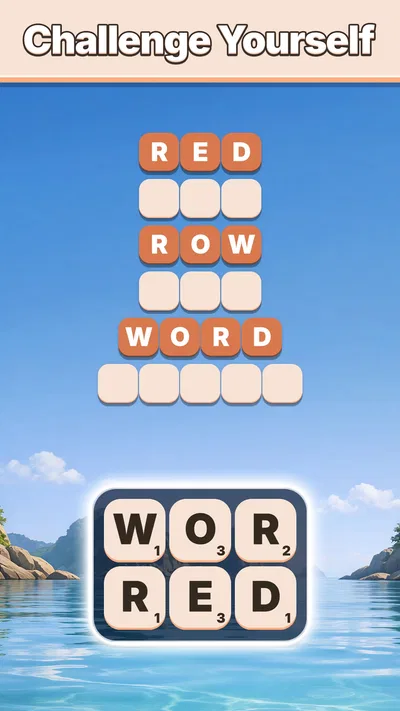
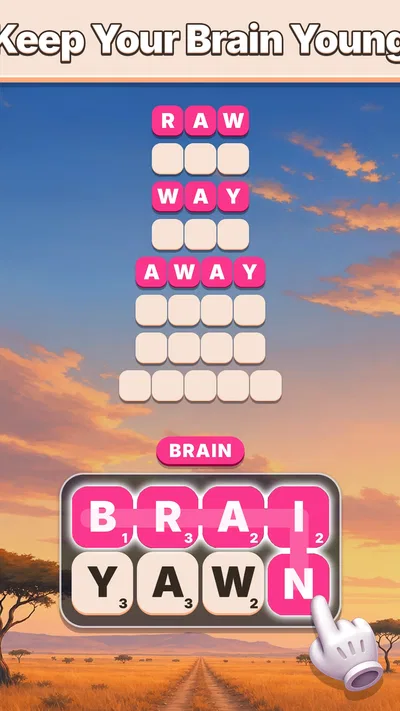
 Analysis byAppsAward
Our review of Word Tiles - Relaxing Puzzle
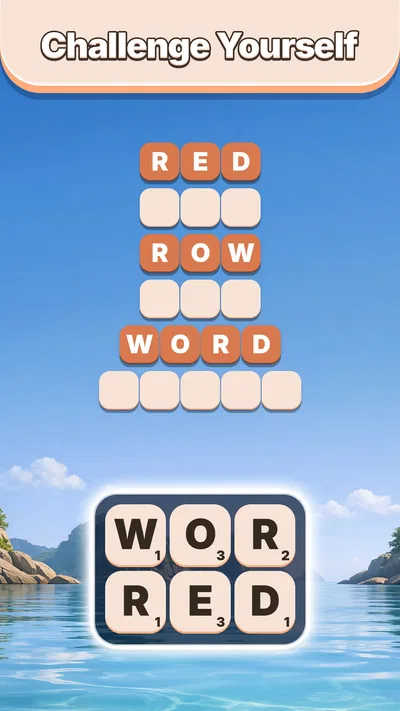
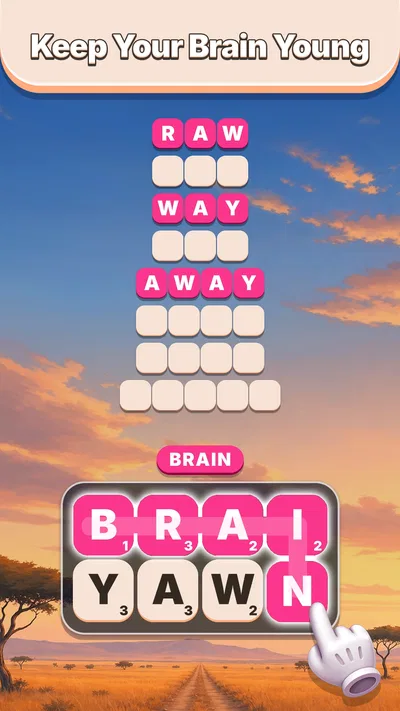
When I want a puzzle I can pick up without planning a long session, word tiles are an appealing middle ground: they ask for a little attention but feel gentler than a timed quiz or a competitive word game. Word Tiles - Relaxing Puzzle is a free puzzle game from Agave Games, and its central idea is easy to grasp from the name: work with tiles and words at a relaxed pace. I’d consider it for short breaks, quiet evenings, or anyone who enjoys language puzzles but doesn’t want the pressure of a clock.
The first decision is whether you want a calm word-focused activity or a more demanding brain teaser. This game is aimed at the former. Its Everyone age rating makes it a reasonable option to consider for a broad household audience, while the word-puzzle format gives players a clear task rather than an open-ended game world to learn. It has an average rating of 4.9 from around 44,000 ratings, which suggests a strong reception, though a high average alone cannot tell you whether its particular style will suit your taste.
Choosing a word puzzle that fits your routine
Before installing, I’d ask myself what I want from a puzzle session. If I’m looking to notice letter patterns, test vocabulary, and make progress in small bursts, a tile-based word game is a natural fit. If I want strategy built around several interacting systems, a sprawling campaign, or direct competition with other people, I’d look elsewhere. The appeal here is the compactness of the idea, not a promise of a deep, multi-genre experience.
That distinction matters in everyday use. A quick puzzle can fit between errands or into a quiet moment when I don’t want to reopen a complicated game and remember where I left off. It is also an easy format to share the idea of with someone nearby: both players can think about words, without needing to learn a large set of controls first. I would still treat it as a personal puzzle game rather than assume it includes multiplayer or shared play.
The word-tile approach also puts the emphasis in a different place from a standard trivia quiz. Trivia depends heavily on what you already know; a word puzzle asks you to inspect and combine language. That can make a session feel more like a small act of problem-solving than a test of facts. On the other hand, anyone who dislikes spelling challenges or gets frustrated when a word solution doesn’t come quickly may find the format less soothing than its relaxed framing suggests.
Why the tile format can feel satisfying
The strongest reason to choose a game like this is the pleasure of finding a pattern. A promising letter arrangement can make you pause, rearrange your thinking, and then see a word that had been hiding in plain sight. That moment is satisfying without requiring a dramatic story or a long chain of decisions. For me, that is a good match for a brief break: the puzzle itself supplies the focus, and I can stop when I have had enough.
There is a useful way to approach a word puzzle when I feel stuck: scan for familiar beginnings and endings first, then look for shorter words before trying to force a long answer. I also try mentally grouping letters by likely combinations rather than staring at the whole board as one jumble. These habits don’t depend on a special feature, and they help keep a tricky moment from turning into random guessing. They are especially useful when I want the game to remain relaxing rather than turn into a test of patience.
Another practical tip is to decide on a natural stopping point before opening a casual puzzle. If I have only a few minutes, I can treat one brief session as a small reset instead of feeling obliged to keep going until I reach an arbitrary milestone. That simple boundary makes this kind of game easier to fit around a commute, a waiting room, or a pause between chores. It also helps distinguish a genuinely restful pastime from an app that quietly takes over a longer stretch of time.
What this game offers over familiar alternatives
Compared with word-search games, a tile puzzle typically asks for more active construction: rather than only spotting a word already placed among letters, I have to think about how the available pieces can form one. Compared with crosswords, the emphasis is less naturally tied to clues and general knowledge. Those category-level differences are why I’d choose Word Tiles - Relaxing Puzzle when I want to engage with words directly, not when I’m specifically craving a themed grid, a quiz, or a dense clue-solving session.
It also makes a different promise from fast competitive word games. Without relying on a race against another player, the experience can suit someone who prefers to think at their own pace. But players who thrive on a countdown, rankings, or the pressure of an opponent should not expect a calm tile puzzle to deliver the same energy. The right alternative depends less on which game is universally better and more on whether you want reflection, speed, clues, or competition.
The game has passed one million installs, and its version is 1.6.4. Those details show that it has reached a substantial audience and has a current version to install, but they do not tell me how challenging any particular puzzle will feel. I’d use the audience figures as reassurance that this is not an obscure one-off, then make the actual decision based on whether the word-tile format matches the kind of break I want.
Where expectations should stay modest
A calm word puzzle is not automatically a perfect fit for every mood. If I want a strong sense of progression, narrative stakes, or a wide range of activities, a focused tile game may feel narrow after the novelty wears off. Likewise, a highly experienced word-game player may prefer something with more layers of difficulty or more varied puzzle types. I would choose this title for its straightforward word focus, not assume that simplicity means it will keep every kind of puzzle fan engaged indefinitely.
There is also a personal language consideration. Word puzzles depend on the words and spelling conventions a player brings to them, so someone learning English or using it as a second language may find some answers less intuitive than a fluent speaker would. That does not make the game unsuitable, but it does affect how relaxing it feels. If I were recommending it to a language learner, I’d frame it as practice with vocabulary and pattern recognition, not as a structured language course.
Another trade-off is that “relaxing” describes an intended mood, not a guarantee that every puzzle will feel easy. Any word challenge can become frustrating when the solution is just outside your vocabulary or you keep circling the same letter combinations. When that happens, I’d take a short break rather than keep tapping in the hope that the answer appears. A gentle game works best when I let myself stop; it is not the right choice if I need a puzzle to provide a fixed level of challenge or a particular outcome every time.
Price, purchases, and the decision to try it
The game is free to install, with in-app purchases listed from $1.99 to $49.99 per item. That range is worth knowing before downloading, particularly if the phone is shared with a child or if I prefer to avoid accidental spending. I’d treat the free entry point as a chance to see whether the core style suits me, and make any purchase decision only after checking the options presented in the app store and within the game.
For a family device, I would also review purchase controls before handing the phone over. That is a sensible precaution for any free game with optional paid items, especially when a child might tap through prompts without considering the cost. The Everyone age rating speaks to its broad content suitability, but it should not be confused with a guarantee about spending habits or a substitute for a parent’s own settings.
The cost of switching away is low in practical terms: if I try a few sessions and decide I’d rather play crosswords, a word search, or a competitive word game, I can simply return to the kind of puzzle I prefer. The more meaningful cost is time spent learning whether this particular format holds my interest. Because the central premise is easy to understand, that trial does not require a long commitment. I would give it a short, honest test rather than judge it from one difficult puzzle or expect it to become my only word game.
Who I would recommend it to
I’d recommend Word Tiles - Relaxing Puzzle to someone who likes words, wants a low-friction puzzle to dip into, and values a calmer pace over head-to-head competition. It is particularly easy to picture as a small everyday companion: while waiting for an appointment, I could open it for a brief change of focus, try a few word combinations, and put the phone away when I’m called. That kind of use is a better match than setting aside an evening for a major game session.
I would point a crossword enthusiast toward a clue-based alternative if solving hints is the part they enjoy most. I’d suggest a timed word challenge to someone who needs urgency to stay engaged, and a broader puzzle collection to someone who gets bored when one mechanic carries the experience. Those are not criticisms of this game so much as useful boundaries: its appeal depends on wanting a focused word-tile puzzle rather than expecting it to cover every puzzle mood.
Overall, I see it as a sensible free try for players who want a gentle word-based diversion, with the extra caution that paid items are available and the format will not please everyone. Agave Games has made a game with a clear identity rather than an all-purpose puzzle toolbox, and that clarity is its main strength. If I wanted calm letter-pattern thinking, I’d give it a chance; if I wanted clues, competition, or substantial variety, I’d choose a different kind of puzzle instead.
Pros
- Simple rules make it easy to start playing.
- Short rounds suit quick breaks.
- Word search puzzles offer a calm pace.
- Hints can help when a puzzle feels difficult.
- The tile format gives word puzzles a fresh feel.
Cons
- Some levels may feel repetitive over time.
- Hints may be limited without extra rewards.
- Small tiles can be hard to tap on compact screens.
- Later puzzles may require a broader vocabulary.
- Ads may interrupt the relaxing flow.
Best Puzzle Game 2026
Our verdict
Word Puzzle Game
Frequently Asked Questions
What is Word Tiles - Relaxing Puzzle?
Word Tiles - Relaxing Puzzle is a casual word game built around finding words from letter tiles. It offers a calmer alternative to timed or competitive word challenges, making it suitable for short sessions or a more leisurely puzzle routine. The exact modes and features can vary by version, so check the app listing for current details before downloading.
How do you play Word Tiles - Relaxing Puzzle?
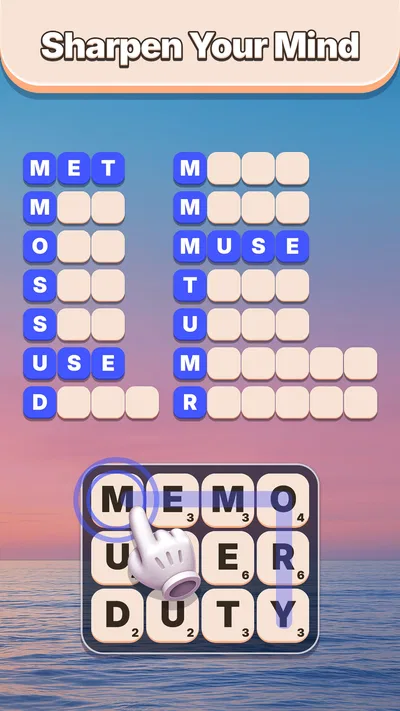
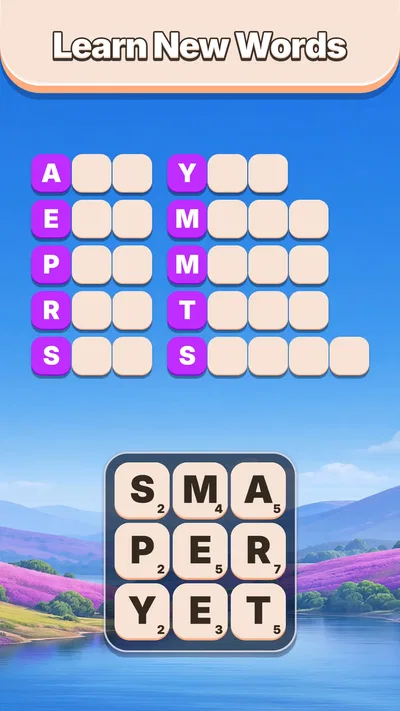
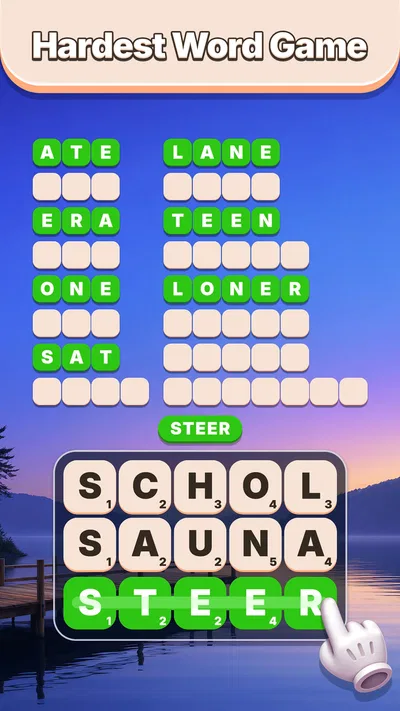
The core idea is to examine the letters shown on the screen and connect or select them to form words that fit the puzzle. As you progress, boards may become more challenging and require closer attention to spelling and letter combinations. Instructions and controls are generally introduced in the game, but the precise rules can differ between levels or updates.
Is Word Tiles - Relaxing Puzzle suitable for children?
Word puzzles can be a useful way for children to practise spelling and vocabulary, but suitability depends on the child’s reading ability and the app’s current content. Before installing, review the age rating, privacy information, and any in-app purchase or advertising disclosures on the relevant app store. Parents should also check whether the game includes features that require supervision.
Can I play Word Tiles - Relaxing Puzzle offline?
Offline access depends on how the current version handles level data, advertisements, events, and other online features. Some basic puzzles may be available without a connection, while rewards or additional content may require internet access. If offline play matters to you, check the store description and test the game in airplane mode after installation rather than assuming every feature works offline.
Is Word Tiles - Relaxing Puzzle free, and does it include ads or purchases?
The app’s price, advertising, and in-app purchase options can vary by platform, region, and release version. A free download does not necessarily mean every feature is free, and some games show ads or offer optional purchases such as hints or other extras. Check the listing on Google Play or the App Store for the latest costs and payment details before downloading.