- Award score
- 4.8Rating
- 1,000,000,000+installs
- Free
App information
- Version
- 10.8.9
- Updated
- Requires
- 7.1
- Price
- Free, in-app purchases
- Developer
- HungryStudio
- Content rating
- Everyone
Screenshots
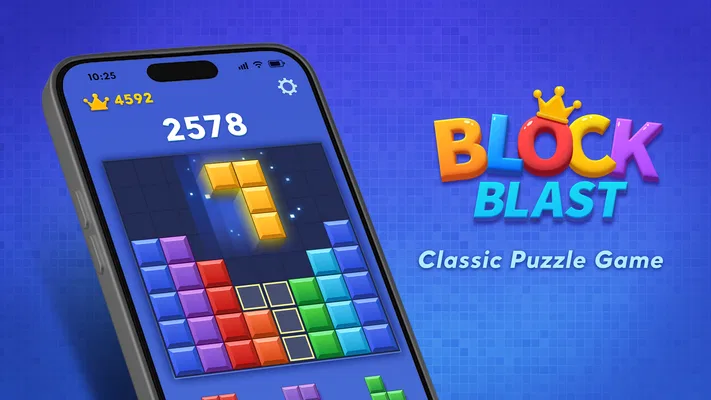
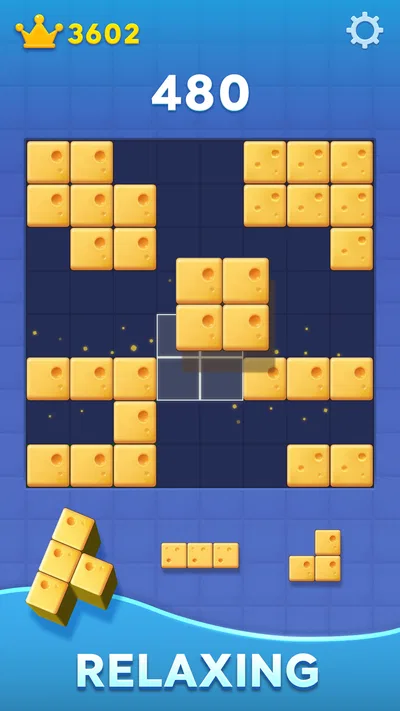
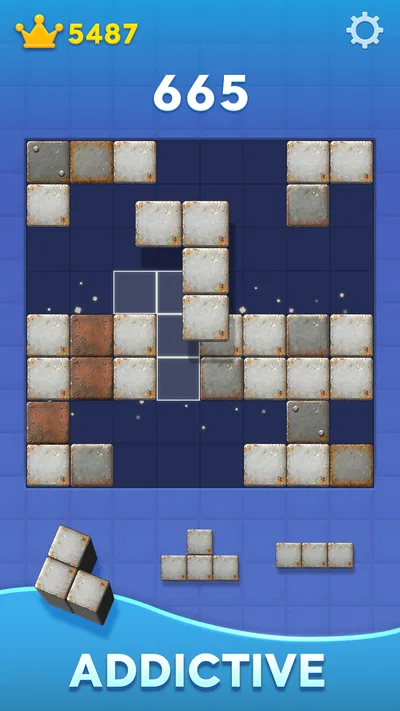
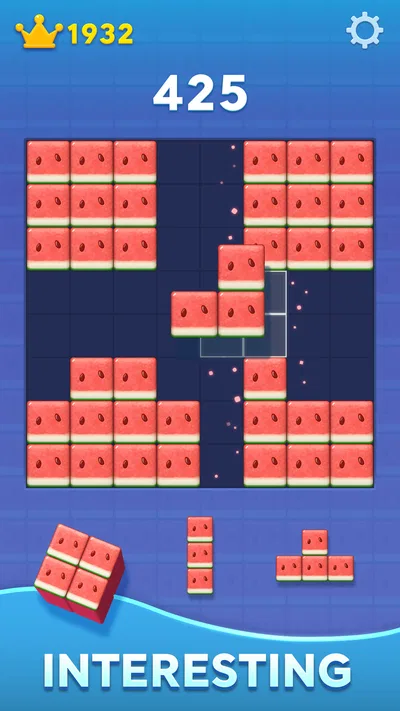
 Analysis byAppsAward
Our review of Block Blast!
I find Block Blast! most appealing as a quick, low-pressure puzzle for the small gaps in a day. Its block-placement format is easy to understand, but the choices still ask me to look ahead rather than simply drop each piece wherever it fits. That balance makes it relaxing without making it entirely thoughtless. It is a strong pick if you want a puzzle you can dip into, though it is less suited to anyone looking for a story, a social competition, or a deep campaign.
Why the simple board keeps me thinking
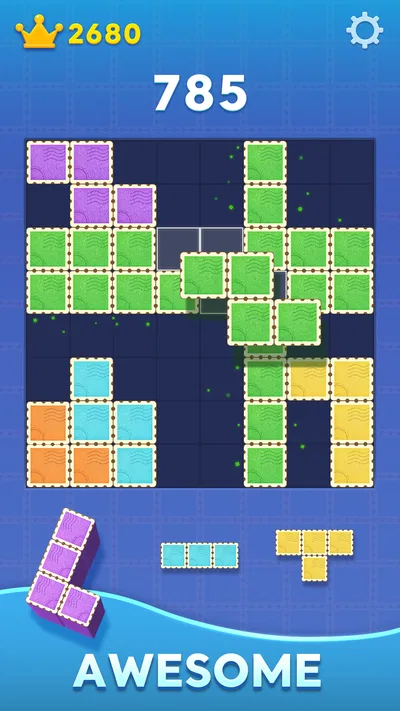
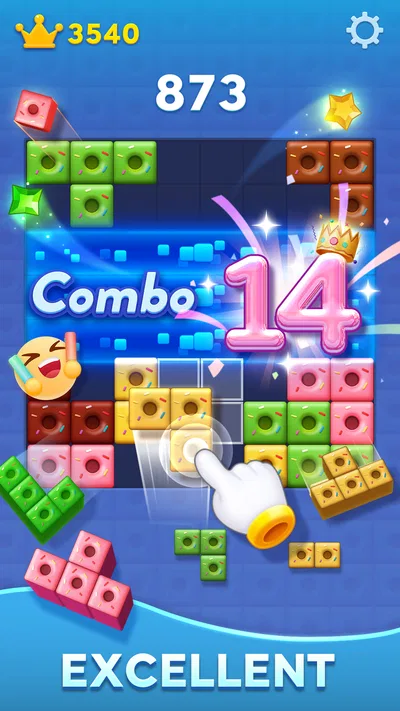
At its heart, this is a block puzzle: I place the pieces I’m given on a board and try to clear space by completing lines. There is no elaborate setup to learn before I can begin, which is a real advantage when I only have a minute or two. The challenge comes from deciding where a piece belongs now while leaving workable space for the next ones.
That small planning demand is what gives the game its staying power for me. A move can look tidy in isolation but leave awkward gaps that are difficult to use later. I’ve found it helps to treat open space as a resource, not just as empty squares. Before placing a piece, I scan for narrow pockets and consider whether the placement will make those pockets harder to fill.
It also rewards flexibility. When I get focused on preserving one perfect area, I can miss a practical placement elsewhere that keeps the board open. I do better when I aim to maintain several usable shapes rather than build one ideal arrangement. That is a modest but useful shift in approach, especially once the board starts to feel crowded.
The appeal is not that every turn is surprising. It is that familiar-looking pieces can create different problems depending on the remaining space. I can play casually and accept a short run, or slow down and think through each placement. That makes it easy to fit around a commute, a waiting room, or a short break without needing to remember a plot or manage a long session.
A practical puzzle for short breaks
One everyday use case is a brief pause between tasks. I can open the game, make a few moves, and put it aside without having to reconstruct a complicated objective later. The puzzle gives me something to focus on, but the basic rules are simple enough that restarting after a distraction does not feel like work.
For the same reason, it can suit people who prefer a quiet solo activity. It does not ask me to coordinate with a team or keep up with other players. The trade-off is that someone who gets motivation from a campaign, character progression, or head-to-head matches may find this loop too self-contained. The satisfaction comes from handling the board in front of me, not from a larger narrative payoff.
The store summary describes offline play, which is useful when a connection is unavailable. I would treat that as a practical advantage for travel or places with unreliable service, rather than assume every part of the experience works identically offline. If uninterrupted play matters, it is sensible to check how the game behaves on your device before relying on it for a long trip.
Where patience matters more than speed
Although the game is easy to pick up, I do not think playing quickly is always the best approach. A placement that clears a line can feel immediately rewarding, but preserving room for an awkward piece may be more valuable than taking the obvious clear. I try to ask two questions before committing: does this move leave enough flexible space, and am I making a corner or gap that will be hard to use?
Another useful habit is to avoid filling the board evenly just because the open spaces look neat. A board with one broad region and a few manageable edges may offer more options than several disconnected pockets. That is not a guaranteed route to a better run; the pieces still shape what is possible. But it helps me make decisions based on future usability instead of visual tidiness.
This is also where the game’s limitations become clear. The core action remains the core action. If I want new rules, a changing environment, or a sequence of handcrafted puzzles with distinct goals, this is not the kind of puzzle experience I would choose first. Repetition is part of its convenience, but it can also make longer sessions feel samey.
How it compares with other puzzle choices
Compared with word puzzles, Block Blast! asks me to think spatially rather than recall vocabulary. Compared with match-style puzzles, the emphasis is less on spotting a matching pattern and more on fitting shapes into a board without boxing myself in. Those differences make it a good alternative when I want a visual logic challenge, though it will not replace a more varied puzzle collection for someone who enjoys switching between mechanics.
It also feels different from games built around a long sequence of levels. Here, the pleasure is in making the current board work, not in advancing through a detailed journey. I would choose it over a more involved puzzle game when I want a low-commitment session; I would choose the other game when I want new objectives, a stronger sense of progression, or more variety from one play to the next.
That distinction matters for expectations. The game can be absorbing without being narratively rich, and accessible without being effortless. If you enjoy finding a better placement after noticing a mistake, the straightforward format has room for small strategic improvements. If you need each session to introduce something new, the same clean loop may wear thin.
Who I think will enjoy it
I would recommend it to casual puzzle fans, people who like spatial reasoning, and anyone who wants something uncomplicated to open during a spare moment. It is especially suitable if you prefer to play alone and value a game that does not demand a long block of attention. The official age rating is Everyone, which fits the accessible premise, though individual preferences about screen time and puzzle repetition still matter.
I would be more cautious about recommending it to players who want a substantial story, detailed instruction, or a broad range of puzzle types in one package. It is also not the best match if you dislike a score- or survival-style loop and prefer puzzles with a clearly defined finish to each stage. The right question is not whether the rules are complicated; they are not. It is whether repeating a focused placement challenge feels satisfying to you.
New players can make the early experience less frustrating by leaving room for larger shapes instead of filling every available gap as soon as possible. When the board begins to tighten, I find it more useful to look for the placement that preserves options than to chase an immediate line clear. That approach will not rescue every board, but it makes the strategic part more legible and helps explain why a seemingly safe move can cause trouble later.
Scale, cost, and the trade-offs to expect
HungryStudio develops the game, which has reached over a billion installs and an average rating of 4.8 from around 5.8 million ratings. That scale suggests a broad audience, but it does not tell me whether an individual player will enjoy the repeated format; the best test is whether spatial placement puzzles hold your attention after the novelty of the first few rounds.
The game is free to download, with in-app purchases listed from $4.99 to $49.99 per item. I would keep that in mind if you prefer games with no optional spending at all. The presence of purchases is a consideration, not a reason by itself to dismiss the puzzle, but it is worth checking the purchase prompts and your device’s spending controls if you share a phone or tablet with a child.
It was released on September 23, 2022, and the current version is 10.8.9, with Android support beginning at version 7.1. Those details make it easier to judge whether it is likely to suit an older device, but compatibility can still depend on the device and its software. The practical point is to check the app store on the device you intend to use rather than assume every older phone will run it smoothly.
My verdict after weighing the strengths and limits
For me, Block Blast! succeeds because it turns a simple placement rule into a repeatable little exercise in planning. Its best quality is also its main limitation: the same focused loop that makes it easy to play in short bursts can feel repetitive when I want novelty or a larger sense of progress. I see it as a handy puzzle companion, not an all-purpose game.
If you like spatial challenges, want a solo game that is easy to pick up, and are happy to improve through better decisions rather than story progression, I think it is worth trying. If your ideal puzzle game has varied modes, a rich campaign, or a definite sequence of handcrafted goals, another option will probably serve you better. My recommendation is specific: choose this one for quick, thoughtful board play, and skip it if repetition is the first thing that makes you lose interest.
Pros
- Quick rounds make it easy to play in short breaks.
- Simple controls are easy for newcomers to learn.
- No internet connection is needed for basic play.
- A calming pace avoids the pressure of a countdown.
- The familiar block puzzle format feels immediately approachable.
Cons
- Random block shapes can leave you with awkward gaps.
- One poorly placed piece can end a promising run.
- Ads may interrupt play between rounds.
- The core gameplay can feel repetitive over time.
- There is little variety beyond the main puzzle mode.
Best Puzzle Game 2026
Our verdict
Enjoy relaxing puzzle games and offline games anytime, no WiFi needed!
Frequently Asked Questions
What is Block Blast! and how do you play it?
Block Blast! is a block-placement puzzle game built around filling rows and columns on a grid. You drag or tap pieces from the available selection and place them where they fit; completed lines disappear and free up space. The main challenge is planning ahead, since the pieces are generally fixed in shape and leaving awkward gaps can make it harder to continue.
Is Block Blast! free to download and play?
Block Blast! is generally offered as a free-to-download game, so you can try its core puzzle gameplay without paying upfront. The version available to you may include advertisements or optional in-app purchases, and store listings can change over time or differ by region. Check the Google Play or Apple App Store page before downloading for current pricing, purchases, and other conditions.
Can I play Block Blast! without an internet connection?
The core block puzzle can often be played without a continuous internet connection, which makes Block Blast! convenient for short sessions while travelling or away from Wi-Fi. However, features such as ads, rewards, leaderboards, events, or syncing may rely on connectivity and may not work offline. Availability can vary by app version, so check how the game behaves on your device.
Does Block Blast! have an ending or different game modes?
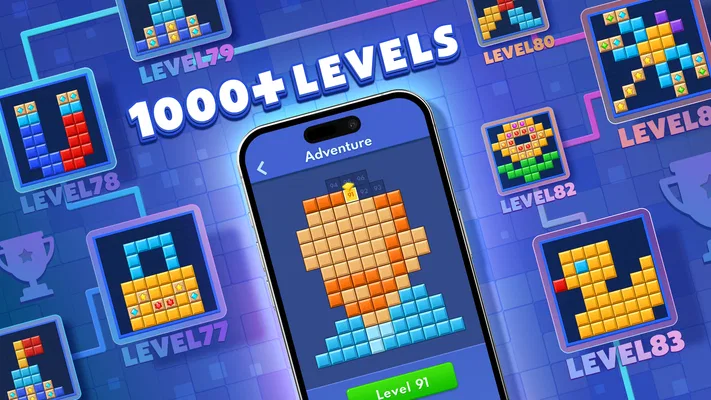
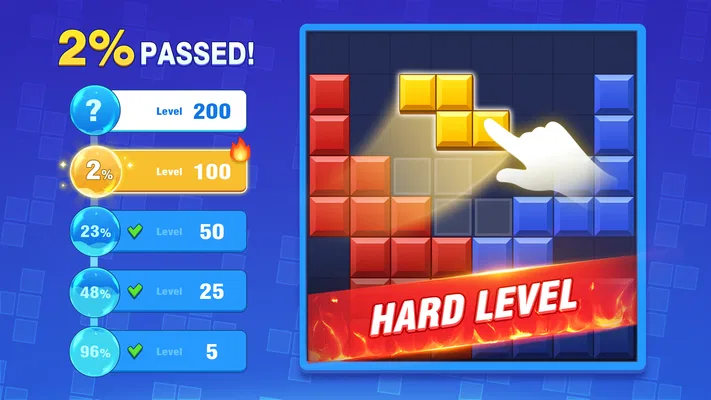
Block Blast! is primarily designed for repeatable puzzle sessions rather than a story campaign with a final level. Depending on the current version, you may find a classic mode focused on keeping the board clear, along with additional challenges or event-style modes. Modes and rules can change through updates, so review the in-game menu and store description for what is currently available.
Is Block Blast! suitable for children, and what should parents check?
The basic gameplay is simple to understand and does not depend on complex reading, but suitability also depends on a child’s age and your family’s preferences. Before installing, review the app-store age rating, privacy details, advertising information, and any in-app purchase disclosures. If a child will play, consider using device-level purchase controls and checking whether ads or online features are appropriate.