
- Award score
- 4.8Rating
- 1,000,000,000+installs
- Free
App information
- Version
- 56.32.2
- Updated
- Requires
- 6.0
- Price
- Free, in-app purchases
- Developer
- Miniclip.com
- Content rating
- Everyone
Screenshots
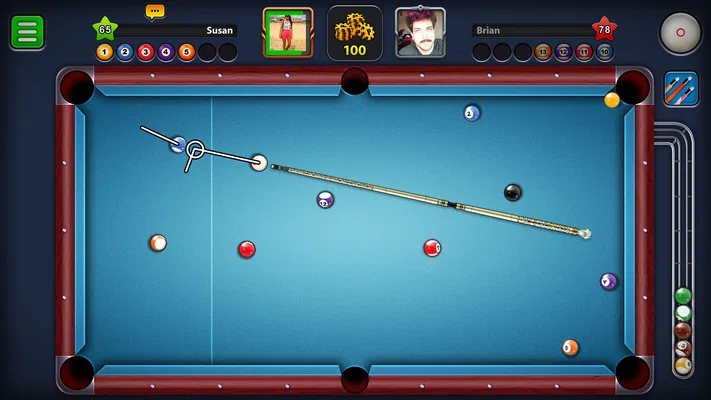
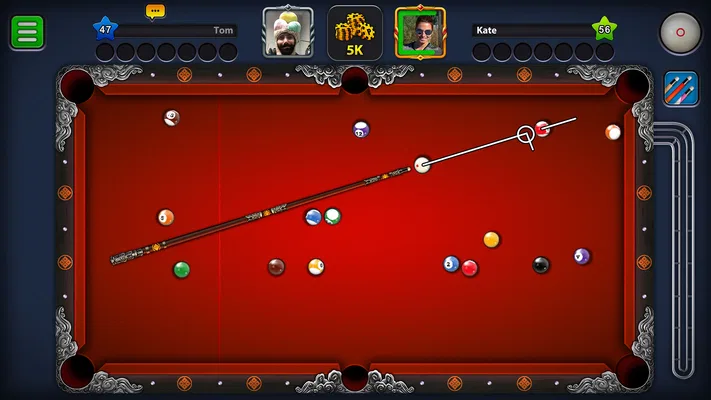
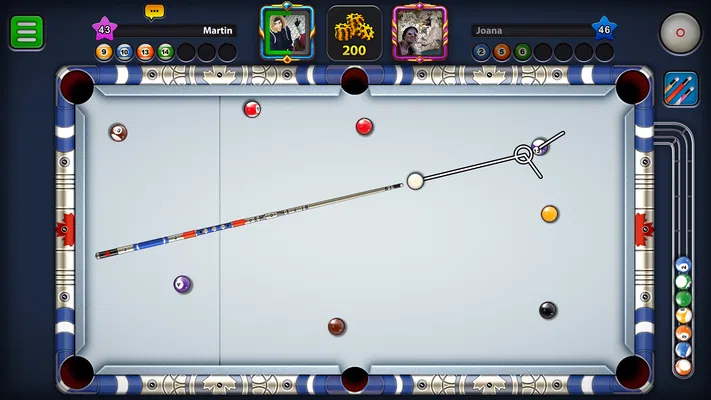
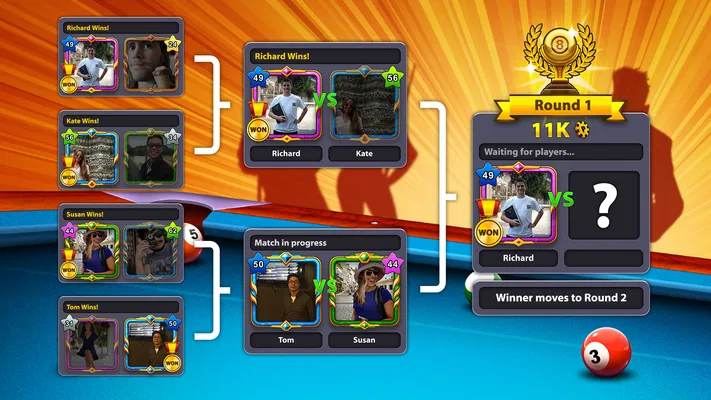


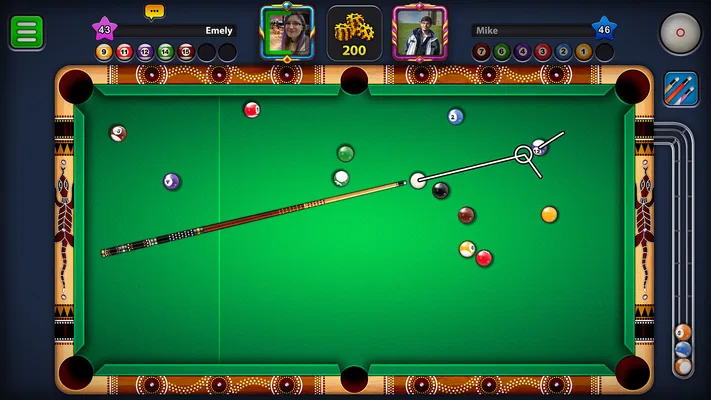
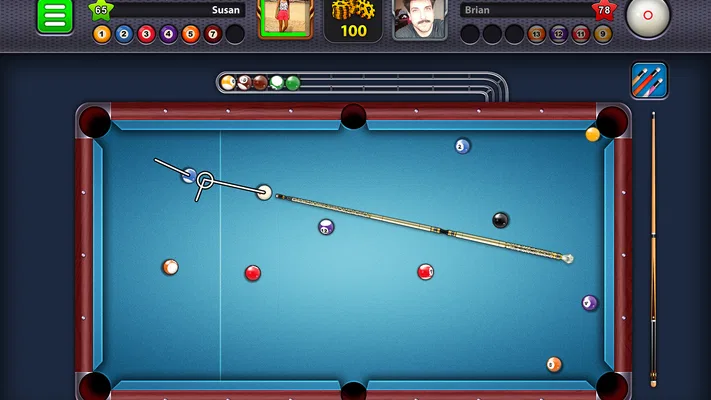
 Analysis byAppsAward
Our review of 8 Ball Pool
I keep coming back to 8 Ball Pool because it turns a familiar game into a quick, focused contest that fits neatly into spare moments. A match gives me a clear goal—make the shots, manage the cue ball, and beat the other player—without asking me to learn a complicated sports simulation. It is a free sports game from Miniclip.com, built around online pool and competition with friends. Its appeal is straightforward, but the small decisions between shots are what make a close game worth playing.
What the free entry gets you
You can start playing without paying to download the game. That makes it easy to try a few matches and decide whether the format suits you before spending anything. The game is rated for Everyone, so it is broadly accessible, though online competition still means your experience depends partly on the people you encounter and the way you choose to play.
There are in-app purchases, with listed item prices ranging from ten cents to just under three hundred dollars. That range is worth noticing, but it does not mean you need to buy anything to find out whether you enjoy pool on a touchscreen. I’d treat optional spending as a separate decision: first see whether the free experience gives you the kind of matches you want, and only then consider whether a purchase would add value for you.
The distinction matters because a free entry point and paid value are not the same thing. I can recommend trying the game without committing money; I can’t recommend a purchase simply because it is available. Before buying an item, check what it offers in the game and whether that benefit matters to the way you play. A large upper price point is a reason to be deliberate, not a reason to assume that spending is required.
A familiar game shaped for a phone
The basic pleasure of pool is already easy to understand: choose a shot, judge the angle, and try to leave the next one in a good position. On a phone, the challenge is translating that intention into a controlled cue action. Touch input is convenient, but it is not identical to leaning over a physical table. A shot that looks obvious in person can demand more care when the screen is your only view of the layout.
That difference creates a useful learning curve. I would not expect every early shot to land exactly where I pictured it. Instead, I’d pay attention to how the cue ball moves after contact and use each turn to improve my judgement. Pool rewards planning beyond the ball I’m aiming at: a successful pot can still leave an awkward next shot, while a more cautious choice may keep the table manageable.
For someone new to digital pool, my practical tip is to resist treating every turn as a chance for a dramatic pot. First look for a shot that is both achievable and helpful afterward. That habit is more valuable than trying to copy the kind of risky, spectacular play that can look tempting when a match is moving quickly.
Why the multiplayer format has staying power
The central draw is the opponent, not a long solo campaign. Playing another person gives even an ordinary layout a little tension: you are not only deciding what to do with the table, but also trying to make the most of your turn before control passes back. That makes a short match feel more purposeful than practising shots alone, while keeping the rules and objective familiar.
Playing with friends is especially appealing when both people want a casual contest rather than a lengthy session. It gives a familiar game a social purpose: a quick match can fill a pause in the day, and the outcome gives you something concrete to talk about afterward. I’d choose this over a more involved sports game when I want direct competition without needing to commit to a full-length event.
The trade-off is that online play is less predictable than practising by yourself. A rival may play differently from the people you know, and that can make the experience feel competitive when you only wanted an easy diversion. If you prefer complete control over pace and opponents, a solo pool game or offline practice option in the broader category may be a better fit. The main appeal here is the possibility of a real contest, and that naturally brings less predictability.
Small choices that improve a match
One non-obvious habit that helps is to think in sequences rather than single shots. Before taking a turn, I’d ask not just, “Can I pot this ball?” but, “Where will the cue ball finish, and what will I be able to do next?” That question turns the game from a string of guesses into a simple plan. It also gives you a way to learn from a miss: the problem may have been the position you left yourself in, not just the aim.
A second useful approach is to keep your risk in proportion to the table. If a difficult shot has little chance of improving your position, taking it just because it looks satisfying can hand the opponent an easier opportunity. When I’m behind or facing a poor layout, I’d rather look for a controlled option than assume that attacking is always the best response. The exact right choice depends on the position, but deliberate restraint is part of good pool.
Third, don’t judge your skill only by wins. A match can turn on a single missed pot, and the result does not always tell you whether your decisions are improving. I’d pay attention to whether I’m choosing better target balls, planning the cue ball’s next position, and avoiding rushed shots. Those are more actionable signs of progress than one result, especially when you are still getting comfortable with touch controls.
There is also a useful difference between a social session and a practice-minded one. With a friend, I might take a playful chance and keep the mood light. When I want to improve, I’d slow down, examine the full table, and make a point of learning from positions that repeatedly cause trouble. The same game can serve both purposes, but mixing them without noticing can be frustrating: trying to train carefully while treating every match as a race to win is not always a pleasant combination.
Where the friction shows
Touchscreen pool is only as satisfying as your comfort with aiming on a small display. If you dislike precision gestures or find it hard to judge angles from a top-down view, the controls may feel less natural than a real cue and table. I would give myself time to adjust before deciding the game is unfair, but I also wouldn’t insist that everyone should enjoy this kind of input. Players who want tactile, physical control may prefer an actual table or a different style of game.
Online competition can also change the mood of what seems like a simple pastime. A relaxed match with a friend feels different from a series of close contests against unfamiliar players. If you are looking for a quiet, fully predictable experience, that competitive element may be more of a drawback than a benefit. I’d approach it as a game for short, focused bouts rather than an automatic way to unwind in every situation.
Spending is another point to handle carefully. The free download makes trying the game accessible, but the presence of purchases means it is sensible to review any item before confirming it. I would not spend just to feel that I must keep pace with other players, nor assume that a purchase is the best way to improve. Better shot selection and cue-ball planning are the first things I’d work on.
Who is most likely to enjoy it
I’d recommend giving it a try if you already enjoy pool, want quick online competition, or like games that reward patience and judgement more than complicated controls. It is also a natural fit for friends who want a simple head-to-head activity that can be picked up between other plans. Its broad age rating and free starting point make it easy to consider, while the multiplayer focus gives returning players a reason to face new situations.
It is less suited to someone who wants a rich single-player sports career, a slow practice environment with no competitive pressure, or a faithful physical-table experience. In those cases, a dedicated offline pool game, a different sports title, or real-world play may better match what you want. The strongest reason to choose this one is the blend of familiar pool and online opponents—not a promise that it replaces every other way to play.
Its longevity is reflected in its reach: it has been available since January 23, 2013, and has passed one billion installs. It holds a 4.8 average from around 32 million ratings, with about 987,000 written reviews. Those figures suggest that the format has found a very large audience, but they cannot tell you whether touchscreen aiming or online matches will suit your own habits. I’d use them as context, then decide by trying a few games.
My verdict: try it before you spend
8 Ball Pool is an easy recommendation for anyone who wants recognizable pool with the added pressure and variety of competing online. I like that a match can be brief while still rewarding careful choices, and that playing with a friend gives the familiar table a personal edge. The current version is 56.32.2, and the game supports Android 6.0 or later, which helps readers check basic device compatibility before installing.
The best way to judge its value is to start free, learn how the touchscreen feels, and see whether the competitive loop keeps you interested. If it does, you can decide for yourself whether any in-app purchase is worth the cost; there is no reason to make that decision before you know what you enjoy. If the controls or online pressure get in the way, skipping it is reasonable. For a casual pool fan who likes short contests and is happy to improve through better decisions, it is well worth a try.
Pros
- Quick matches make it easy to play during short breaks.
- Practice modes help beginners learn the basics.
- Club features add a social layer to matches.
- Cue upgrades offer useful customization options.
- Cross-platform play can connect players on different devices.
Cons
- Progression relies heavily on coins and other in-game currencies.
- High-stakes matches can quickly drain your coin balance.
- Ads and promotions may interrupt the overall experience.
- Matchmaking can pair players with much more experience.
- Some cues require repeated play or in-app purchases to unlock.
Best Sports Game 2026
Our verdict
Play online multiplayer or PvP Pool games and compete with your friends!
Frequently Asked Questions
What is 8 Ball Pool, and how do you play it?
8 Ball Pool is a mobile billiards game in which you compete against another player to pocket the solid or striped balls, then sink the black 8 ball to win. Matches use familiar pool rules, while cues, aiming guides, and optional power-ups add a mobile-game layer. The game offers quick online matches and other pool modes, though the exact rules can vary by mode.
Can I play 8 Ball Pool with friends or without an internet connection?
You can challenge friends through the game’s social features, provided you can connect to the service and both players are available. 8 Ball Pool is primarily designed for online play, so an internet connection is generally needed for matches, account features, and progression. Availability of practice or other offline options may vary by version; check the current app listing and in-game menus if offline play is important to you.
Is 8 Ball Pool free to download, and does it include in-app purchases?
8 Ball Pool is generally free to download, but it includes in-app purchases. The game may offer coins, cash, cues, or other items for purchase, and some optional purchases can make progression or access to certain content feel faster. You can usually play without paying, but check the store listing for current pricing and your device’s purchase controls, especially if children use the device.
Does 8 Ball Pool require an account, and can I save my progress?
You can typically begin playing without creating a separate account, but linking the game to a supported sign-in option can help preserve progress and make it easier to access your profile on another device. The available sign-in methods may depend on your platform and the current version. Before switching devices or reinstalling, confirm that your account is linked and review the game’s support guidance to reduce the risk of losing progress.
Is 8 Ball Pool suitable for children, and are there safety considerations?
The game’s pool matches are straightforward, but online competition and social features may expose players to interactions with other users. Age ratings, chat options, privacy settings, and parental controls can differ by platform and region, so review the current store rating and settings before a child plays. Purchases are also available, making device-level purchase restrictions a sensible precaution for younger players.