
- Award score
- 4.7Rating
- 100,000+installs
- Free
App information
- Version
- 1.0.52
- Updated
- Requires
- 7.0
- Price
- Free, in-app purchases
- Developer
- FunCraft Games
- Content rating
- Everyone
Screenshots
 Analysis byAppsAward
Our review of 17-0 Football Manager
My first impression of 17-0 Football Manager is that it aims for the appeal of building a winning football team without asking me to control every moment on the field. The idea is to shape a roster through drafting, then see how that squad fares against other players in online leagues. That makes it a sports game for people who enjoy planning and competition as much as the result itself. I’d recommend it to a friend who likes making decisions between matches, but not to someone looking for a hands-on football simulation.
A football world built around the draft
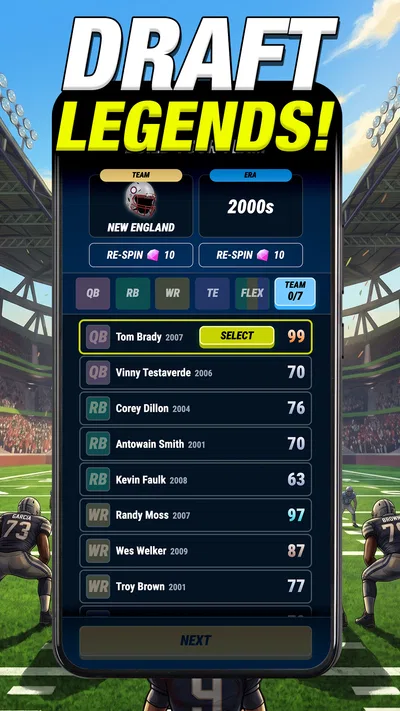
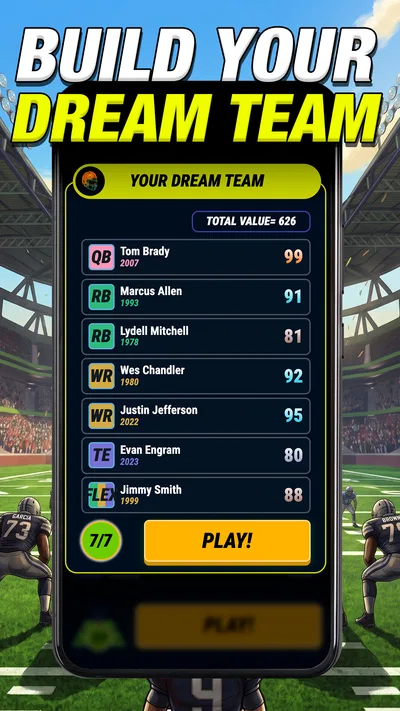
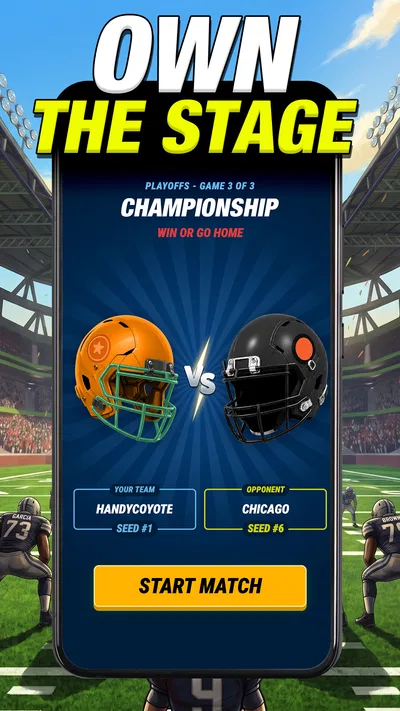
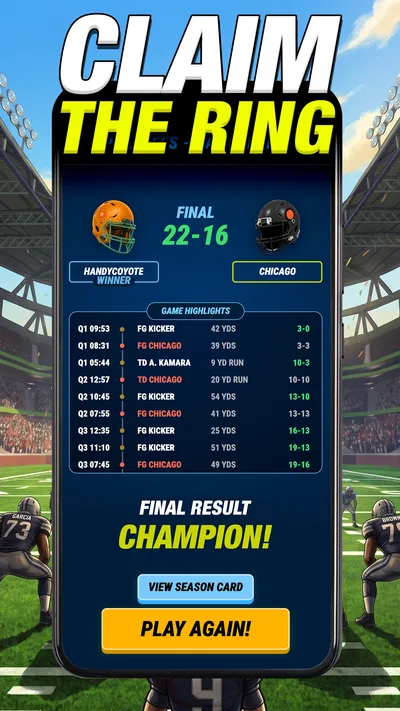
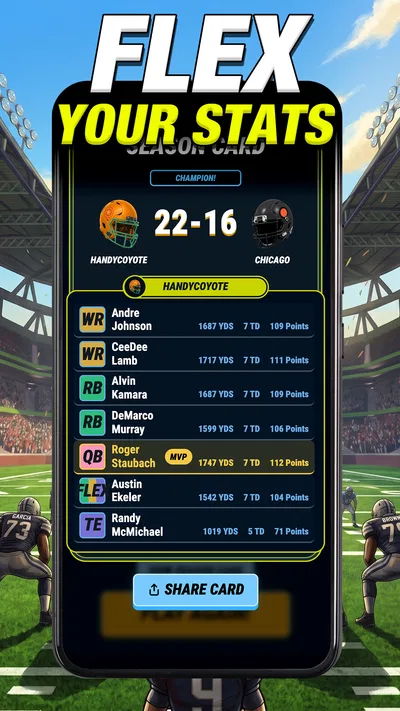
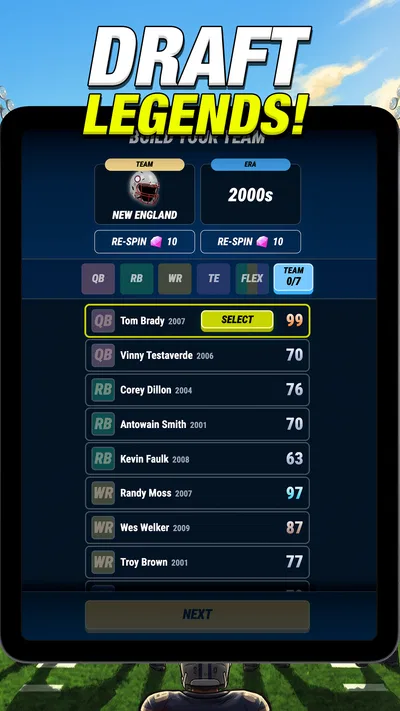
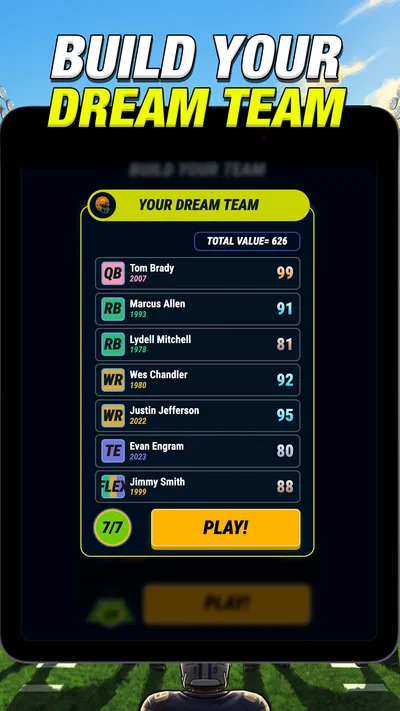
The game’s setting is football, but its point of view is that of a manager assembling a team rather than a player directing every pass. Drafting football legends gives each decision a sense of selection and trade-off: a roster is not just a collection of names, but the foundation for whatever success follows. The championship goal gives those choices a clear destination, while online leagues provide a competitive context beyond playing in isolation.
That framing is a useful distinction from familiar alternatives in the sports category. A direct-control football game puts the emphasis on timing, movement, and reacting during play. A management game like this instead asks whether you enjoy thinking about the team you have put together and testing it against other managers. If the satisfaction for you is spotting a promising combination and seeing it compete, the format has a natural draw. If you need to make every on-field decision yourself, the manager perspective may feel distant.
Visually, the concept suggests a focused sports atmosphere rather than a sprawling world to explore. I find that fitting: the central fantasy is building a team and pursuing a record, not inhabiting a detailed stadium or following a long story. The legends-and-championship framing gives the game an aspirational tone, while the online league structure keeps the competition relevant to other players. I would approach it as a compact team-building contest, not as a substitute for watching or controlling a full football match.
One practical point is that the draft is likely to be where a new player’s attention is most valuable. Rather than rushing through selections just to get to the competition, I’d pause to consider what kind of roster I am building and whether each choice supports that plan. The useful question is not simply “Who looks strongest?” but “What does this player add to the team I’m trying to make?” That habit makes a drafting game feel more deliberate, even before the results show whether the choices work.
How the presentation supports the competition
The game’s identity is clearest in the contrast between individual legends and a team-level goal. A draft can make star names feel exciting, but winning a championship is ultimately a collective task. That creates a small but meaningful tension: picking the most appealing option is not always the same as making the most coherent team. I like that kind of decision because it gives the manager role a reason to exist beyond collecting famous players.
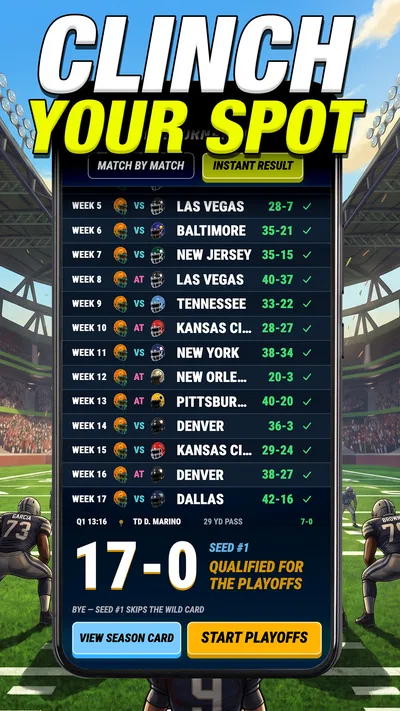
The title’s perfect-season ambition also shapes expectations. A flawless record is an enticing target, but I would treat it as a long-term challenge rather than assume that every league run will be straightforward. Online competition means results depend on how a roster performs against other players, so a strong-looking lineup is not a guarantee. For me, that uncertainty is part of the appeal, provided the game gives me enough reason to learn from a loss and make a better plan next time.
There is a trade-off in keeping the focus narrow. Players who want deep character stories, a richly described football universe, or a detailed recreation of match tactics may find the premise too streamlined. The game’s appeal rests on drafting, league competition, and chasing a championship. That can make each decision easier to understand, but it also means the experience will depend heavily on whether those particular loops stay engaging for you.
Sound and the pace of a manager’s game
In a management-focused sports game, sound matters less as a spectacle than as a way to give decisions and results some weight. I would judge the audio here by whether it supports the shift between selecting a roster and following league competition, rather than expecting the noise and immediacy of a live football broadcast. The overall mood should leave room to think: if I am weighing a draft choice, constant sensory intensity would be more distracting than helpful.
The pacing is likely to suit short sessions better than a game that demands sustained real-time control. A manager can check a team, make choices, and follow competitive progress without needing the same uninterrupted attention as a full match simulation. That makes it a plausible fit for a commute break or a quiet moment at home. I’d still go in expecting to engage with the league over time; online competition is not the same as a one-and-done puzzle that resolves in a few minutes.
For an everyday example, imagine having a short break after lunch. I could open the game, review my current team-building priorities, make a considered selection when the opportunity comes, then leave the deeper competitive session for later. The main benefit of that approach is avoiding rushed decisions just because I have only a few minutes. In a draft game, patience can be more valuable than tapping quickly through the available choices.
I would also separate the game’s competitive rhythm from the way I spend money in it. It is free to start, with in-app purchases ranging from $0.99 to $49.99 per item. That is a wide enough span that I’d check the purchase screen carefully before confirming anything, especially if I only want to try the core experience. A sensible first step is to play without buying, decide whether the draft-and-league loop holds my attention, and only then consider whether an optional purchase is worthwhile for me.
Where the mechanics fit—and where they may not
The central mechanical fit is clear: drafting gives the player agency before competition, and online leagues put the resulting team to a test. This structure tends to reward people who enjoy comparing options, accepting that a roster has limits, and learning from outcomes. A useful approach is to make a simple plan before each draft decision: identify what the team needs most, then judge each available legend against that need. It is a more reliable way to build a coherent squad than choosing solely on name recognition.
There is also a reason not to overreact to an early result. A team can look promising and still run into a difficult stretch in competition; one outcome is not necessarily proof that the whole approach is wrong. I’d use results as a prompt to reconsider the roster’s balance and my priorities, rather than abandoning a plan after a single disappointment. That kind of measured adjustment is one of the more satisfying habits a management game can encourage.
Because the competition is online, the appeal will vary with how much you enjoy playing against other people’s choices. Someone who prefers a predictable solo campaign may find that less comfortable than a clearly scripted progression. Conversely, players who like testing their judgment against real opponents may find the league context more compelling than a series of disconnected challenges. The right choice depends on whether uncertainty makes the game feel alive or merely frustrating.
I would skip this one if my main goal were direct control of footballers, realistic match movement, or a detailed tactical sandbox. Those are different pleasures, and a manager-centered draft game should not be judged as though it promised them. I would also hesitate if I dislike competitive uncertainty or prefer sports games that can be enjoyed entirely without engagement with online leagues. For those players, a conventional single-player football experience may be a better match.
On the other hand, it is a strong concept for someone who enjoys the decisions around the game: who belongs on a roster, how to make a team feel purposeful, and whether that plan can hold up in a league. The fact that the competition revolves around drafted legends gives those decisions a specific flavor rather than making this feel like a generic match simulator. My advice is to approach it as a strategy-minded sports game, and to give the team-building loop time to prove whether it suits you.
Who should give it a try
17-0 Football Manager is a free sports game from FunCraft Games, rated for Everyone. It has a 4.7 average from around 4,600 ratings, with more than 100,000 installs and 518 written reviews. Those figures suggest that plenty of players have tried it, though they cannot tell me whether its particular style will suit an individual. The game is at version 1.0.52 and requires Android 7.0 or later, so it is worth checking device compatibility before installing.
I’d put it on the shortlist for football fans who enjoy roster-building, competitive leagues, and the idea of pursuing an exceptional season through planning. It is less suitable for someone who wants an action-first game, a long narrative, or a guaranteed solo progression. The age rating of Everyone makes it broadly accessible, while the optional purchases are worth keeping in mind for anyone who prefers a strictly no-spend experience.
My overall view is that the game’s appeal depends on a clean, specific promise: make a team through the draft and see how it competes. The sports setting gives that process immediate meaning, and the championship target provides a reason to keep refining a roster. Its limits are part of the same design choice: this is not trying to be every kind of football game at once. I’d recommend trying it if the manager’s seat sounds more appealing than the pitch, and moving on if what you really want is to control the action yourself.
Pros
- Quick matches make it easy to play in short sessions
- Simple controls are approachable for new players
- Team selection adds a useful layer of strategy
- The football manager theme gives matches clear context
- A lightweight design suits casual mobile play
Cons
- Limited depth may not satisfy experienced management fans
- Progress can feel repetitive over time
- Small screens can make some details harder to see
- Match outcomes may depend heavily on player ratings
- Some features may require an internet connection
Best Sports Game 2026
Our verdict
Draft football legends, compete in online leagues, and win the championship!
Frequently Asked Questions
What is 17-0 Football Manager?
17-0 Football Manager is a football management game focused on building and directing a club rather than controlling every player during a match. You typically make decisions about your squad, tactics, training, and transfers, then follow the results of your choices on the pitch. The exact features and available competitions can depend on the game version, so check its store listing before downloading.
Is 17-0 Football Manager free to download?
The price and payment options may vary by platform, region, and version. Check the Google Play Store or Apple App Store listing to see whether 17-0 Football Manager is free, paid, or includes optional in-app purchases. Also review the listing for any subscription details or advertisements. Store information is the most reliable source for current costs, since availability and monetization can change.
Can I play 17-0 Football Manager offline?
Offline support can depend on the version and on which features you want to use. Some management games let you continue a saved career without an internet connection, while online services, cloud saves, updates, or certain competitions may require one. Check the app description and recent player feedback for confirmation, and consider testing connectivity requirements before beginning a long career save.
Does 17-0 Football Manager use real teams and players?
Licensing and database content can differ between editions, and a football manager game may use real-world names, fictional data, or a mixture of both. Before downloading, review the screenshots, description, and any notes about clubs, leagues, and player rosters. If authentic teams or current squads matter to you, check recent reviews as well, since databases may not reflect the latest transfers.
What should I check before downloading 17-0 Football Manager?
Confirm that your Android or iOS device meets the app’s current compatibility requirements, and check the download size, supported operating-system version, and available storage. It is also worth reviewing the latest update date, privacy information, permissions, and any in-app purchase details. These checks help you judge whether the game will run on your device and whether its features suit your preferences.