- Award score
- 4.7Rating
- 500,000,000+installs
- Free
App information
- Version
- 39.1.2
- Updated
- Requires
- Varies with device
- Price
- Free, in-app purchases
- Developer
- Playrix
- Content rating
- Everyone
Screenshots
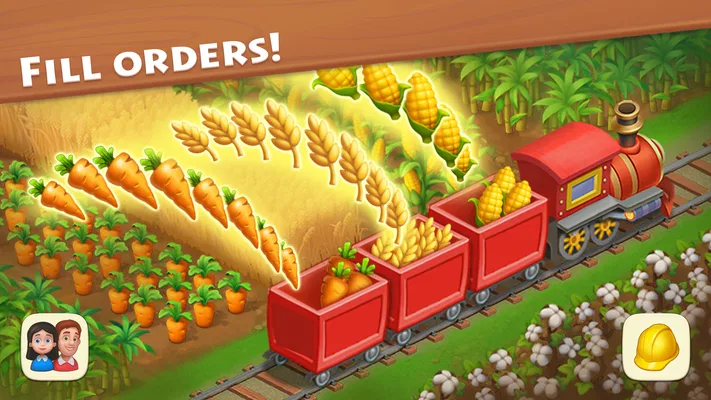
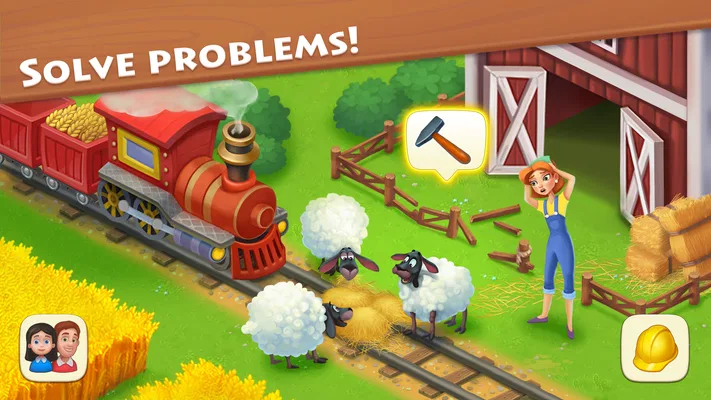
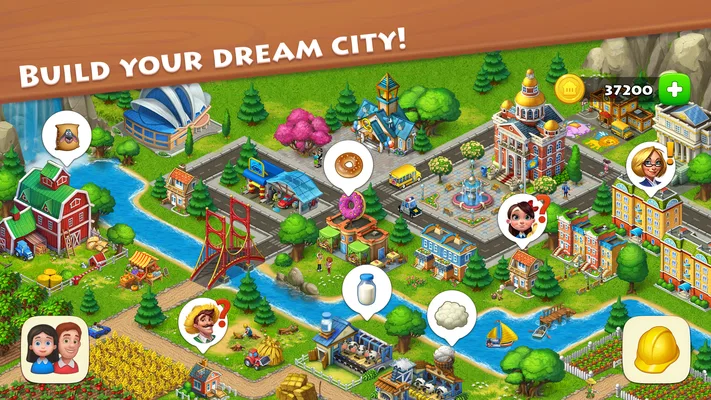
 Analysis byAppsAward
Our review of Township
I found that Township is easiest to enjoy when I treat it as two connected pastimes: a match-3 puzzle for short bursts and a town-and-farm project that grows gradually between them. My first satisfying moment was not building a huge city; it was finishing a puzzle, using the reward to move my town forward, and seeing the place feel a little more like my own. That small loop is the game’s real appeal.
What to expect from Township
Playrix’s casual game mixes puzzle levels with the steady work of running a farm and developing a town. I spend one moment lining up matching pieces on a board, then switch to the broader goal of making progress in the settlement. Neither side feels entirely separate: puzzle wins help sustain the building-and-farming rhythm, while the town gives those individual wins a visible purpose.
The tone is bright and family-friendly, and the age rating is Everyone. That makes it approachable for players who want something gentler than a competitive game, though the gradual progression still asks for patience. I would describe it as a good fit for someone who likes both quick puzzles and a project that keeps unfolding over time. If you only want a self-contained match-3 game with no town-building layer, this is not the most direct option.
Articles related to Township
It has been available since November 8, 2013, and its current version is 39.1.2. The game is free to download, with optional in-app purchases priced from $0.99 to $149.99 per item. I would go in expecting the free experience to be the starting point and the purchases to be optional spending choices, not a reason to buy anything before I understand how the game fits my routine.
Its scale is striking: Township has over 500 million installs, a 4.7 average from around 13 million ratings, and roughly 375,000 written reviews. Those numbers suggest a very established game, but they are not a promise that every player will enjoy its pace. In my view, the key question is whether you like alternating between immediate puzzle decisions and slower town progress.
Starting without feeling overwhelmed
For a first-time player, I recommend following the early in-game guidance rather than trying to plan a perfect town from the first minute. The game presents several kinds of activity, and it is tempting to treat every visible goal as urgent. I found it more comfortable to focus on the next clearly explained task, learn what it unlocks, and let the larger picture become familiar through play.
My practical starting routine is simple: check the current town task, play a level when progress calls for it, then use the resulting opportunity to improve the settlement. This keeps the puzzle board from feeling like an unrelated diversion and stops the town side from becoming a list of chores. It also gives a new player a reliable answer to the common question, “What should I do next?”—follow one active goal rather than trying to advance everything at once.
The first useful habit is to pause briefly before making moves on a match-3 board. I look for a match that contributes to the board’s objective, not merely one that looks satisfying in isolation. A move that creates a better position for a later match can be more valuable than clearing pieces without a plan. That small adjustment makes the puzzle side feel less like tapping quickly and more like solving the level in front of me.
Your first meaningful success
I would define an early success as completing a level and seeing that result contribute to the town’s next step. It is a modest milestone, but it demonstrates the game’s central connection: puzzles are not just a separate arcade mode, and the farm-and-town layer is not only decoration. Each side gives the other context, which helps the opening hours feel purposeful.
When a level proves awkward, I try not to repeat the same approach immediately. I inspect the board again, identify which objective is actually holding me back, and choose a move that addresses it. This is more useful than chasing the largest-looking match every turn. It also helps me recognize when I am stuck because I have overlooked the level’s goal rather than because I need to spend money.
A concrete everyday use case is a short break between errands or during a quiet part of the evening. I can play a puzzle or two, make a small town improvement, and leave without needing to commit to a long session. The larger project gives me a reason to return, but the bite-sized puzzle decisions make it possible to enjoy the game in spare moments. Players who prefer long, uninterrupted sessions may still enjoy it, but the format particularly suits people who like brief check-ins.
One useful trade-off is that the two halves can make a setback feel more noticeable. If I am eager to develop the town but a puzzle level slows me down, the progress loop can feel less immediate than a pure building game. On the other hand, if I tire of puzzles, the town gives those levels a broader purpose. Whether the blend feels motivating or interruptive depends on which side I value more that day.
Common points of confusion
The main source of confusion for a newcomer is assuming that every activity deserves equal attention. I do better when I distinguish between the immediate objective and longer-term ambitions. The current task tells me what matters now; the town’s broader development can wait. That approach reduces the urge to make every decision at once and keeps the game’s many visible possibilities from becoming intimidating.
Another easy mistake is treating a failed or difficult level as proof that I should buy something. I would first change my approach: look carefully at the board objective, use moves to support that objective, and avoid spending a turn on a match that does not help. Purchases are available, but I would only consider them after deciding that paying for convenience genuinely improves my own experience. Township is free to start, so there is no need to make that decision during the first session.
It also helps to understand the difference between a quick reward and lasting progress. A single match may feel satisfying, but the more meaningful rhythm comes from connecting puzzle completion to the town’s development. If I focus only on clearing boards, I miss the simulation side; if I focus only on the settlement, I can overlook the puzzle thinking that drives much of the moment-to-moment play.
For anyone wondering whether it is suitable for a younger or less experienced player, the Everyone rating and straightforward visual presentation make it accessible. Still, “accessible” does not mean every level will be effortless. Some players may need to think through a board, retry a challenge, or take a break. I would recommend it as a gentle game, not as a guarantee of effortless progress.
Finding a comfortable routine
Once the basic loop makes sense, I find it helpful to decide what kind of session I want before opening the game. If I have only a few minutes, I focus on a level or one clear town task. If I have more time, I can alternate between puzzle progress and checking how the settlement is developing. This keeps the experience flexible instead of turning a casual game into a daily obligation.
A less obvious benefit of the paired design is that it gives me two ways to judge progress. Puzzle improvement is immediate: I can notice when I plan moves more carefully. Town progress is broader and more visual, giving a sense of continuity across sessions. When one kind of progress feels slow, I can shift attention to the other, though I still need to accept that the two are linked.
Compared with a typical match-3 game, Township gives wins a longer-term setting and a reason to return beyond the next board. Compared with a straightforward farm or city simulator, it puts puzzle solving at the center of the progression loop. That combination is its strongest distinction, but it is also the main reason to skip it if you already know you dislike either half. A dedicated puzzle title is a better choice for someone who wants boards without town management; a more focused simulation is better for someone who wants to build without match-3 challenges.
I also would not recommend approaching the town as a design project that must be optimized from the outset. For a first playthrough, learning the loop matters more than perfect planning. The game is more welcoming when I let the early goals teach me how its pieces fit together and save detailed decisions for the point when I understand what I enjoy doing most.
Who should give it a try
I would recommend Township to casual players who enjoy matching puzzles but want a larger world around them, and to simulation fans who do not mind solving levels as part of their progress. It is particularly comfortable for someone who likes short sessions, visible incremental change, and a family-friendly atmosphere. The broad player base and long-running presence make it a familiar choice, but the right fit still comes down to enjoying both the board and the town.
I would steer away from it if you want a purely relaxing builder with no puzzle gates, or if you prefer match-3 levels that stand alone without a continuing management layer. It may also frustrate anyone who expects fast, uninterrupted expansion. The free entry point makes trying the combination straightforward, but optional purchases can reach $149.99 per item, so I would set personal spending boundaries before playing if in-app purchases are a concern.
My recommendation is to give the opening loop enough time to click: follow one task, think through the puzzle objective, and notice how a win feeds into the farm and town. If that connection feels rewarding, Township can become an easy game to revisit in small pockets of the day. If you find yourself wishing the puzzles or the building would disappear, that is a useful sign that a more specialized game would suit you better.
Pros
- Combines city building with familiar match-three puzzles.
- Offers a broad range of buildings and decorations.
- Train orders provide a steady way to gather supplies.
- Seasonal events add fresh goals and limited-time rewards.
- You can visit friends and help with their towns.
Cons
- Construction and crop timers can slow progress.
- Some upgrades require substantial amounts of coins and materials.
- Regatta tasks may feel demanding for casual players.
- Limited barn storage makes resource management important.
- Optional purchases can speed up progress and unlock extras.
Best Casual Game 2026
Our verdict
Farm, build, and beat match-3 levels — a simulation game for the whole family!
Frequently Asked Questions
What is Township, and what do you do in the game?
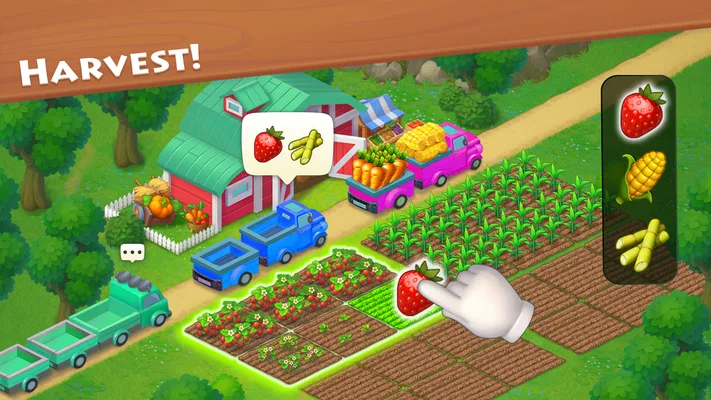
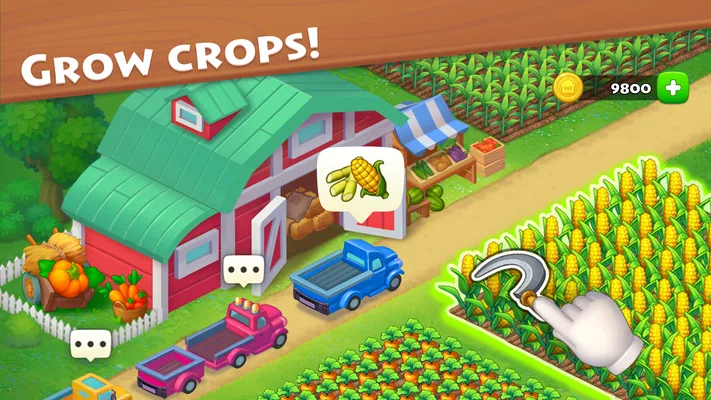
Township is a free-to-play city-building and farming game from Playrix. You grow crops, process them in factories, complete orders, and use the rewards to expand and decorate a town. The game also includes activities such as matching puzzles, events, and community features. Progress generally involves managing several tasks at once, so expect a relaxed but ongoing cycle of planting, producing, and upgrading.
Is Township free to download and play?
Township is free to download on supported Android and iOS devices, and you can make progress without paying. However, it offers optional in-app purchases, including items and resources that can help speed up construction or production. Some activities also use energy or other limited resources, so waiting for them to replenish is part of the experience. Check your device’s store listing and purchase settings before installing, especially if children use the device.
Does Township require an internet connection?
Some parts of Township may be playable without a steady connection, but an internet connection is needed for features such as synchronizing progress, participating in events, accessing social or cooperative features, and receiving updates. Offline availability can vary by activity and version, so it is best not to assume the entire game works without internet. Connect before making significant progress to reduce the risk of unsaved changes.
Can I play Township with friends or on multiple devices?
Township includes social features that let players connect with friends and join co-ops, where members can communicate and work toward shared goals. The exact options depend on the game version and the services linked to your account. If you plan to switch devices, use the game’s supported account or cloud-save options and confirm that your progress is synchronized before removing the app or starting on another device.
Is Township suitable for children, and what should parents know?
Township has colorful visuals and straightforward farming and building activities that may appeal to children, but it also includes optional purchases and online social features. Parents should review the current age rating and privacy information in the app store for their region, enable purchase authentication, and discuss interactions with other players. The game’s events and timers can encourage frequent check-ins, so device limits may help keep play balanced.