- Award score
- 4.1Rating
- 10,000,000+installs
- Free
App information
Screenshots
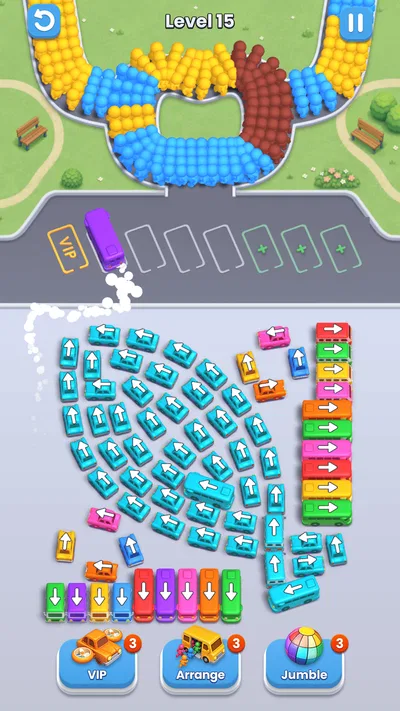
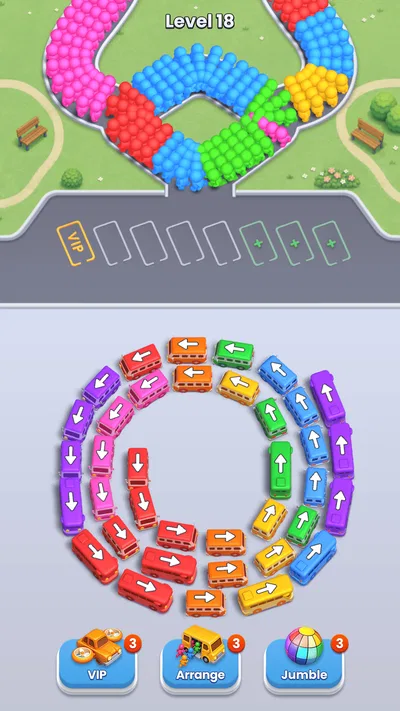
 Analysis byAppsAward
Our review of Bus Fever Party!
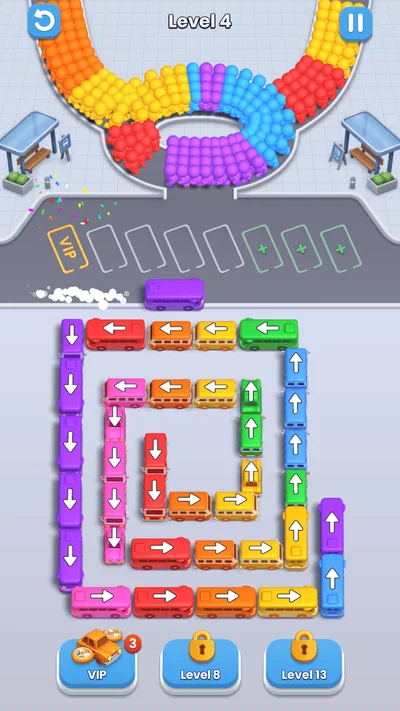
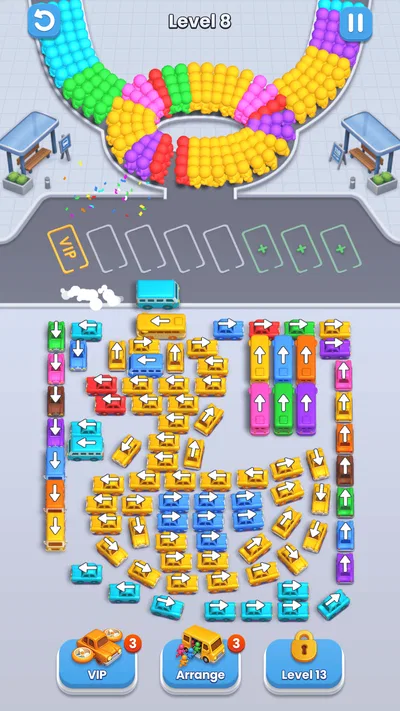
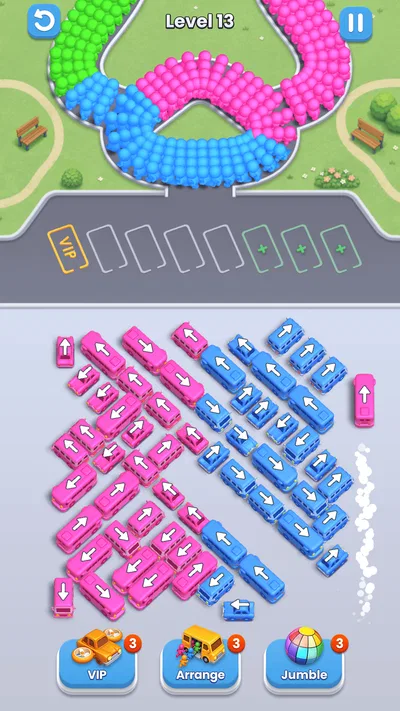
I like casual puzzle games that make me pause for a moment rather than demand a long session, and Bus Fever Party! fits that niche with a simple idea: work out how to clear a crowded parking area so a bus can leave. The appeal is in the small decisions—what to move first, what is blocking what, and whether an apparently easy route will create a worse jam a moment later. It is easy to understand, but the best progress comes from looking at the whole arrangement before making the first move.
Bus Fever Party! is a casual game from Lumi Games, free to download and rated for Everyone. It has an average rating of 4.1 from around 55,000 ratings, and has passed 10 million installs. Those figures suggest broad interest, but they are not a guarantee that its particular puzzle rhythm will suit you. I’d recommend trying it if you enjoy spatial sorting and traffic puzzles; if you want a story, realistic driving, or deep strategy, this is probably not the bus game you have in mind.
Start by reading the parking jam
The useful first habit is to treat each board as a little traffic problem, not a race to tap everything that looks movable. I scan the bus’s intended exit, identify the vehicles directly in its way, and then look for the pieces preventing those vehicles from shifting. That backward check helps avoid spending moves on cars that are easy to move but irrelevant to opening the route.
That approach matters because a clear-looking gap can be misleading. Moving one vehicle may create room for another, but it can also put a different vehicle in a position that blocks the exit again. I try to think one or two moves ahead: which object must move now, and where will it end up? Even without turning every level into a lengthy calculation, this keeps the puzzle focused on cause and effect.
For a quick everyday session, the game works well as a short break while waiting for a drink or sitting between errands. I can look at the layout, make a few deliberate moves, and stop when I need to return to something else. It is a better fit for brief pockets of attention than for someone expecting an absorbing, continuous adventure.
If I get stuck, I reset my thinking before I reset the board. I trace the exit route again and look for a vehicle whose position is constraining several others. This is more useful than repeatedly moving the same easy pieces back and forth. A good general rule is to preserve open lanes where possible, because a temporary gap can be more valuable than a move that seems to make immediate progress.
Build a repeatable routine, not a tapping rhythm
Experienced players can make the experience feel smoother by following a consistent routine: inspect the exit, find the closest obstruction, identify its blocker, then move only what contributes to that chain. After each move, I check whether the intended lane actually improved. That quick reassessment prevents a common mistake in traffic puzzles—continuing with a plan after the board has changed enough to make it unhelpful.
I also find it useful to separate “necessary” moves from “available” moves. A vehicle may be movable without helping the bus at all. Leaving it alone keeps the puzzle mentally tidy and reduces the chance of creating an awkward arrangement. This is a small discipline, but it makes the game feel less like trial and error and more like a sequence of purposeful choices.
Check the basics before settling into play
There is no complicated setup I would recommend before starting. Instead, I’d check the game’s available settings and make sure the controls feel comfortable on the device being used. A touch puzzle depends on selecting and moving the intended object cleanly, so if a move does not go as expected, I slow down and make sure I am targeting the correct vehicle rather than assuming the level requires a trick.
I would also make a personal decision about spending before getting attached to a long session. The game is free, but it includes in-app purchases priced from $1.99 to $99.99 per item. That range is worth noticing, especially if a child is playing on a device where purchases can be made. I would review the purchase controls available through the device’s app-store settings and avoid treating a paid option as a necessary part of solving a puzzle.
The current version is 1.2.9, and the game was released on April 23, 2025. It requires Android 8.0 or later. Those details are practical checks before installing: an older device may not meet the stated minimum, while a compatible phone or tablet should be a reasonable place to try a touch-focused casual puzzle.
Make progress faster by choosing moves with a purpose
The most helpful speed-up is not tapping faster; it is reducing unnecessary moves. Before shifting a car, I ask whether it opens a route, frees a blocker, or creates room for a later repositioning. If the answer is no, I leave it in place until it becomes relevant. This keeps attention on the bus’s escape path and helps prevent the board from becoming harder to read.
Another useful pattern is to look for dependencies. If the bus cannot move because one vehicle is trapped, and that vehicle cannot move because another is in the way, the second vehicle is the real starting point. Working from the cause rather than the most visible obstruction often reveals a cleaner sequence. When several pieces could move, I prefer the one that opens the most useful space rather than the one that simply has the easiest destination.
There is a trade-off here: planning every move can make a casual game feel like homework. I do not think every board needs a perfect solution worked out in advance. A quick scan and a short plan are usually enough; then I reassess after each meaningful move. That balance keeps the puzzle thoughtful without turning a spare-minute game into a drawn-out analysis exercise.
Where the puzzle style has limits
The central traffic-clearing idea is easy to grasp, which is a strength for newcomers, but it also defines the game’s limits. If you quickly tire of moving vehicles around a constrained space, a different casual game with more varied tasks may hold your interest longer. Likewise, anyone looking for a driving simulator should choose something built around steering and road behavior; this is about arranging a route, not taking the wheel.
There is also a difference between enjoying a puzzle and enjoying repeated attempts at one. If a board is not clicking, the game’s appeal depends on whether you like reconsidering positions and trying a new sequence. I would step away briefly rather than make random moves out of impatience. When I return, the layout is easier to read, and I am more likely to notice which vehicle is actually locking the exit.
Compared with familiar match-and-clear casual games, the satisfaction here comes less from quick visual combinations and more from spatial planning. Compared with other parking-jam puzzles, the basic appeal is recognizable: arrange traffic so the important vehicle can pass. That familiarity makes it approachable, but people who have played many similar puzzles may want more variation than this core concept alone provides. Its appeal is strongest when you enjoy refining a small sequence rather than chasing a broad set of game modes.
The public response is positive overall, with about 1,100 written reviews alongside the ratings. I would treat that as useful context rather than a promise of universal enjoyment: people can appreciate a clean, approachable puzzle while still wanting more variety or a different pace. For my part, I would judge it by whether the act of untangling each traffic layout stays satisfying after the novelty wears off.
Who I would recommend it to
I’d suggest giving it a try if you like parking puzzles, can enjoy a few minutes of focused problem-solving, or want a game that is easy to explain to a family member. Its Everyone rating makes the theme broadly accessible, though I would still pay attention to purchase settings when children use the device. The best audience is someone who likes taking a cluttered layout and gradually finding a workable order.
I would skip it if your ideal casual game is mostly reflexes, social competition, a rich narrative, or a steady stream of unrelated activities. It is also not the strongest choice if you dislike thinking ahead or feel annoyed when a small move makes a later route less convenient. A more varied puzzle collection may be a better match for players who want to switch mechanics frequently rather than return to the same traffic-clearing idea.
A measured verdict for puzzle fans
My recommendation is a qualified yes. Bus Fever Party! gives a familiar parking jam a clear, approachable focus, and it rewards a calm scan of the board more than frantic tapping. The practical habits that help most are simple: identify the exit path, trace blockers backward, preserve useful space, and reassess after each move. Those routines make play feel more deliberate without requiring special knowledge or a complicated strategy guide.
Its free entry point makes it easy to test whether that style suits you, while the in-app purchase range is a reason to keep spending choices deliberate. I would not expect it to replace a varied puzzle game or a driving title, but for short sessions built around untangling traffic, it has a clear purpose. If the pleasure for you is spotting the one move that makes the rest of the route possible, this is a sensible casual game to try; if you need constant novelty, I’d look elsewhere.
Pros
- Easy-to-learn controls make it approachable for casual players.
- Short rounds suit quick gaming sessions.
- Colorful visuals make the busy scenes easy to follow.
- Increasing difficulty keeps later stages engaging.
- The bus theme offers a playful twist on traffic puzzles.
Cons
- Traffic jams can make some levels feel frustrating.
- Repeated puzzle layouts may reduce variety over time.
- Later stages can require trial and error.
- Small screen details may be harder to see on phones.
- Progress may feel slow when replaying difficult levels.
Best Casual Game 2026
Our verdict
Bus game & traffic escape puzzle! Clear the parking jam and take the bus out!
Frequently Asked Questions
What is Bus Fever Party!?
Bus Fever Party! is a casual traffic and parking puzzle game built around moving buses through crowded stations. You guide vehicles along available routes, match passengers with the correct bus, and clear obstacles without causing a traffic jam. Its rules are easy to understand, but later stages can require more careful planning. The exact features and level selection may vary depending on the version available for your device.
How do you play Bus Fever Party!?
The core task is to direct buses through a busy scene so passengers can board the right vehicle and the area can be cleared. Before tapping, look at the buses, passenger colors, and blocked routes, since a move can limit what is possible next. Levels generally become more demanding as the number of vehicles and traffic constraints grows. Controls are designed for touchscreens, though particular mechanics can differ by release.
Is Bus Fever Party! free to download and play?
The game may be offered as a free download, but that does not necessarily mean every part of it is free of charge. Mobile games commonly include advertising, optional in-app purchases, or items that can speed up progress; availability and pricing can differ between the Android and iOS versions and by region. Check the store listing for the current price, purchase details, and any age or content information before installing.
Can I play Bus Fever Party! offline?
Some puzzle levels may work without a continuous internet connection, but offline access can depend on the version, device, and how the game handles ads, updates, or saved progress. If you plan to play while traveling, launch it once with an internet connection and check whether levels remain available after disconnecting. Online features, if present, may not work offline, and progress synchronization could require reconnecting.
Is Bus Fever Party! suitable for children, and what should parents check?
The traffic-puzzle premise is generally straightforward and does not rely on complex controls, which can make the game approachable for younger players. However, suitability depends on the specific store version and its advertising, in-app purchases, privacy practices, and age rating. Parents should review those details on the official app listing, use device purchase controls where appropriate, and check whether the game requires an account or requests permissions.