- Award score
- 3.8Rating
- 10,000,000+installs
- Free
App information
Screenshots
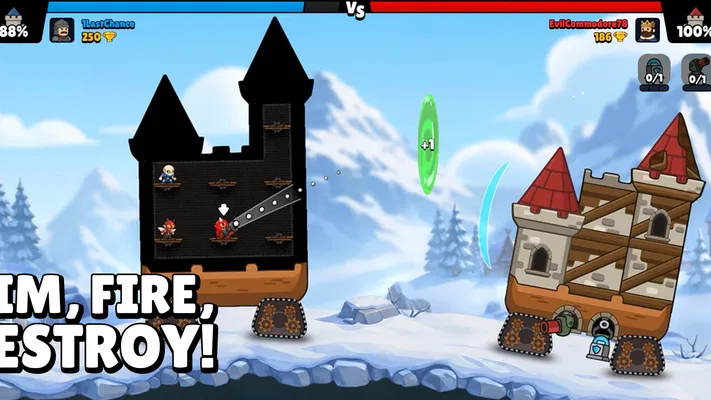
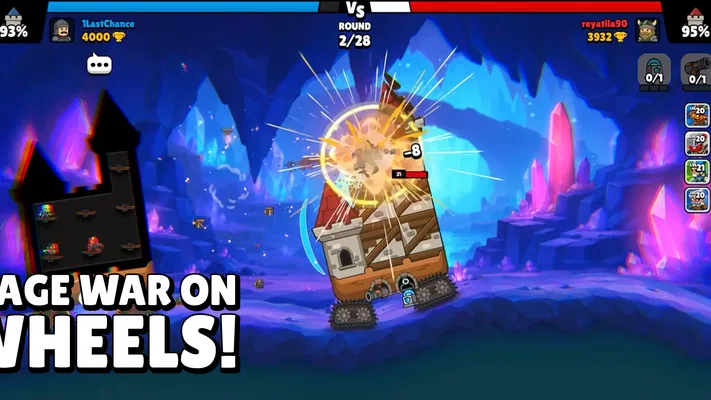
 Analysis byAppsAward
Our review of Castle Busters
I find Castle Busters easiest to judge through a practical question: can I quickly understand what is happening, make a decision, and enjoy a short competitive session without the game asking more of me than I can give? It is an action game built around one-on-one battles, crew-building and castle destruction. That combination makes its appeal clear, but it also means the experience depends on being comfortable with fast visual changes and direct competition.
How readable and navigable does a battle feel?
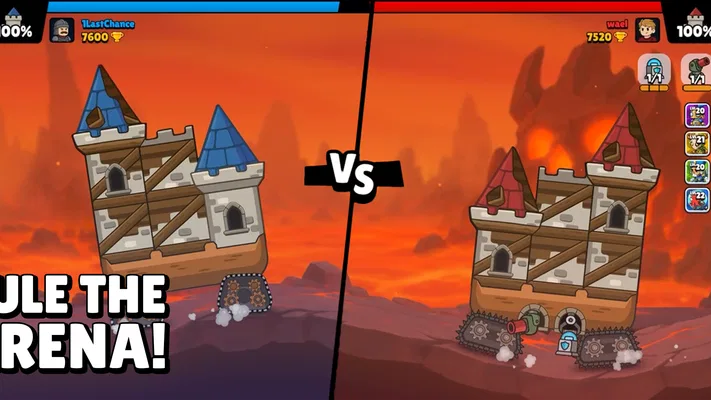
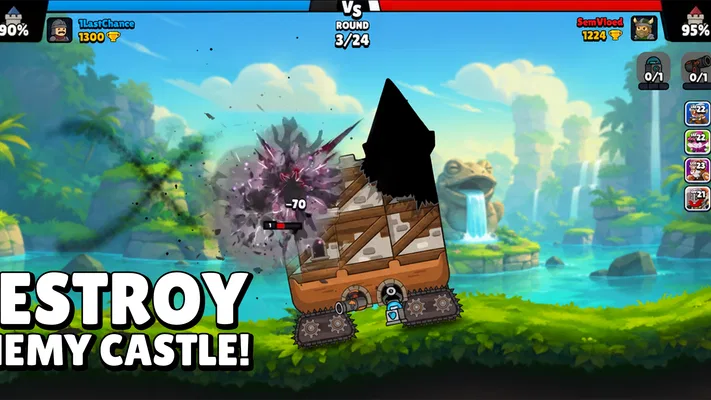
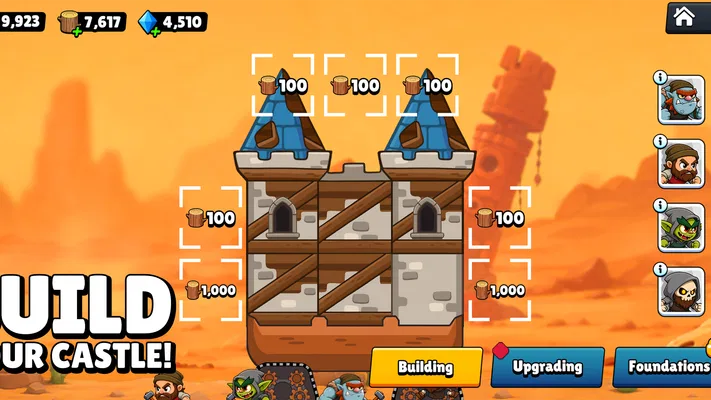
VOODOO’s game puts strategy and brawling in the same small arena. The basic aim is easy to grasp: assemble a crew, face another player, and try to break their castle. I like that this gives each match a clear purpose. Instead of asking me to learn a sprawling world before I can act, the game frames the challenge around a compact contest with an obvious opponent and objective.
That clarity matters for new players, but it should not be mistaken for a slow or purely casual pace. A one-on-one match puts attention on a single rival, and the action can make it difficult to study every movement while also planning what to do next. I would approach the early matches as practice in reading the arena, not as a test of whether I can master every decision immediately.
For a more manageable first session, I would focus on one question at a time: what is my crew doing, what is threatening my castle, and what action seems most useful now? Trying to track every detail at once can turn a simple objective into visual noise. This small habit is especially useful for players who are new to strategy brawlers or who prefer to learn through repetition rather than by memorising a complex rule set.
The interface and action also have to work together. When a game combines units, an opponent and destructible structures, it is important to know which part of the scene deserves attention. Castle Busters’ central premise supplies a helpful mental map: the rival’s castle is the goal, your crew is the means, and the other player is actively trying to stop you. That framework gives me a practical way to reorient myself after a confusing moment.
I would not describe it as a quiet, low-demand game. Its appeal lies in immediate head-to-head action, so players who need generous time to inspect each option may find the pace stressful. If I were playing with someone who benefits from a slower introduction, I would start with a brief session and pause between matches to talk through what was easy or hard to follow, rather than assuming that the simple objective makes every moment equally accessible.
Learning the rhythm without overloading attention
A useful way to build confidence is to separate learning the controls from learning the match. First, notice how your chosen actions affect the crew and the castle; then pay attention to how the opposing player responds. This is more effective than changing several decisions at once, because it helps identify what caused a result. It also makes losses less frustrating: each round can answer one small question about timing or priorities.
Because it is a PvP game, another person’s choices add unpredictability. A pattern that seems effective in one encounter may not work the next time. I see that as part of the appeal for players who enjoy adapting, but it can be a barrier for anyone who wants a predictable sequence or a fully controllable practice environment. The strongest first impression may come from treating each match as a compact experiment rather than expecting a fixed routine.
Motor, sensory and situational access
Fast action games can place pressure on reaction speed, hand comfort and visual attention, and this one’s brawler format makes those considerations relevant. I would not recommend assuming that a short match is effortless: repeated taps or quick adjustments can still be tiring, particularly during a longer run of competitive play. If touch input feels uncomfortable, stopping after a match or two is a sensible way to see whether the game suits your hands before committing to a longer session.
The visual side deserves similar care. Battles involve more than one focal point: the crew, the opponent and the castles all matter. Players who find busy scenes hard to parse may benefit from keeping their attention on the immediate objective instead of scanning the whole arena continuously. Playing on a comfortable screen, with good lighting and without glare, can make it easier to distinguish movement and follow the action. Those are practical adjustments, not a substitute for dedicated accessibility options.
Sensory preferences vary. Some people enjoy the urgency of a live duel; others find rapid changes and competitive pressure tiring even when the rules are straightforward. I would choose a calm moment for a first try rather than launching into a match while multitasking. If you need to keep an eye on messages, conversation or another task, the duel may demand more attention than you can comfortably spare.
For everyday use, I can picture opening it during a break when I have enough time to focus on a complete encounter, then putting it away instead of trying to play while walking, commuting through a crowd or watching for a stop. The one-on-one format gives the session a clear shape, but the competition means it is not ideal background entertainment. A player who needs to pause at unpredictable moments should consider whether that interruption would spoil the experience or put them at a disadvantage.
The game is free to start, with in-app purchases ranging from $0.99 to $99.99 per item. That broad spread is worth considering before playing, especially for younger users or anyone who prefers to avoid optional spending. I recommend checking purchase controls on the device and agreeing on spending expectations before handing the phone to a child. This is a practical safeguard, not a judgment about how any particular player will use the shop.
Who may find the format comfortable?
I think it is best suited to players who like direct competition, can concentrate on a screen for a short stretch, and enjoy adjusting a plan in response to another person. It may also work for friends who want a simple shared premise to talk about: build a crew, protect your own position and attack the rival’s. The Teen content rating is a useful cue for families considering whether the style and competitive setting fit a particular player.
It is less suitable for someone seeking a relaxed idle game, a story-led adventure, or a match that can be ignored while other things happen. It may also be a poor fit for players who become discouraged by losing to human opponents or who need a slower, less visually active experience. In those cases, a turn-based strategy game or a solo action title with more control over pace could be a better choice than a head-to-head brawler.
Compared with familiar mobile action games that centre on solo levels, Castle Busters puts the rival player at the heart of the experience. That makes each encounter less predictable than a scripted stage, but it also shifts the burden: success depends not just on learning a route, but on responding to another person. Players who value variety may enjoy that tension; players who want repeatable, carefully paced challenges may prefer a campaign-based alternative.
What the audience figures say—and what they do not decide
The game has a 3.8 average from around 219,000 ratings, with about 7,900 written reviews, and has passed 10 million installs. I read that as evidence that it has attracted a substantial mobile audience, not as a promise that its pace or controls will suit every player. Its July 18, 2025 release and current version 1.20.2 place it among relatively recent games, so I would still judge it by how it feels on my own device and in my own hands.
It is free to download, and the version requires Android 8.0 or later. Those details make it easier to decide whether a device is a candidate, but they do not guarantee that every screen size, control preference or personal access need will feel comfortable. I would try a short session before making it a regular habit, especially if touch-heavy games have caused strain or confusion in the past.
One useful personal test is to notice what remains difficult after the objective is understood. If the challenge is simply learning when to attack, repeated play may help. If the problem is that the action feels too crowded, requires uncomfortable movement, or demands uninterrupted attention, more practice may not solve it. That distinction can save time: a skill barrier may ease as you learn, while a mismatch in pace or sensory load may remain.
Where the experience still has limits
The same focus that gives the game its identity also narrows its audience. One-on-one PvP means that the opponent can make a match feel demanding even when the central goal is clear. A player looking for cooperative play, a gentle introduction to strategy, or a purely offline routine should not choose it simply because the premise sounds approachable. The competition is a core part of the appeal, not a detail that can be ignored.
There is also a difference between knowing what to do and being able to do it comfortably. A player may understand the castle objective yet still struggle to keep up with a fast exchange or to manage touch input for long. I would be cautious about recommending it as an accessible option for someone with specific motor or sensory requirements without trying it together first. The game’s clear contest structure is helpful, but that alone does not answer every access need.
Another trade-off is the purchase range. Free entry lowers the barrier to trying it, while the possibility of spending makes clear boundaries useful. If you share a device with a child, or simply want to keep mobile gaming costs predictable, decide those boundaries in advance. That way, the question of whether the battles are enjoyable stays separate from pressure to buy something.
My inclusive verdict
Castle Busters is most inviting when a player wants a focused, competitive action game and can comfortably follow a changing arena. I like the clarity of its central contest and the way each opponent can call for a different response. It is a reasonable pick for short, attentive sessions, especially for players who enjoy learning through direct challenges rather than following a long campaign.
I would be more hesitant for anyone who needs slow pacing, low sensory demand, flexible interruption, or unusually light touch input. In those situations, a turn-based game or a solo title with more control over tempo is likely to be kinder. For anyone unsure, the best test is a brief play session in a comfortable setting: notice whether the objective remains readable, whether the controls feel sustainable, and whether competing feels energising rather than stressful.
VOODOO’s action game has reached a broad audience, but popularity is only a starting point for deciding whether it belongs on your phone. I would recommend giving it a try if the duel format sounds fun and you are comfortable with its demands; I would skip it if you want something quiet, easily paused or designed around a slower rhythm. That distinction is more useful than expecting one mobile game to work equally well for every player.
Pros
- Quick matches make it easy to play in short sessions.
- Distinct castle designs add visual variety to battles.
- Simple controls are approachable for new players.
- Unlockable content gives you goals to work toward.
- Colorful visuals give the game a lighthearted feel.
Cons
- Progress can feel repetitive after several battles.
- Some upgrades may require considerable grinding.
- The small screen can make fast action harder to follow.
- Difficulty spikes may frustrate less experienced players.
- The game may offer limited depth for long sessions.
Best Action Game 2026
Our verdict
1v1 PvP strategy brawler! Build your crew, smash castles and rule the arena!
Frequently Asked Questions
What kind of game is Castle Busters?
Castle Busters is a casual action game built around attacking and destroying castles. Players typically aim, launch attacks, and work through increasingly challenging stages, with the goal of overcoming defenses and clearing each level. Its straightforward premise makes it easy to understand, while new obstacles and tougher structures can add variety. Check the store listing for the exact features and gameplay modes available in the version you plan to download.
Is Castle Busters free to download and play?
Castle Busters may be available as a free download, but that does not necessarily mean every feature or item is free. Mobile games can include optional in-app purchases, such as resources, upgrades, or other conveniences, and some versions may show advertisements. Before installing, review the game’s store page for its current price, in-app purchase details, and any advertising disclosures. Availability and payment options can vary by device, region, and version.
Can I play Castle Busters offline?
Whether Castle Busters works without an internet connection can depend on the version and on which features you want to use. Some stages in mobile games are playable offline after installation, while advertisements, account services, updates, or online events may require a connection. If offline play matters to you, check the app’s store description and test a level with your device disconnected. Avoid assuming that every mode or reward will remain available offline.
Is Castle Busters suitable for children?
The game’s castle-destruction theme may look lighthearted, but suitability depends on its content, advertisements, purchase options, and the age of the player. Parents should check the age rating and content descriptors on the relevant app store, then review whether the game includes ads, in-app purchases, or online features. If a child will play, consider using device-level purchase controls and parental settings, and supervise play when needed.
Which devices support Castle Busters, and what should I check before downloading?
Compatibility depends on the specific release, so check the Castle Busters listing in the Google Play Store or Apple App Store for supported operating-system versions, device requirements, and available regions. Make sure your phone or tablet has enough free storage for the download and any additional data, and use a stable connection when installing. Download from an official store listing where possible, and review recent updates and permissions before proceeding.