- Award score
- 4.6Rating
- 10,000,000+installs
- Free
App information
- Version
- 42.40.0-59343437-Android
- Updated
- Requires
- 8.0
- Price
- Free, in-app purchases
- Developer
- Epic Games, Inc
- Content rating
- Teen
Screenshots
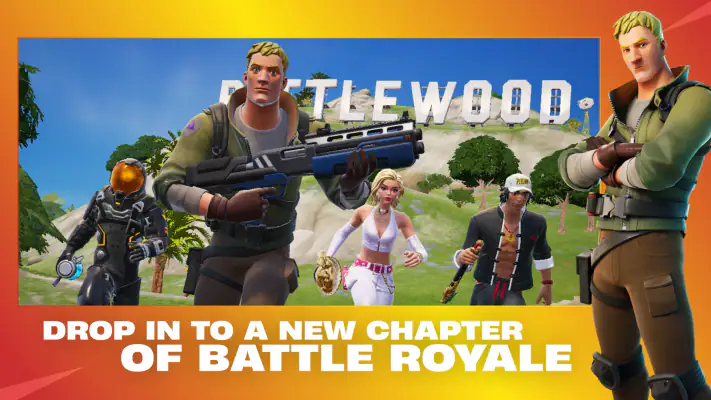
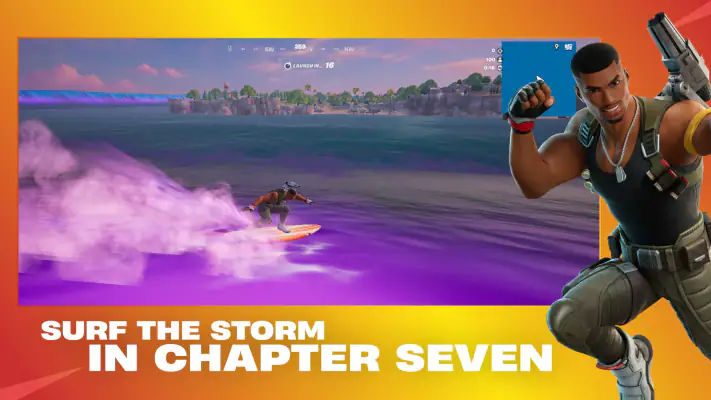
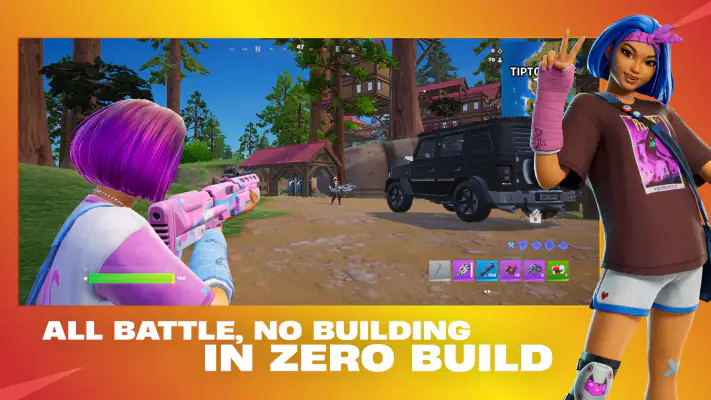
 Analysis byAppsAward
Our review of Fortnite
Some action games are at their best when they give you a reason to come back with friends, and that is the angle that makes Fortnite click for me. It brings battle royale competition together with PvP and social games, so a session does not have to mean the same kind of match every time. The core appeal is easy to understand: compete on your own when you want a personal challenge, or team up and turn the experience into a shared hangout.
A multiplayer game built around choice
The most useful thing about Fortnite is the choice between solo competition and playing with friends. That flexibility changes the feel of a session. Going solo puts the focus on your own decisions and performance; playing with friends makes coordination and conversation part of the fun. Either way, the game gives you a clear reason to jump in: compete, socialize, or switch between those moods.
That combination helps the game feel broader than a single-purpose action title. Its store summary describes battle royale, PvP and social games, with solo play and group play both in the mix. I like that framing because it makes the appeal understandable even if you are not looking for one specific mode. You can approach it as a competitive game, a place to meet up with friends, or a little of both.
Why the social side matters
Online games can be more enjoyable when they make it easy to share the experience. Here, friends are not just an afterthought to the competitive pitch: playing together is one of the central ways the game presents itself. That can make a session feel less like a solitary grind and more like a planned activity. If nobody is available, solo play still gives you a direct route into the action.
I also appreciate that this choice gives players room to set their own tone. Some evenings call for focused competition; others are better spent chatting and exploring a social game together. A title that supports both can fit into more kinds of free time than one that asks every player to approach it in exactly the same way.
What a session feels like
In practice, the pitch is straightforward: choose whether you want to compete alone or join friends, then settle into the kind of session that suits the group. Battle royale and PvP speak to players who want competition, while social games broaden the options for those who would rather spend time together than treat every moment as a contest. The appeal is not that every session has to feel identical; it is that the game offers different reasons to play.
That variety is especially handy when a group has mixed tastes. One person may be there for the action, another may care more about hanging out, and someone else might simply want to see what the game offers. A shared game can be a tough sell when everyone wants the same thing, but a mix of competitive and social options gives friends more ways to find common ground.
The decision to play solo is just as meaningful. Friends may not be online, or you may want to concentrate without coordinating with anyone. Being able to compete alone keeps the game approachable in those moments. I see that as a practical strength: the experience is not dependent on assembling a group every time you want to play.
Best when friends are part of the plan
The strongest scenario is a group looking for an action game that can serve as both competition and a social meetup. If your friends enjoy playing together but do not always want the same intensity, the mix of PvP and social games gives the session more room to breathe. You can make competition the point, or lean into the simple pleasure of sharing time in the same game.
It also suits players who like switching between solo and group sessions. You might want an independent challenge one day and a team evening another. Rather than being limited to one social setup, the game speaks to both. That makes it easier to keep in a rotation with friends, especially when your group’s plans change from one session to the next.
For someone who is mainly interested in a quiet, self-contained single-player experience, the game’s multiplayer focus may be less compelling. Its identity is tied to competition and playing with other people, so the enjoyment depends in part on whether those are things you want from an action game. If they are, the social dimension is a genuine part of the appeal, not just a side note.
The tradeoffs behind the flexibility
Having several ways to play is a plus, but it can also mean the experience is not centered on one narrow style. If you want a game built around only one kind of competitive challenge, the broader mix may not be what you are seeking. The range is most valuable to players who enjoy having options; someone who wants a very specific kind of session may prefer a more focused game.
The group angle has a practical tradeoff, too: playing with friends is most rewarding when those friends are available and interested. Solo play helps when they are not, but it cannot reproduce the shared jokes and coordination that make group sessions distinctive. For me, that is less a flaw than a reminder to match the game to your mood. It works best when you are in the mood for action or social play rather than expecting a private, story-led experience.
Competition also naturally asks for attention. If you want to relax without thinking about how you are performing, a PvP session may not always be the right fit. The social options help soften that all-or-nothing feeling, since the game’s appeal is not framed solely around winning. Still, it is worth approaching the competitive side as a central part of the experience rather than an incidental feature.
Who should give it a try?
I would point Fortnite toward players who like action games, enjoy multiplayer competition, and want the option to bring friends along. It is particularly suited to groups who value having both competitive and social reasons to play. Solo-minded players can also find a route in, provided they are comfortable with a game whose broader identity revolves around multiplayer play.
It is available as a free game, with in-app purchases ranging from $0.99 to $89.99 per item. That gives newcomers a way to try the experience without an upfront purchase, while purchases are part of the wider package. The game is rated Teen, and the Android version requires Android 8.0 or later. Those details are worth checking against your device and household preferences before installing.
Epic Games, Inc. is the developer, and the game has been available since April 20, 2020. Its current Android version is 42.40.0-59343437-Android. It has an average rating of 4.6 from around 529,000 ratings, alongside roughly 36,000 written reviews and over 10 million installs. Those figures point to a large audience, but the more important question is whether the central mix of action and social play suits you.
A flexible choice for action and company
What stays with me is the way the game puts solo competition, friend-based sessions, and social play under one recognizable banner. That makes it easier to recommend to groups with different moods, as well as players who do not want to rely on friends being online every time. It is at its best when you treat it as a shared multiplayer space with room for both focused matches and lighter social time.
If you want an action game that gives you a reason to meet up with friends while still letting you compete on your own, Fortnite is an appealing fit. Its strongest quality is not simply that it offers several kinds of play, but that those options make the game useful for different kinds of sessions. Go in for the competition, stay for the company, or switch between the two when the mood changes.
Pros
- Frequent updates keep the game feeling fresh.
- Cross-platform play lets friends team up across devices.
- Creative mode offers player-made maps and experiences.
- Regular events bring new challenges and limited-time content.
- Building adds a distinctive layer of strategy to matches.
Cons
- Large downloads can take up substantial storage space.
- The fast-paced action may be difficult for beginners.
- In-app purchases can make cosmetics tempting to collect.
- Performance can vary depending on your device.
- An internet connection is required to play.
Best Action Game 2026
Our verdict
Battle royale, PvP, social games and more. Compete solo or play with friends.
Frequently Asked Questions
Is Fortnite free to download and play?
Fortnite is free to download and offers several game modes without an upfront purchase. Optional in-game purchases include cosmetic items, such as outfits and emotes, and may include access to season-related content or other features. Purchases do not generally provide a direct competitive advantage, but costs can add up. Check the payment settings and parental controls on your device before playing, especially if children will use the account.
Which devices can run Fortnite?
Fortnite availability depends on your device, operating system, region, and the current distribution options. It is available on supported platforms, but access on Android and iOS can differ by country and may change over time. Before downloading, check the official Fortnite website or your platform’s official store for current compatibility requirements. Avoid unofficial installers and download links, which may be unsafe or offer outdated versions.
Does Fortnite require an internet connection?
Yes. Fortnite is primarily an online game, so you need a reliable internet connection to sign in, download updates, and play its main modes. Connection quality can affect matchmaking, responsiveness, and the overall experience, particularly during fast-paced battles. The game may also use substantial mobile data when downloading or updating, so using Wi-Fi is sensible if your data plan is limited.
Can children play Fortnite safely?
Fortnite includes combat, online interactions, and optional purchases, so parents should review its age rating and settings before allowing a child to play. Parental controls can help manage spending, communication, and play-related permissions, though available controls may depend on the platform and account setup. Discuss online safety with children, use appropriate privacy settings, and supervise purchases and interactions with other players.
How much storage space and data does Fortnite need?
Fortnite can require considerable storage, and its installed size varies by platform, version, and selected content. You may also need extra free space temporarily while downloading or installing updates. The initial download and later updates can use a large amount of data, so check your device’s available storage and consider using Wi-Fi. Consult the official platform listing for the latest requirements before installation.