- Award score
- 4.9Rating
- 1,000,000+installs
- Free
App information
- Version
- 1.84.0
- Updated
- Requires
- 8.0
- Price
- Free, in-app purchases
- Developer
- PlaySimple Games
- Content rating
- Everyone
Screenshots
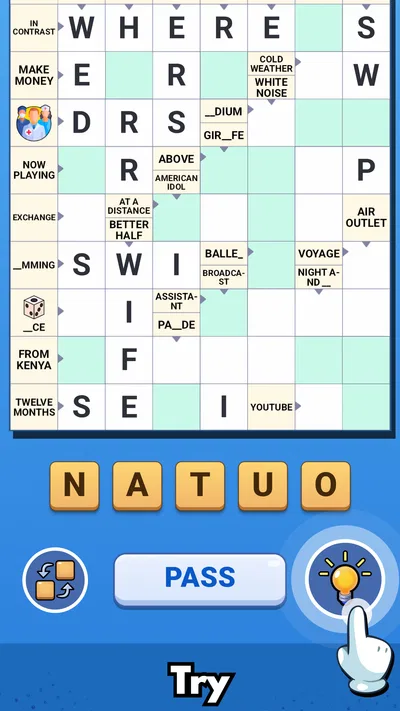
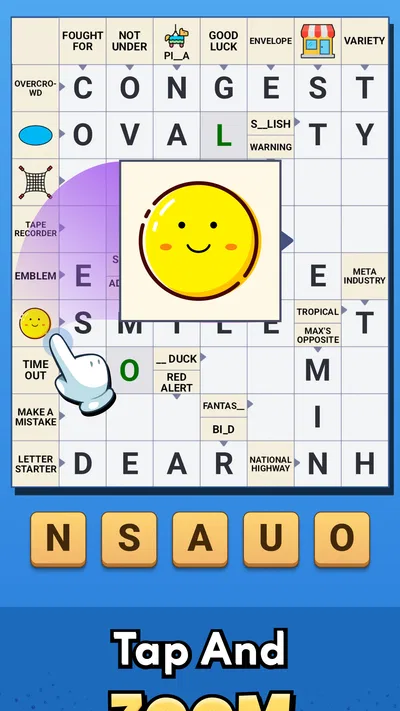
 Analysis byAppsAward
Our review of Crossword Go!
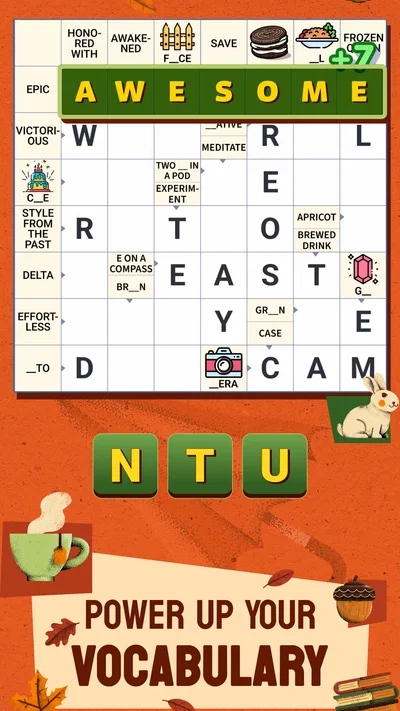
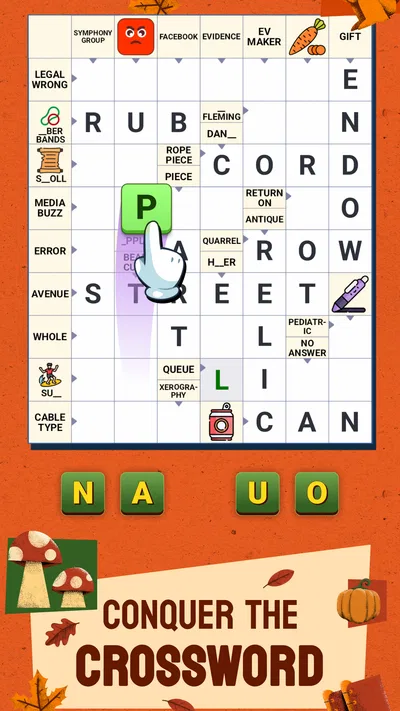
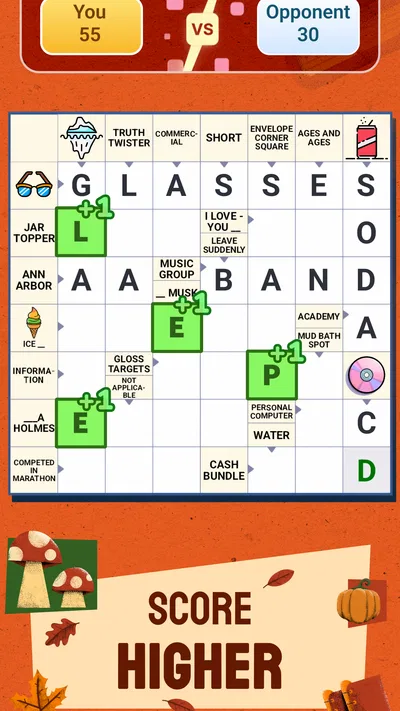
I like word games best when they give me a clear reason to start, then let me stop without turning a spare minute into a commitment. Crossword Go! aims for that sort of approachable session: it is a crossword game built around short, clue-led puzzle solving, with play intended to be enjoyable alone or alongside someone else. In my view, its appeal is less about elaborate progression machinery and more about the small satisfaction of filling in an answer, using crossing letters to make the next clue easier, and deciding whether I have time for one more.
Small goals make it easy to begin
The first useful goal in a crossword is simple: solve a clue you can understand, then let its letters help with the rest. That familiar loop gives Crossword Go! a gentle entry point. I do not need to learn a complicated set of rules before I can start thinking about words. For a newcomer, that matters; the puzzle itself becomes the tutorial, and every answer offers a small, immediate sense of progress.
The clever-clue emphasis also gives the game a different feel from a plain vocabulary quiz. A clue may ask me to pause and consider a second meaning rather than reach for the first obvious word. When I get it, the pleasure comes from making the connection, not merely recognizing a definition. That makes the game a good fit for someone who enjoys wordplay but finds a full newspaper crossword too demanding or too involved for a casual break.
I would approach a puzzle by scanning for clues that feel familiar before tackling the ones that require more thought. Filling a few answers early gives the crossing letters a practical job: they narrow the possibilities for later clues. This is a more effective habit than staring at one difficult prompt until it becomes frustrating. It also makes the game work well in short sessions, because I can make progress without needing to solve everything at once.
The social framing is part of the appeal, but it does not mean every moment has to become a competition. I can imagine handing a clue to a friend or family member and comparing guesses, especially when a phrase has a clever turn. That works best when both people enjoy talking through word choices. If I want a strictly solitary experience with no conversational element, the crossword format still makes sense, but the togetherness angle will matter less to me.
Progress is clearest inside the puzzle
Crossword games have an unusually readable progress signal: blank spaces become answers, and partial answers create new hints through their crossing letters. That is the most satisfying kind of feedback here because it comes directly from my own reasoning. I can see why a new letter helps, and I can tell whether I am making a good guess or simply filling space. This makes the moment-to-moment progress feel earned rather than arbitrary.
It is worth separating that puzzle-level progress from a broader sense of advancement. The game’s basic attraction is solving clues, so I would not choose it expecting a deep campaign or a complex system of goals. If I am motivated primarily by collecting rewards, building a character, or unlocking layers of gameplay, a crossword may feel spare beside games designed around those things. Here, the clue and the grid are the main event.
That simplicity has a practical upside: it gives me a clear stopping point. I can finish a section of solving, put the phone away, and return later without needing to remember a long sequence of actions. For a commuter or someone waiting for an appointment, that is more useful than a progression structure that encourages a lengthy uninterrupted session. The trade-off is that players who need frequent external milestones may find the ordinary act of solving less motivating over time.
One helpful way to keep the experience rewarding is to treat each difficult clue as a two-step problem. First, use the wording to think of possible meanings; then check whether any existing letters support one of them. If nothing fits, move on and come back after solving nearby answers. I find this approach reduces the temptation to guess blindly and lets the crossword do what it does best: turn partial knowledge into a more manageable question.
The challenge depends on how you approach clues
The challenge in a crossword does not rise in a perfectly smooth line. A clue that seems obvious to one player may be opaque to another because vocabulary, cultural references, and associations differ. That is part of the format, not necessarily a flaw in this particular game. It means my experience can shift from quick wins to a stubborn patch without any change in how well I understand the controls or basic rules.
When I hit that patch, I would avoid treating speed as the measure of skill. Crosswords reward patience and flexible thinking: the first interpretation may be wrong, and a crossing letter can overturn it. A useful routine is to leave uncertain answers empty rather than force a guess, solve the clues I can, then revisit the gaps with more context. This keeps the puzzle challenging without making each pause feel like failure.
That also explains who may want a different option. A player looking for a timed race, action, or constant novelty is likely to prefer a more energetic word game. Someone who wants long, highly demanding cryptic puzzles may find a casual crossword game too gentle, depending on their experience and the particular clues they encounter. I see this as best suited to people who enjoy language and want a manageable mental exercise rather than a test of speed or specialist crossword knowledge.
Because the game is designed for easy entry, it is a sensible choice for sharing with someone who does not regularly play word games. I would start by solving a few straightforward clues together and explain how crossing answers help, rather than presenting the whole grid as a challenge. That small change makes the activity collaborative: one person can suggest a meaning while the other checks whether it fits the letters. It is a more natural social use than simply passing the phone back and forth without discussion.
Steady play without turning it into an obligation
For me, the best retention pressure in a puzzle game is the feeling that I can return because I want to, not because I am afraid of losing progress. Crossword Go! has a naturally repeatable core: clues continue to offer little problems to solve, and the grid can keep my attention while I have time for it. That is a calmer kind of motivation than a game that depends on daily streak anxiety or a chain of chores. I would rather play a crossword when I am in the mood to think than feel that I owe it a session.
There is still a limit to how long this format holds my attention. If I am tired, a clever clue can feel more like a blockage than a treat; if I am in a hurry, I may not want to pause and reason through wordplay. In those moments, a quick arcade game or a simple word-search may fit better. The choice is not that one style is universally superior, but that this game asks for a particular kind of attention: relaxed, language-focused, and willing to sit with uncertainty for a moment.
The practical everyday use case is easy to picture. I might open it during a short wait, solve the clues that immediately make sense, and leave the harder ones for another moment rather than trying to complete the puzzle in one sitting. That is also the way I would recommend using it around other people: keep a puzzle available for casual conversation, but do not turn it into a test that everyone must finish. The light touch suits the game’s central appeal.
It is free to download, though optional in-app purchases range from $0.99 to $49.99 per item. I would keep that in mind if I prefer to avoid spending inside games: the free entry point is clear, but the presence of purchases means I should check any purchase prompt before continuing. A player who is comfortable with optional spending may not mind; someone who wants a completely purchase-free environment should make that preference part of the decision.
Who will enjoy it, and what to expect
PlaySimple Games developed this word game, which is rated for Everyone. It is available on Android from version 8.0 onward, and the current release is version 1.84.0. The game has a 4.9 average from around 75,000 ratings, with roughly 3,500 written reviews and over one million installs. Those figures suggest that it has found a substantial audience, but they do not tell me whether its clue style will suit my own vocabulary or preferred level of challenge.
I would recommend trying it if you like crosswords but want a more approachable way to fit them into ordinary breaks, or if you want a word activity that can prompt a bit of conversation. It is also a reasonable starting point for someone who has avoided traditional crosswords because they seem intimidating. I would skip it if I need fast action, a complex long-term progression system, or puzzles that consistently demand advanced specialist knowledge. Those are different expectations from the quiet pleasure of solving clues.
Compared with a word-search, Crossword Go! asks for more interpretation and less visual scanning: I have to work out what a clue means, not merely spot a word in a jumble of letters. Compared with a traditional newspaper crossword, its easy-to-play framing makes it feel more suitable for casual use, though seasoned solvers may prefer a harder puzzle source. A word quiz may be better when I want direct questions and instant answers; a crossword is more satisfying when I want each answer to help unlock the next.
A measured verdict on its progression
Crossword Go! succeeds most when I judge its progress on the scale it actually serves: one clue at a time, one useful crossing letter, and the gradual shift from an empty grid to a more complete one. It does not need elaborate goals to make that loop worthwhile, but the simplicity will not satisfy every player. Its strongest practical quality is that I can pick it up for a short mental break, make a little progress, and stop without turning the session into a project.
My recommendation is for casual crossword fans, wordplay newcomers, and people who enjoy solving clues with someone nearby. I would be more cautious if I were seeking a demanding progression journey or a game that constantly pushes me to return. The rating and audience show that many players enjoy it, but my own deciding question would be simpler: do I like the small thrill of finding the right word and watching the rest of the grid become easier? If the answer is yes, this is a worthwhile free place to start.
Pros
- Quick puzzles fit neatly into short breaks.
- The familiar crossword format is easy to pick up.
- Clues offer a satisfying test of vocabulary.
- Progression gives players a reason to return.
- It provides a quiet alternative to action games.
Cons
- Some clues may feel too vague without outside knowledge.
- Difficulty can vary noticeably between puzzles.
- Frequent play may make the clue patterns feel repetitive.
- Small text can be uncomfortable on compact screens.
- A steady internet connection may be needed for some features.
Best Word Game 2026
Our verdict
Easy-to-play crossword puzzles with clever clues made to enjoy together.
Frequently Asked Questions
What is Crossword Go!?
Crossword Go! is a mobile word-puzzle game built around filling crossword-style grids with answers that fit the available spaces. It is suited to players who enjoy vocabulary challenges and solving clues at their own pace. The exact puzzle selection, progression system, and available features can vary by version, so check the current app listing for details before downloading.
Is Crossword Go! free to download and play?
The app may be available to download without an upfront purchase, but that does not necessarily mean every feature or item is free. Mobile games can include advertisements, optional in-app purchases, or other limits on progression. Review the store page for the current pricing and purchase information, and check your device’s purchase settings if you want to avoid accidental spending.
Can I play Crossword Go! offline?
Offline availability can depend on the app version and which features you want to use. Crossword puzzles may be playable without a continuous connection, while advertisements, purchases, updates, cloud saves, or online events may require internet access. If offline play matters to you, check the app’s current description and test its behavior before relying on it during travel or without Wi-Fi.
Is Crossword Go! suitable for beginners and children?
Crossword Go! may appeal to beginners who want a casual way to practice word recognition and clue solving, but puzzle difficulty and accessibility can vary. Children may also enjoy word games, though parents should review the age rating, advertising, in-app purchases, and privacy information shown on the store page. The game’s suitability depends on the player’s reading level and comfort with its content.
What should I check before downloading Crossword Go!?
Before installing Crossword Go!, confirm that the listing is for the intended game and that it supports your Android or iOS version. Check its age rating, storage requirements, privacy disclosures, permissions, recent reviews, and any advertised purchases or subscription terms. These details can change with updates, so use the official app store listing as the most reliable source before downloading.

Download Crossword Go!
Similar games
View all 9.8
 9.4
 9.6