- Award score
- 4.8Rating
- 1,000,000+installs
- Free
App information
- Version
- 1.70.0
- Updated
- Requires
- 8.0
- Price
- Free, in-app purchases
- Developer
- PlaySimple Games
- Content rating
- Everyone
Screenshots
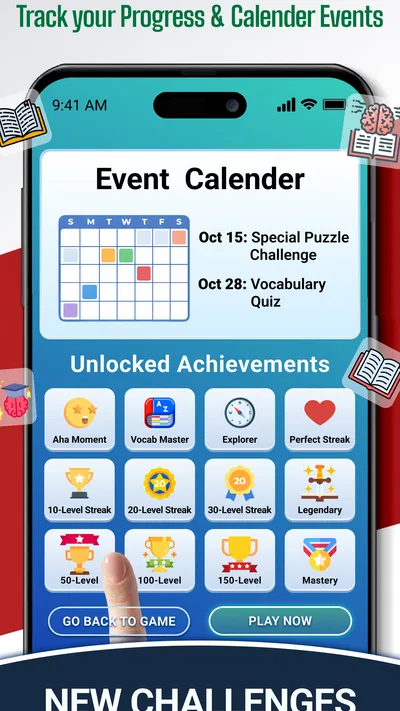
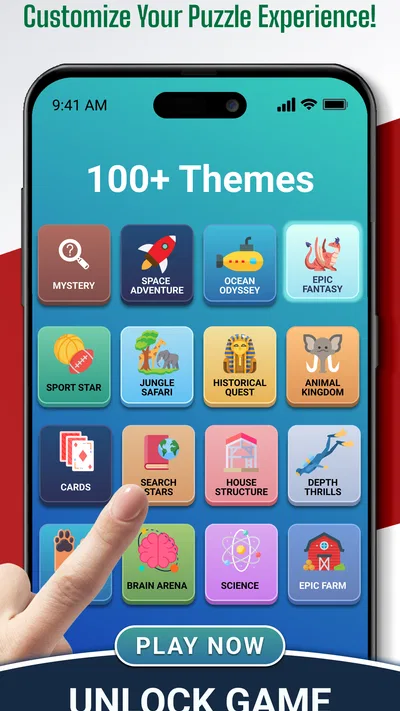
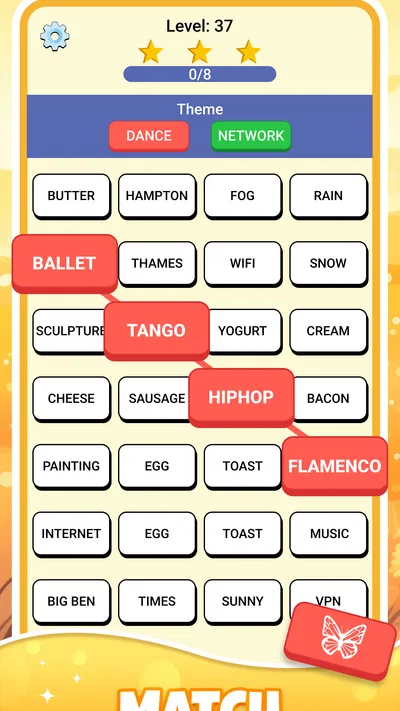
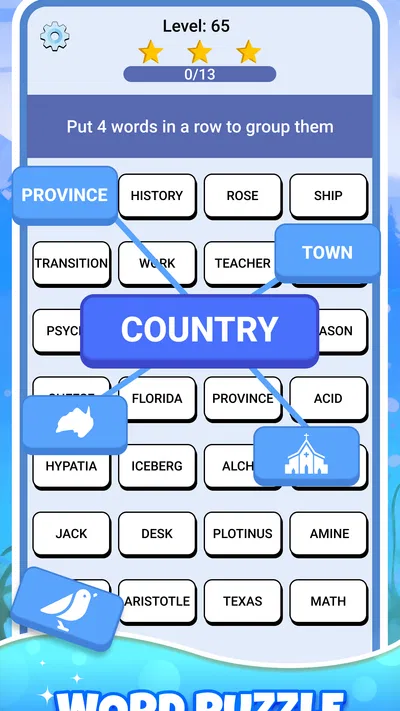
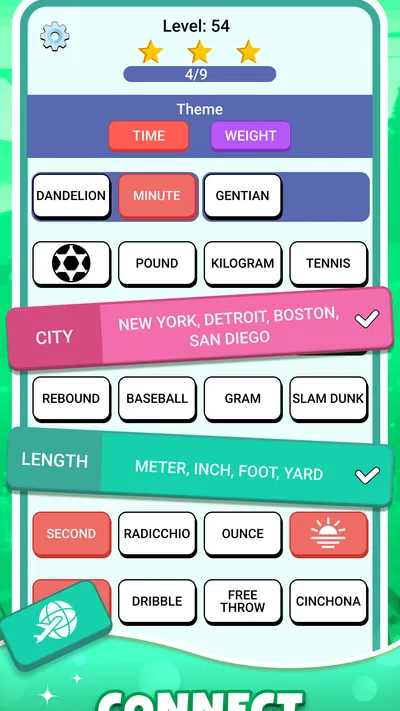
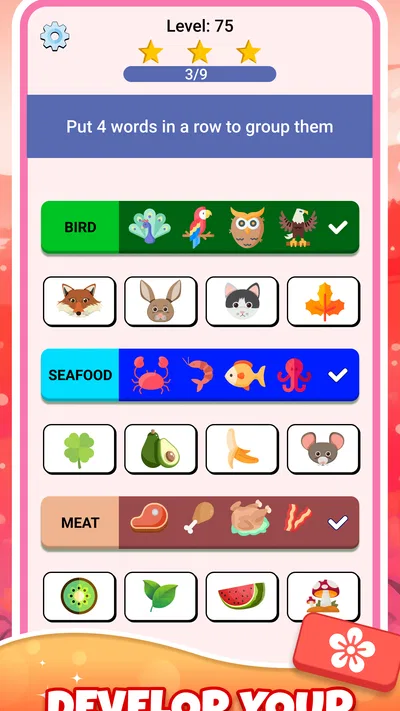
 Analysis byAppsAward
Our review of Word Connect Association
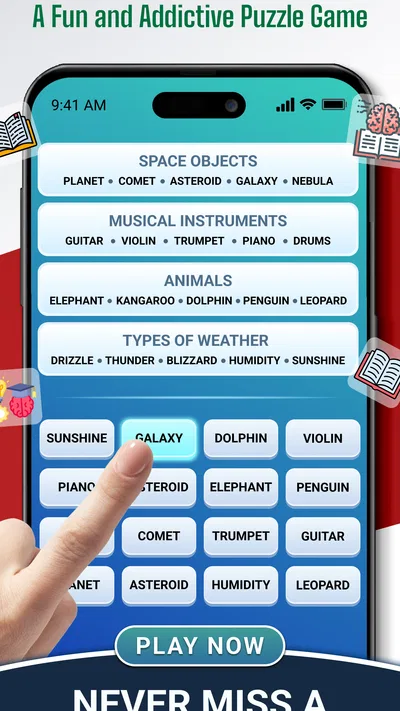
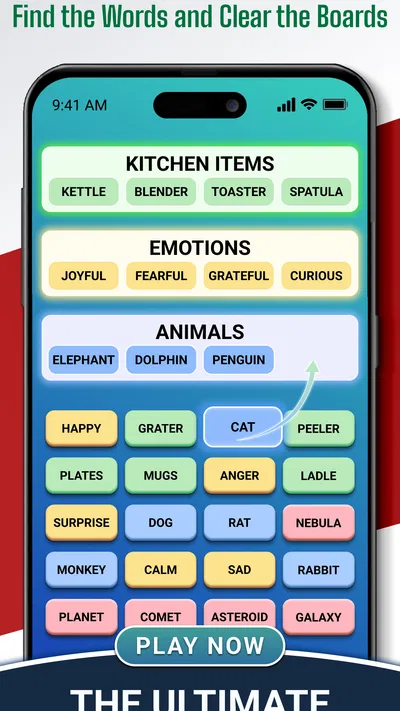
I like word games best when the next move is obvious but the answer still makes me pause. Word Connect Association is built around that small, satisfying challenge: you link related words, check whether your connection fits, and then look for another set to solve. It is a word puzzle game from PlaySimple Games, aimed at casual play rather than long, complicated sessions. My first impression is that it works well as a quiet mental break, though it is not the right pick if you want a deep vocabulary course or a story-driven game.
Starting with a simple connection
The basic appeal is easy to understand. You look at the words in front of you and try to spot a relationship that ties them together. That might mean recognizing a shared topic, a familiar association, or a connection that is less obvious at first glance. The useful part is that the task asks you to think beyond spelling: knowing what individual words mean helps, but noticing how ideas fit together is the real work.
That makes the opening move feel approachable without making every puzzle automatic. I would recommend beginning by scanning the whole set rather than committing to the first pair that seems plausible. A word may belong to more than one mental category, and a quick first guess can distract you from a cleaner relationship elsewhere. Treating the board as a small collection of clues, instead of a sequence of isolated guesses, is a practical way to get started.
The game’s focus also gives it a different texture from a conventional word-search or an anagram game. In those formats, you are usually hunting for a visible arrangement or rearranging letters. Here, the interesting question is semantic: what belongs together, and why? That shift suits players who enjoy associations and categorization more than letter manipulation. If you prefer a puzzle with a single mechanical trick to master, this may feel less structured than you want.
It is an easy game to fit between other tasks because the central idea does not require a lengthy explanation or a big commitment before play feels rewarding. I can imagine opening it while waiting for a drink or taking a short pause from work, solving what I can, and putting it aside. The approach is also friendly to people who do not think of themselves as dedicated puzzle players. You can try a connection, reconsider it, and keep going without needing to learn a complicated control scheme.
Read the words before you chase a guess
One small habit makes the game more enjoyable: look for the broadest possible relationship first, then narrow it down. If several words seem to share a theme, check whether the connection explains the whole group rather than only the most obvious pair. This is especially helpful when a word has multiple meanings. A familiar association can be tempting, but the surrounding words may point to a different sense.
Another useful approach is to pause when a guess feels forced. In association puzzles, forcing a clever link can be less productive than stepping back and noticing a plain one. I find that a brief reset of attention often helps: reread the words, say them quietly in your head, and ask what everyday context they evoke together. That is not a special trick or hidden feature; it is simply a better way to use the game’s central mechanic.
How the puzzle keeps its rhythm
The satisfying part of a round comes from moving between uncertainty and recognition. First I scan, then test an idea, then see whether the words support it. When a connection works, the board gives me a clear sense of progress; when it does not, I have to reconsider the relationship rather than rely on a reflex. That alternating rhythm is why the game can feel relaxing while still asking for attention.
Its feedback is most useful when I treat a mistake as information. A rejected or unsuccessful idea tells me that my chosen relationship is probably too narrow, too vague, or based on the wrong meaning of a word. Instead of repeating the same thought with a slightly different guess, I look for a new angle: category, context, common phrase, or everyday use. This keeps the puzzle from becoming a string of arbitrary attempts.
The loop is also less demanding than a timed challenge. I can take a moment to think rather than racing a clock, which makes the game suitable for a calm break and for players who dislike pressure. The trade-off is that people who want urgency, escalating stakes, or fast competitive rounds may find the pace too gentle. The pleasure here comes from recognition, not from beating a countdown.
Because the connections depend on language and familiarity, difficulty can feel personal. A relationship that seems immediate to one player may not occur to another, especially when a word has a less common meaning or a cultural association. If I get stuck, I do not assume the puzzle is unfair straight away; I first check whether I have been reading a word too literally. Still, anyone who strongly prefers clues with one unambiguous interpretation may sometimes find association-based solving less satisfying.
Why a solved group feels rewarding
A completed connection offers a compact payoff: the scattered words make sense as a group, and the next task becomes the focus. That is a modest reward, but it suits the scale of play. I do not need a lengthy narrative or a complicated progression system to appreciate the moment when a pattern clicks. The game’s appeal is the small mental lift of seeing a relationship that was not obvious a few seconds earlier.
For me, the best use is as a gentle attention exercise, not as a serious way to measure intelligence or learn a language. I can use it to shift gears after repetitive work, or to occupy a short stretch of downtime without committing to a substantial game. It encourages flexible thinking, but I would not treat a good run as proof of broad vocabulary mastery. The puzzles reward noticing connections in the presented words, which is a narrower and more playful skill.
It can also work as a shared, low-pressure activity. If I am sitting with someone, we can each suggest a possible link and compare how we are interpreting the same words. The interesting discussion is often not just whether a guess is right, but what made it seem plausible. That makes the game more conversational than a solitary letter grid, although it still depends on both players enjoying wordplay.
There is a practical limit to that appeal: association puzzles can feel subjective when a connection is not immediately apparent. If I want a crisp, rule-heavy challenge, a crossword, a word-search, or a well-defined anagram puzzle may be a better choice. Those alternatives tend to make the task more about filling a known structure or finding a precise letter pattern. This game is stronger when I want to explore meaning and make a satisfying leap between ideas.
Returning for another short session
The reset is part of the design’s everyday usefulness. Once I have finished the current set of connections, the attention shifts to another puzzle rather than requiring me to remember a complicated sequence of steps. That makes it easy to stop after a brief visit and just as easy to return when I have another spare moment. The repeating cycle is straightforward: inspect the words, test a relationship, respond to the result, enjoy the click of a solution, and begin again.
That same simplicity can become repetitive if you want each session to introduce a dramatically different mode or a long-term challenge with lots of strategic decisions. The core activity remains focused on making word relationships. I see that as a strength for quick play and a limitation for anyone seeking variety above all else. It is worth choosing with that expectation in mind: the game is about returning to a pleasant puzzle habit, not constantly reinventing the rules.
It is free to download, with in-app purchases listed from $0.99 to $199.99 per item. I would approach those purchases as optional rather than part of the basic reason to try the game, and check the purchase prompt carefully before confirming anything. The wide range means it is sensible to be deliberate, particularly if a child uses the device. The game is rated Everyone, but an age rating does not replace sensible purchase settings or supervision.
For a quick decision, the main question is whether you enjoy making connections between words. If you do, the price of entry is low and the format is easy to sample. If you would rather solve by spelling, hunt for hidden letters, or compete under pressure, the usual alternatives in those styles are likely to suit you better. I would also skip it if you need a structured vocabulary curriculum; its purpose is entertainment and casual thinking, not systematic instruction.
Who I would recommend it to
I would suggest it to casual word-game fans, people who enjoy sorting ideas into themes, and anyone looking for a quiet puzzle to fill a short wait. It is especially suitable if you like the feeling of finding an unexpected but fair connection. The game has an average rating of 4.8 from around 43,000 ratings, and it has been installed over a million times, so it has clearly found a broad audience. Those figures are encouraging context, but the best test is still whether its association-based play matches your taste.
PlaySimple Games released it on July 7, 2025, and the current version is 1.70.0. It requires Android 8.0 or later. Those details make it straightforward to judge basic compatibility, while the Everyone age rating suggests a broad audience for the puzzle itself. I would still keep the purchase range in mind when deciding whether to hand a device to a younger player.
My verdict is that Word Connect Association earns its place as an easygoing, repeatable word puzzle when you want a small challenge without a demanding setup. Its strongest moments come from examining a handful of words, trying a plausible link, and feeling the pattern fall into place. Its main weakness is also clear: the same association-focused loop will not satisfy players who crave speed, elaborate progression, or tightly defined letter mechanics.
I would keep it in mind for a commute, a quiet break, or a few minutes between chores, especially if I wanted to exercise flexible thinking without turning the moment into a serious study session. Go in expecting short, language-based puzzles and a gentle rhythm, rather than a deep game with many different systems. With that expectation, it is an appealing choice; without it, a crossword or another more structured word game may be a better fit.
Pros
- Quick rounds make it easy to play during short breaks.
- Word puzzles offer a satisfying way to practise vocabulary.
- Simple controls are easy for new players to learn.
- Progressive challenges provide a steady sense of achievement.
- Offline play is useful when an internet connection is unavailable.
Cons
- Later puzzles can feel repetitive.
- Some word solutions may seem unintuitive.
- Hints can make challenging levels less rewarding.
- Ads may interrupt the flow between puzzles.
- Small screens can make letter selection less comfortable.
Best Word Game 2026
Our verdict
Link related words, train your brain, and relax with calming word puzzles!
Frequently Asked Questions
What is Word Connect Association?
Word Connect Association is a word puzzle game that combines making words from letter sets with spotting connections between related words. The exact rules and available modes can vary by version, but the central challenge is to use vocabulary and pattern recognition to complete each puzzle. If you enjoy relaxed brain teasers, check the app’s store listing for screenshots and mode details before downloading.
How do you play Word Connect Association?
Gameplay generally asks you to form valid words from the letters provided and use them to solve or complete a word-association challenge. Look for shared themes, meanings, or other relationships among the answers, rather than treating every word as unrelated. The game’s instructions should explain its specific controls and scoring, so read the introductory prompts carefully, especially if a level uses a different puzzle format.
Is Word Connect Association free to download and play?
Whether the game is free, includes advertisements, or offers optional in-app purchases depends on the version and store listing available in your region. Before installing, review the price, purchase information, and recent user feedback on Google Play or the App Store. A free download does not necessarily mean every feature or hint is free, so check the listing for details about optional payments.
Can I play Word Connect Association offline?
Offline availability can depend on the app version and on which features you want to use. Some word puzzles may work without an internet connection, while advertisements, purchases, cloud saves, or other online services may require one. To avoid interruptions, check the developer’s store description and test a level with your device disconnected after installation. Do not assume progress will sync between devices while offline.
Is Word Connect Association suitable for children, and what should I check before downloading?
Word Connect Association may appeal to players who enjoy vocabulary games, but age suitability depends on the content, advertising, and data practices of the specific version. Check the age rating, privacy information, and permissions shown in the store, and consider whether optional purchases or ads are appropriate for the player. Parents may also want to try the opening levels and review device-level purchase controls before allowing independent play.