- Award score
- 4.8Rating
- 50,000,000+installs
- Free
App information
Screenshots

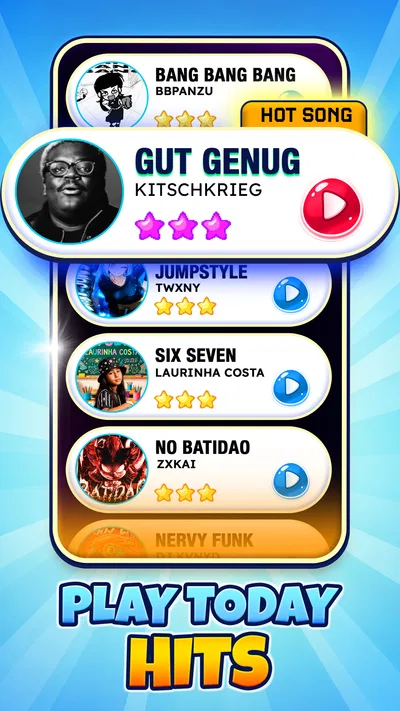
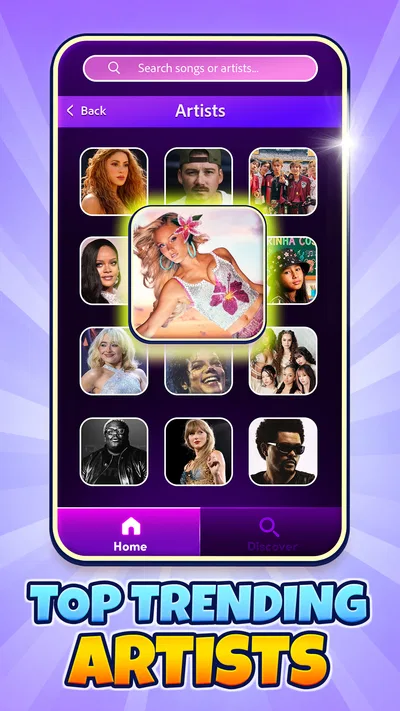

 Analysis byAppsAward
Our review of Music Piano 7: Rush Song Games
Some music games are easy to pick up but hard to put down, and Music Piano 7: Rush Song Games is built around that familiar rhythm-game pull. You tap along to music, try to keep your timing steady, and get the urge to have another go when a run ends. Its focus on piano tiles, K-pop, and EDM gives it a clear identity for players who want a quick musical challenge rather than a complicated game to learn.
From the first tap to the rhythm
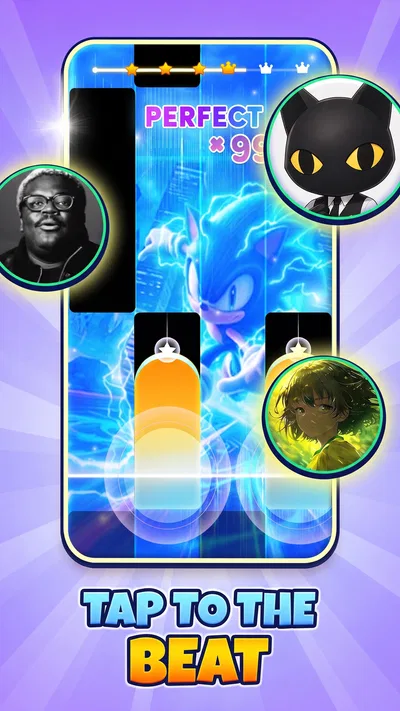
The basic appeal is immediate: follow the music and tap the tiles in time. That simple action makes the game approachable even if you have not spent much time with piano tile games. You do not need to learn a long list of commands before you can start engaging with the central challenge. Your attention goes straight to the screen, the beat, and the next tap.
In practice, the experience is about maintaining focus as the song continues. Each successful tap gives you a small confirmation that you are keeping pace; a missed beat breaks that feeling and makes you want to recover your rhythm. The feedback is easy to understand without a tutorial-heavy approach: stay attentive, respond to the tiles, and keep the music moving.
That clarity works especially well for short play sessions. I can imagine opening the game when I have a few spare minutes, choosing to play, and getting into the action without having to settle in for a long commitment. The same simplicity also makes it suitable for players who enjoy testing their coordination and reaction timing in compact bursts.
A music game with a direct premise
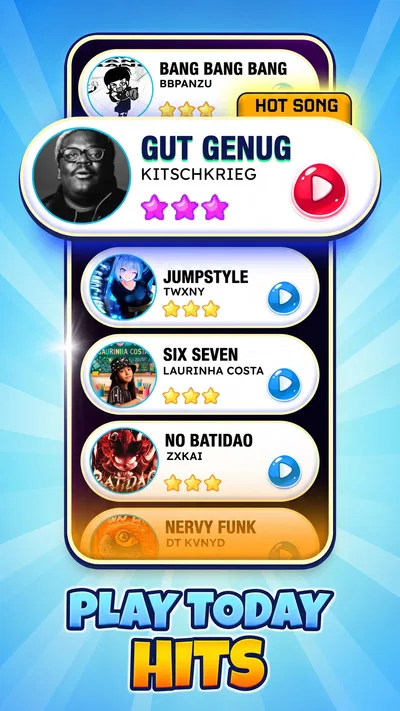
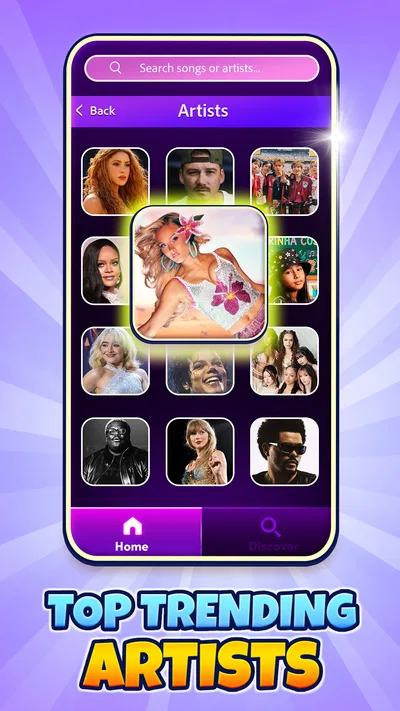
The game’s store summary points to piano tiles alongside K-pop and EDM, so its musical identity is easy to grasp. Those genres give the experience a more contemporary feel than a piano game built around a single narrow style. If you already enjoy energetic pop and electronic music, that framing is likely to make the tapping challenge feel more inviting.
Still, the appeal is not only about the songs. Rhythm games turn listening into action: instead of letting a track play in the background, you have to respond to what appears on screen. That shift makes familiar musical patterns feel active. Your eyes and ears work together, and even a simple tap can feel satisfying when it lands in time.
The best part of the core loop is how clearly action and feedback connect. Tap well, stay with the beat, and the run continues; lose the timing and you immediately have a reason to try again. That direct relationship makes the game understandable from the outset and gives each attempt a small, personal goal: do a little better than the last time.
Keeping time and chasing a clean run
As the play continues, the challenge is less about learning complicated controls and more about staying composed. Rhythm games ask for consistency, and a run can feel different depending on how focused you are. When the taps line up with the music, the experience feels smooth and rewarding. When they do not, the interruption is a clear signal to sharpen your timing on the next attempt.
That kind of feedback is useful because it does not need a lengthy explanation. You can feel whether you are in sync. The game’s appeal comes from repeating the basic action with more attention, rather than from having to remember a complicated set of rules. For casual players, that lowers the barrier to entry; for fans of the genre, it leaves room to focus on execution.
It is also the reason the game can work as a quick distraction. A rhythm challenge gives you something concrete to concentrate on, even in a short session. There is a small sense of flow when your reactions match the track, and the desire to preserve that flow can keep you engaged through another attempt.
Reward in small steps
The reward here is closely tied to performance. Completing a run or simply feeling more in control of the timing can be satisfying in its own right. You are not just listening to a song; you are trying to keep your response aligned with it. That makes improvement easy to recognize on a personal level, even when you are only comparing one attempt with the next.
This is a familiar strength of music rhythm games: the goal is simple enough to understand, but the timing keeps the experience from feeling entirely passive. A successful sequence offers a little burst of satisfaction, while a mistake gives the next run a purpose. Instead of needing a large reward system to explain why you should continue, the game can rely on the appeal of getting into the groove and doing better.
Its broad audience also makes sense for this style. Music and tapping are easy concepts to understand, and the game is rated for everyone. That does not mean every player will find the same level of challenge or enjoyment, but it does make the premise accessible to a wide range of people who want a straightforward musical game.
The game is free to play, which makes it easy to consider if you are looking for a casual download rather than a paid music title. It has attracted over 50 million installs, and its average rating is 4.8 from around 472,000 ratings. Those figures suggest that many players have found the formula appealing, though your own enjoyment will depend on whether you like repeating rhythm challenges and tapping along to music.
Why a run leads to another
A session naturally resets when an attempt ends. Rather than treating that as a hard stop, the game’s simple loop makes it easy to think, “I can do that again with better timing.” You already understand the action, so returning does not require a fresh learning process. You can focus on the same basic task and see whether you maintain the rhythm for longer or play more confidently.
That reset-and-retry structure is central to the experience. A mistake is not mysterious: it is a moment when your timing slipped. The next attempt gives you an immediate chance to correct it. This can be motivating for players who enjoy incremental improvement, but it may feel repetitive to anyone who wants a story, deep strategy, or a substantially different activity from one session to the next.
For me, that makes the game best suited to brief, focused play. It offers a clear reason to restart, but the reason is personal performance rather than a complicated progression system. The pleasure comes from getting closer to the beat and keeping the run going. If that loop sounds fun, the straightforward design is a strength; if you need constant variety, the repeated tapping may not hold your attention for long.
Playing around your routine
The store summary highlights offline rhythm play, which suits the game’s pick-up-and-play character. The concept does not depend on a long setup: you can concentrate on the music and the tiles, then return to whatever you were doing after a short session. That makes it a natural option for a break, a commute, or another moment when you want a lightweight game to occupy your attention.
It is also easy to picture sharing the basic idea with someone who has not played a rhythm game before. The instructions are essentially built into the action: watch, listen, and tap. There is a satisfying immediacy to that format, and the piano-tile presentation helps communicate the kind of response the game expects without making the experience feel like a technical exercise.
Music preference will still shape how much the game clicks. Players drawn to K-pop and EDM may be especially interested in its stated musical focus, while others may be more curious about the timing challenge itself. Either way, the key question is whether you enjoy turning a track into a test of attention and coordination. That is the heart of the experience, and the game keeps its focus there.
What its scale says about the appeal
Music Piano 7: Rush Song Games has been available since October 12, 2023, and is developed by Melodya Muses. Its current version is 3.10.0, and it requires Android 7.0 or later. The game has also received around 3,100 written reviews, giving prospective players a sizeable pool of impressions to explore in the app store.
Its reach suggests that the uncomplicated rhythm-game format has found a substantial audience. The important thing to take from that is not that every player will love it, but that the core idea is easy to understand and widely approachable. You do not need to be a musician to enjoy tapping in time, and you do not need to commit to a lengthy session to get a sense of the game.
Final take on the play loop
As a free music game, Music Piano 7: Rush Song Games does its best work when you want a direct, low-friction rhythm challenge. The action is simple to grasp, the feedback is immediate, and each mistake creates a clear opening for another try. Its emphasis on piano tiles with K-pop and EDM gives it a recognizable musical direction, while the familiar tap-and-retry structure keeps the experience easy to return to.
I would recommend it to players who like testing their timing, enjoy short sessions, or want a casual game that turns music into an active challenge. It is less compelling if you are looking for deep systems or a changing set of activities, because its appeal rests on repetition and gradual improvement. But when you are in the mood to follow a beat, sharpen your reactions, and chase one cleaner run, the loop makes sense: tap, respond to the rhythm, enjoy the progress, and start again.
Pros
- Quick rounds make it easy to enjoy during short breaks.
- One-touch controls are simple for beginners to learn.
- The music-based format gives routine play a rhythmic challenge.
- A wide song selection can keep sessions feeling varied.
- Performance improves with practice and careful timing.
Cons
- Fast note sequences can feel unforgiving to new players.
- Small targets may be difficult to tap accurately on phones.
- Repeated attempts can make songs feel repetitive.
- The experience may be interrupted by frequent advertisements.
- Some songs or features may require an internet connection.
Best Music Game 2026
Our verdict
Piano Tiles Music Game! Kpop, EDM Piano Tiles - Play Offline Rhythm Games
Frequently Asked Questions
What is Music Piano 7: Rush Song Games?
Music Piano 7: Rush Song Games is a rhythm game built around tapping piano-style tiles in time with music. Its central challenge is to follow the notes as they move across the screen, avoid mistakes, and keep a song going for as long as possible. The pace and accuracy required can make familiar piano-tile gameplay feel energetic, especially for short play sessions.
How do you play Music Piano 7: Rush Song Games?
You tap the tiles as they reach the indicated part of the screen, matching your timing to the beat and note sequence. Missing a tile or tapping at the wrong time can interrupt a run, so it helps to watch the upcoming pattern rather than focus only on the current note. The controls are simple, but faster sections may take practice and concentration.
Does Music Piano 7: Rush Song Games work offline?
Offline availability can depend on the particular version and the features you want to use. Basic gameplay may be accessible without a continuous connection, while downloading songs, loading ads, or using online features may require internet access. Check the current store listing and test the game with your device offline before relying on it for travel or places without a connection.
Is Music Piano 7: Rush Song Games free to download, and does it include ads or purchases?
The price, advertising, and optional purchase details can vary by platform, region, and app version. Before installing, review the Google Play or App Store listing for the current price and any disclosures about ads or in-app purchases. If the game is free to download, that does not necessarily mean every feature or item is free, so check purchase prompts before confirming them.
Is Music Piano 7: Rush Song Games suitable for children, and what should parents check?
The tap-to-the-beat format is straightforward to understand, but suitability depends on the child’s age, the music and visuals, and the store’s current content rating. Parents should also review the app’s privacy information and check whether it contains advertisements, online features, or in-app purchases. For younger players, it is sensible to supervise the first session and use device settings to manage purchases and screen time.