- Award score
- 4.4Rating
- 100,000,000+installs
- Free
App information
Screenshots
 Analysis byAppsAward
Our review of Toca Boca World
When I choose an educational game for a child, I look for more than a lesson wrapped in bright colors. I want something they can return to without needing constant instructions, and I want to know whether the play encourages imagination or simply asks them to follow a sequence. Toca Boca World is best understood as a creative play space: it gives children room to make up stories, change their characters and explore, rather than steering them through a conventional course of challenges.
That distinction matters. If you are hoping for structured practice in reading, maths or another school subject, this is not the kind of educational game I would choose first. If the goal is open-ended storytelling and playful exploration, though, it has a much clearer case. Developed by Toca Boca, it is rated for Everyone and is free to install, while optional in-app purchases range from $0.49 to $199.99 per item. The broad price range makes it worth thinking about how purchases fit into your household before handing over a device.
How to decide whether this kind of play fits
The most useful question is not whether a child can “finish” the game, but what they enjoy doing when no one gives them a task. A child who likes inventing characters, arranging scenes and narrating what is happening may find plenty to do here. A child who prefers clear goals, right-or-wrong answers or visible progress through lessons may lose interest, even though the game sits in the educational category.
In my view, the educational value comes mainly from the play children bring to it. Making up a story can involve choosing roles, remembering what a character has done and changing the plot when something unexpected happens. That is a different kind of engagement from a game that teaches a particular skill directly. It can be a good companion to imaginative play, but I would not treat it as a substitute for a focused learning tool.
Age rating is one practical starting point: the game is rated Everyone. That does not tell you whether every child will find it engaging or whether every household will be comfortable with optional purchases. I would still set expectations about device time and purchases, especially for a younger player who may tap through menus without understanding that some items cost money.
It is also a substantial, established choice rather than a niche experiment. It has an average rating of 4.4 from around 6.9 million ratings, alongside roughly 219,000 written reviews and over 100 million installs. Those figures suggest that many people have tried it, but they do not settle the real decision for your family: whether open-ended play is what the child wants today.
What makes the play feel different
The central appeal is the freedom to create and explore a personal story. Instead of asking a child to solve a fixed chain of problems, the game invites them to decide who is involved and what happens next. That can make a short visit feel complete without a formal ending: a child can invent one small scene, then leave the larger imaginary world for another day.
One practical way to get more from it is to give a child a light prompt rather than a full set of instructions. “What happened before this scene?” or “Who might need help here?” can turn casual tapping into a story with a beginning and a consequence. I like this approach because it leaves the child in charge while helping a parent join in without taking over.
A second useful habit is to treat the game as a shared storytelling activity rather than a solo screen distraction. A child can explain why a character is in a particular situation, while an adult asks a question and lets them decide the answer. This is especially useful during a quiet stretch at home when you want an activity that can occupy a child and still give you a natural way to participate for a few minutes.
It can also suit children who enjoy revisiting an idea and changing it. A story does not have to be polished or finished to be satisfying; a child might alter a character’s role or imagine a different outcome on the next visit. That flexibility is a strength compared with games that depend on completing one objective after another. It is also a trade-off: children who want a clear reward for every action may find the freedom less motivating.
Where it wins over more structured games
Compared with quiz-style learning games, Toca Boca World puts less emphasis on checking whether a child knows a specific answer. That makes it a better fit when you want to encourage make-believe, dialogue and self-directed choices. It is also distinct from many simple digital toys that offer a single repetitive interaction: the appeal here is that the child supplies much of the meaning through the story they invent.
That freedom can be valuable for a child who resists being tested or who is more interested in storytelling than in a score. The game gives them a setting in which to exercise choice, and an adult can use the play as a starting point for conversation. For example, if a child invents a disagreement between characters, you can ask what might help them resolve it. The game does not need to teach a formal lesson for that exchange to be worthwhile.
There is a balance to keep in mind, however. Open-ended play can look quiet or repetitive from an adult’s point of view, even when the child is building a detailed scenario in their head. I would give a child a little time to settle in before deciding that nothing is happening. At the same time, if they repeatedly ask what to do next, that may be a sign that a more guided game would suit them better.
For a realistic everyday use, I would offer it during a short waiting period or a calm spell at home, with a simple invitation to create one scene and tell me about it afterward. That gives the child a manageable starting point without pretending that the game is a timer-based activity or a formal lesson. If you need an app that reliably drills a particular school skill, choose one designed around that subject instead.
When another kind of app is the better choice
The strongest alternatives depend on what you want the child to do. A structured educational app is usually the better choice for deliberate practice, step-by-step instruction or feedback on a specific subject. A puzzle game may be a closer match for a child who wants a challenge with a clear solution. And if the child mainly wants to draw or make things, a dedicated creative tool could provide a more direct route to that activity.
Those alternatives are not automatically better; they simply serve different needs. Toca Boca World is most persuasive when a child enjoys inventing scenes without being told which answer is right. It is less persuasive for a family looking for a tightly bounded activity with a measurable learning target or a defined endpoint. I would decide based on the child’s play style, not on the educational label alone.
Parents should also consider the purchase model. The game is free to install, but optional in-app purchases can be inexpensive or very costly, with listed items spanning $0.49 to $199.99. That wide range makes it sensible to review purchase controls on the device and explain in simple terms that not everything visible in a game is automatically included. A child who is allowed to explore without purchase boundaries may encounter a source of friction that has nothing to do with the creative play itself.
There is a small setup cost in expectations, too. Before a child starts, I would say whether purchases are allowed and whether they should ask before tapping anything that appears to involve buying. This is a more useful safeguard than assuming a free install means there can be no spending decisions. It also helps keep the focus on what the child can invent with the experience they already have.
Starting well and making the switch
If your child is moving from a more goal-driven game, the first few sessions may feel different. There may be no obvious “next level” to chase, so it helps to suggest a story prompt: invent a character, decide what they are trying to do, and explain what happens when their plan changes. I would avoid supplying every detail. The game is most rewarding when the child gets to make the decisions rather than simply follow an adult’s script.
Switching from this to a structured app is easy in one sense: the two styles can complement each other. You can use this for imaginative play and a subject-focused app when a child wants to practise a particular skill. The harder part is choosing the right tool for the moment. If a child asks for a clear task, do not expect open-ended exploration to satisfy that request; if they want to make up a story, a quiz may feel like work.
The title is free, and its current version is 1.141. It was released on November 21, 2018, and the stated minimum operating-system requirement is version 7.0. These details make it easier to check basic compatibility before trying it, while the large optional-purchase range remains the main point I would discuss with a child before play begins.
My recommendation for families
I recommend Toca Boca World for children who naturally turn toys, drawings or everyday moments into stories and want room to direct their own play. It is also a reasonable choice for an adult who is happy to join in occasionally by asking questions rather than turning the activity into a lesson. Its strongest quality is not a promise of instant learning; it is the space it gives children to shape an idea and keep changing it.
I would skip it if your main goal is a defined curriculum, a clear progression of challenges or a game that tells a child exactly what to do next. I would also pause if you do not want to manage in-app purchase settings, since the optional items cover a broad price range. In those situations, a focused learning app, puzzle game or simple offline activity may be a better match.
For families who value creative freedom, the recommendation is straightforward: try it as a storytelling space, set purchase boundaries first, and judge it by how your child uses the freedom rather than by whether they reach an endpoint. Its best use is open-ended play with room for a child’s own ideas. If that is what you are looking for, this is a well-established educational game worth considering; if you need structured teaching, choose a tool built for that job.
Pros
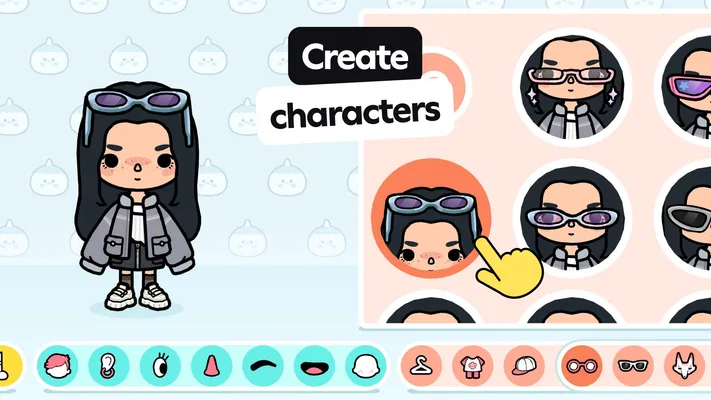
- Create characters with a wide range of outfits and hairstyles
- Explore locations and invent stories at your own pace
- Many free areas are available without a subscription
- Regular updates can add new content to explore
- Parental controls help manage purchases and play time
Cons
- Many locations and items require separate purchases
- Some content may take time to download on slower connections
- The open-ended play may not suit children who prefer goals
- Frequent updates can use a significant amount of storage
- Online features may require adult guidance for younger children
Best Educational Game 2026
Our verdict
Create, customize & explore your Toca Boca story! Endless fun & creativity await
Frequently Asked Questions
What is Toca Boca World?
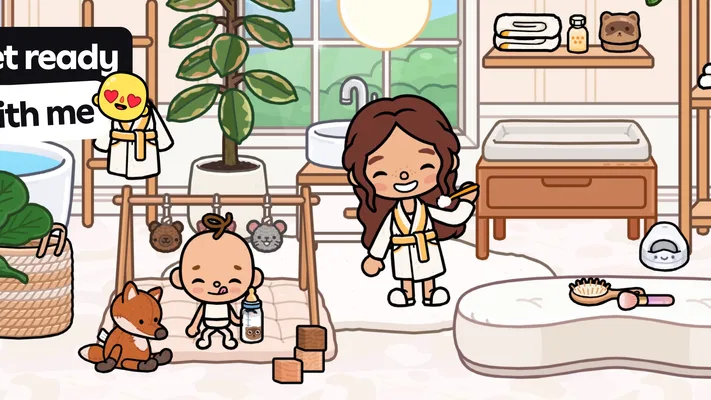
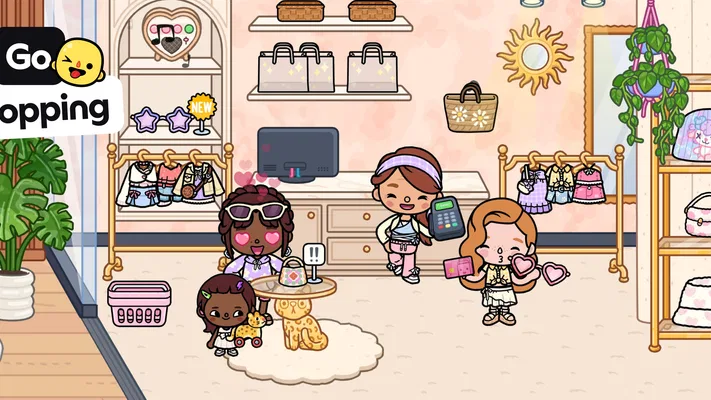
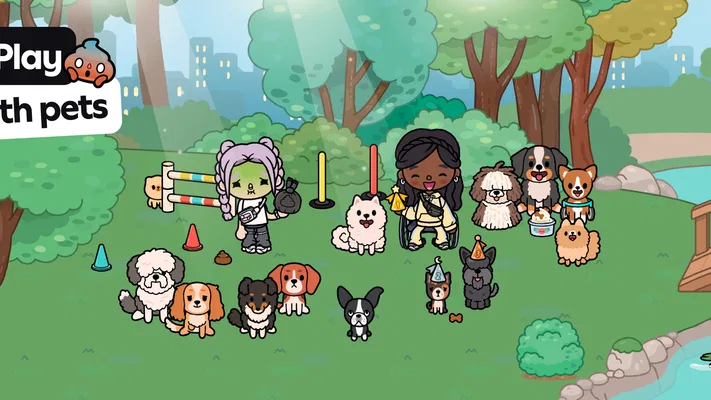
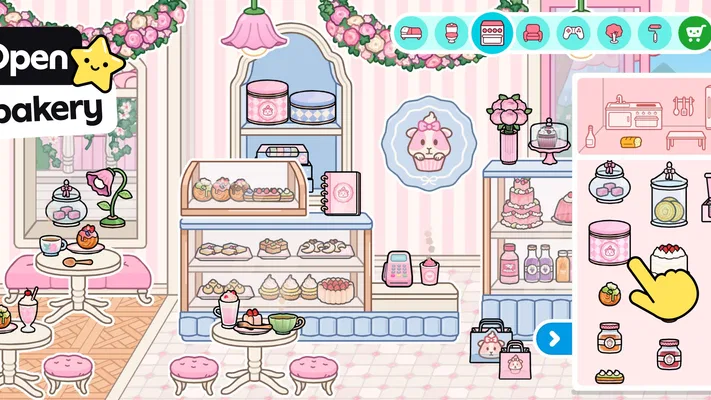
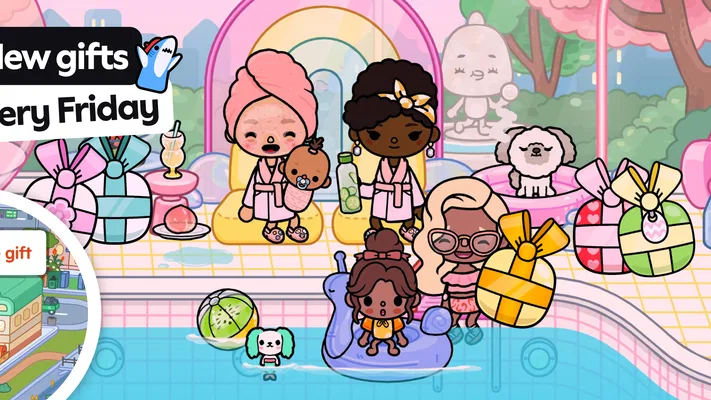
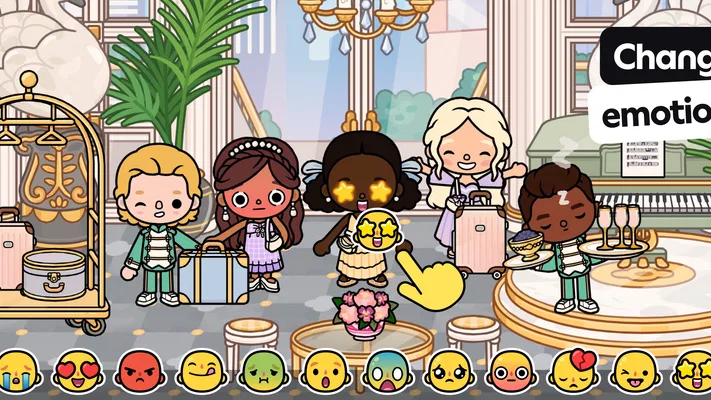
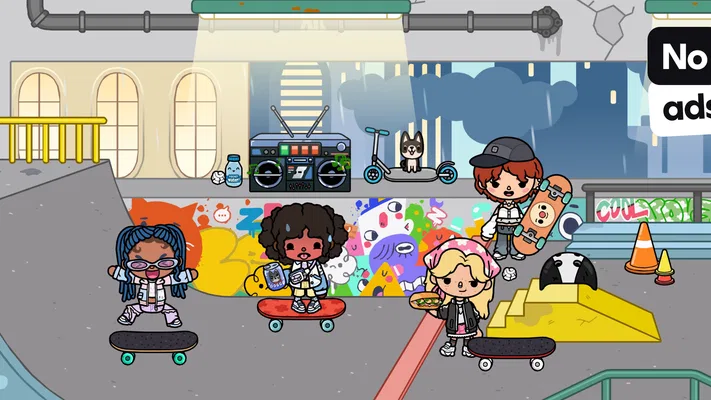
Toca Boca World is a creative play app where you can explore locations, create characters, decorate spaces, and invent your own stories. It combines many familiar Toca Boca places and activities in one world, so play can shift from designing a character to acting out a scene. There is no single required storyline or way to play; the experience is built around imaginative, open-ended exploration.
Is Toca Boca World free to download and play?
The app is generally available to download for free, and it includes content players can explore without purchasing every add-on. However, additional locations, character packs, and other content may be offered as in-app purchases, and availability can vary by platform or region. Check the app store listing and purchase settings before downloading, especially if a child will be using the device, so you understand what is included and can manage spending.
Can children play Toca Boca World safely?
Toca Boca World is designed as a creative play experience for children, with pretend scenarios rather than competitive combat or a required social feed. Still, parents should review the current store listing, privacy information, and any available parental controls, since features and policies can change. It is also sensible to protect purchases with device-level authentication and supervise play in line with the child’s age and your family’s preferences.
Does Toca Boca World require an internet connection?
Some parts of Toca Boca World may be available offline after the app and relevant content have been downloaded, but an internet connection can be needed to install updates, access the store, or download additional content. Offline behavior may differ by device and version, so it is worth testing the app before relying on it during travel. Make sure any desired locations or packs have finished downloading while connected.
Can I transfer Toca Boca World progress or purchases to another device?
Progress and purchased content may depend on the platform, account, and the app’s current restore or backup options. Moving between devices or switching from Android to iOS does not necessarily transfer everything automatically, because purchases are often tied to the store account used to buy them. Before changing devices, check the app’s help information and your store account settings, and avoid deleting the original installation until you have confirmed what can be restored.

Download Toca Boca World
Similar games
View all 8.8
Coloring Games: Color & Paint
Educational
 6.6
Toca Boca Jr: Fun Kids Games
Educational
 8.7
Baby Games: Piano & Baby Phone
Educational
 8.6
PBS KIDS Games
Educational