- Award score
- 4.6Rating
- 10,000,000+installs
- Free
App information
Screenshots


 Analysis byAppsAward
Our review of DoorDash - Dasher
My first impression of DoorDash - Dasher is that it makes a flexible delivery job feel approachable: open the app, look for work, and fit deliveries around the rest of your day. That simplicity is appealing during the first week, especially if you want to try delivery driving without treating it as a fixed shift. But the better test is what happens after the novelty wears off. To me, the app’s lasting value depends less on its promise of flexibility and more on whether delivery work fits your routine, vehicle, and tolerance for waiting and driving.
Getting started feels flexible, but the work is still real
DoorDash’s Dasher app is a business tool from DoorDash, built for people delivering orders rather than customers placing them. It is free, rated for Everyone, and sits in the business category. The app’s core appeal is control over when to try working: it is meant for people who want to deliver on their own schedule, not simply browse restaurant menus or arrange a one-off meal.
That distinction matters if you are deciding whether to install it. This is not a passive income app where you can leave it running and expect money to appear. You need to be ready to travel, pay attention to instructions, and make practical choices about where and when to work. I would approach the first few sessions as a trial of the whole routine, not just a test of whether the interface is easy to use.
In ordinary use, the useful question is not “Can I open the app?” but “Can I fit a delivery run into the rest of my day without making everything else harder?” Someone with a free evening and a convenient way to get around may find the flexible setup attractive. Someone who needs a guaranteed, predictable amount of work at a fixed time should be more cautious: flexibility and dependable scheduling are not the same thing.
The app has been available since December 10, 2013, and its current version is 8.104.3. Its 4.6 average rating across around 685,000 ratings suggests that many people find it worthwhile, while the volume of feedback also reflects how widely it is used. Those numbers can help set expectations about familiarity, but they cannot tell you whether your local delivery routine will feel worthwhile.
A realistic first-week test
Imagine you finish your main job early one evening and have a few hours available. You open the Dasher app, see whether you can work, and decide whether the timing makes sense. If you do go out, the day is not just a matter of accepting an order: you must travel to the pickup, handle the handoff, and complete the delivery while staying aware of your route and time. Then you have to decide whether continuing still suits your evening.
That scenario is why I would avoid judging the app from a single exciting first run. A good first session can make the work feel easy, but a quiet stretch, awkward route, or inconvenient pickup can change the picture. Try it at the times you would genuinely expect to work, and pay attention to the full experience, including the time spent getting ready and returning to your normal plans.
One practical habit is to set a personal stopping point before beginning. For example, decide in advance when you need to head home or when you will stop accepting work for the evening. That boundary helps keep “I have the app open” from turning into an unplanned, tiring shift. It also gives you a fairer way to compare sessions: did this time slot fit your life, or did it take over the time you meant to keep free?
What makes it useful after the first few sessions
The recurring value is the ability to consider delivery work when your schedule changes, rather than having to commit to the same pattern every week. That can suit a student with changing class hours, a worker with occasional free evenings, or someone who wants to test whether driving deliveries can complement another source of income. The important caveat is that a flexible opportunity is valuable only when the available work and the effort required make sense to you.
For month-to-month use, I would treat the app as a way to organize a work option, not as a promise of a particular income. Keep a simple personal note after each run: when you went out, how long you were away, how the route felt, and whether the experience was worth repeating. You do not need complicated bookkeeping to notice patterns. A few weeks of honest notes can show whether certain parts of your schedule are consistently more practical than others.
A less obvious trade-off is that convenience on the app’s side does not erase the real-world costs on yours. Driving, waiting, and changing plans all consume time and energy. Before making regular use of Dasher, consider the costs you personally bear, such as fuel and vehicle wear, and compare them with what you actually take home. I would not make a decision based only on a busy-looking screen or a single strong day.
It is also worth separating this app from the usual alternatives in flexible work. A fixed part-time job may offer a more regular schedule, while other gig work may suit people who prefer tasks that do not involve food pickups and deliveries. Dasher is most compelling if you specifically want to use your available time for delivery driving and are comfortable with the practical demands of that work. If what you need is predictability, less time on the road, or work that can be done from home, a different option may fit better.
Small routines that help the work stay manageable
First, decide where you are comfortable working before you begin. Knowing your own boundaries around distance, traffic, parking, and unfamiliar areas makes it easier to judge whether an opportunity fits you, rather than letting the app’s availability make the decision for you. This is especially useful when you are learning, because the quickest-looking choice is not always the least stressful one.
Second, think in complete blocks of time. Include the effort of getting ready, reaching a sensible starting point, and finishing the run—not just the minutes spent actively delivering. This is a useful way to compare Dasher with a regular shift: a delivery session may be flexible, but its true footprint on your day can be larger than the time you planned to spend working.
Third, review how the job affects your week, not only your wallet. If a few short sessions leave you tired or interfere with rest, that matters. On the other hand, if occasional runs fit around existing commitments without creating stress, the app may earn a continuing place as an optional work channel. That kind of personal check is more informative than assuming the same schedule will suit everyone.
These habits are not extra features hidden in the software; they are ways to use a flexible work tool thoughtfully. In my view, they make the difference between opening the app whenever you have a spare moment and building a routine that remains sustainable.
The ongoing effort and the points that can wear you down
Maintenance here is mostly about keeping your work routine in order. You will need to decide when you are available, prepare for time on the road, and stay attentive while handling pickups and drop-offs. The app may help coordinate the delivery work, but it cannot remove the need to manage your energy, transport, and schedule. If you want a work app that requires almost no planning once installed, this is not that kind of experience.
There is also a practical learning curve that goes beyond tapping through screens. You have to learn what makes a delivery session comfortable for you: which hours fit your life, how much travel you are willing to take on, and how to avoid letting one run disrupt the rest of your plans. Give yourself room to learn rather than expecting every early session to be efficient. The app can present an opportunity, but your judgment still determines whether it is a sensible one.
The main source of fatigue is repetition. Driving the same kinds of routes, dealing with delays, and staying alert through a run can feel less novel after several weeks. Flexibility may soften that feeling because you can choose when to work, but it does not make the work itself effortless. If you already dislike driving in busy conditions or feel drained by time-sensitive errands, that dislike is likely to matter more over time than the convenience of opening an app.
Another possible friction point is uncertainty from day to day. A flexible setup can be useful precisely because it does not force you into a fixed schedule, yet that same openness can make it harder to plan around work with confidence. If you need stable hours and a clear routine, consider whether a conventional shift-based role would make life easier. If you are willing to treat Dasher as an option rather than a guaranteed plan, the flexibility is easier to appreciate.
For readers asking whether it is suitable for a first delivery job, I would say it can be a reasonable way to explore this type of work if you are prepared for the road-based responsibilities. If you are asking whether you can rely on it as your only source of income, I would not assume so simply from the app’s presence or popularity. Your local circumstances and your own experience need to guide that decision.
The app has over 10 million installs, which shows it has reached a large audience, but popularity is not a substitute for fit. Its Everyone age rating is broad; the work itself still calls for adult judgment about road safety, time, and personal costs. I would use the first few weeks to find out whether the practical routine suits you, then reassess rather than letting an early burst of enthusiasm make the decision for you.
Does Dasher earn a lasting place?
My long-term verdict is that DoorDash - Dasher is worth considering for people who want an adjustable way to take on delivery work and are comfortable being on the move. Its strongest lasting quality is not novelty but the possibility of fitting work into changing pockets of free time. For someone with suitable transport, realistic expectations, and the patience to learn what makes a run worthwhile, that can be a useful option to keep available.
I would be less enthusiastic if you need reliable fixed hours, want to avoid driving, or expect the app alone to make the work easy and predictable. The continuing effort is physical and logistical, and your experience will depend on the circumstances around each session. A fixed part-time role may be the better choice if routine matters more than flexibility; a different kind of gig work may be better if you want to avoid delivery routes.
DoorDash developed an app with a clear purpose, and the free download lowers the barrier to trying it. But keeping it installed should depend on what your own weeks tell you. If the work fits naturally into your schedule and the effort feels worthwhile after the first excitement fades, it can earn a regular place. If each run creates more hassle than value, deleting it or switching to a more predictable alternative is a sensible choice, not a failure to use the app correctly.
Pros
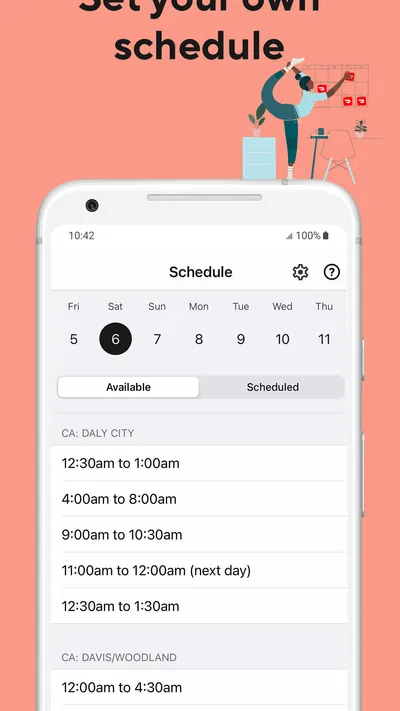
- Flexible scheduling lets Dashers choose when to work.
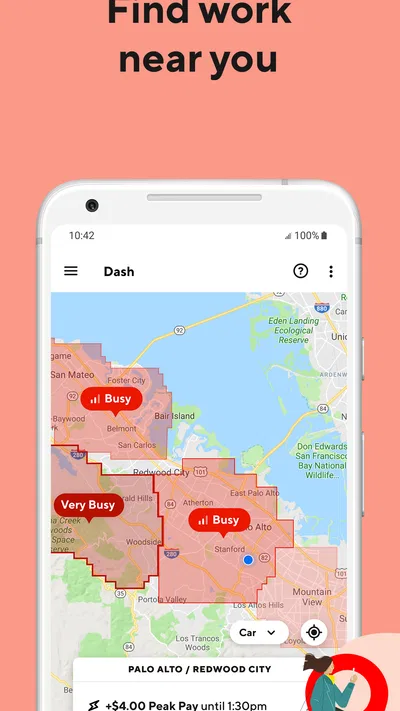
- Drivers can view delivery offers before accepting them.
- The app provides turn-by-turn navigation to pickup and drop-off locations.
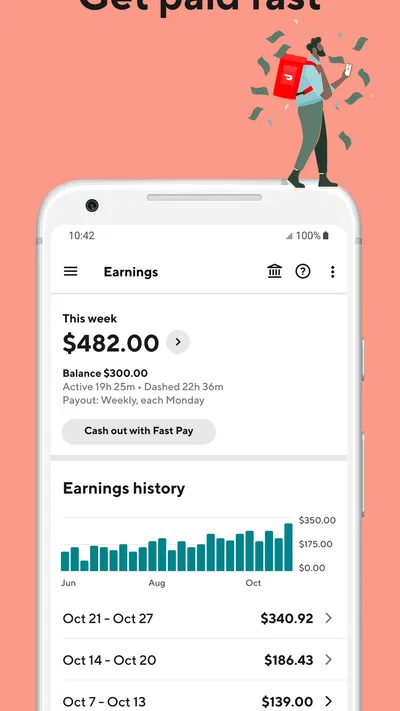
- Earnings and delivery activity are tracked in the app.
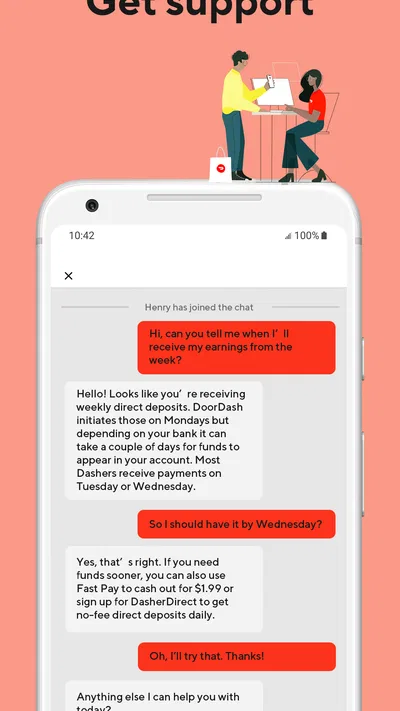
- In-app support can help resolve issues during a delivery.
Cons
- Pay can vary significantly by location and time of day.
- Dashers cover their own fuel and vehicle maintenance costs.
- Busy periods may bring more offers than drivers can accept.
- Customers may provide inaccurate delivery instructions.
- The app requires location access while completing deliveries.
Best Business App 2026
Our verdict
Make money as a delivery driver with DoorDash and work when you want as a Dasher
Frequently Asked Questions
What is DoorDash - Dasher, and who should use it?
DoorDash - Dasher is the delivery-partner app for people who want to accept DoorDash delivery offers and earn money completing them. It is separate from the customer-facing DoorDash app. Before downloading, check that DoorDash operates in your area and that you meet its current age, vehicle, identity, and other eligibility requirements. The app is designed for independent delivery work, so available orders and earnings can vary.
How do deliveries and offers work in DoorDash - Dasher?
After signing in and indicating that you are available to deliver, you may receive offers showing details such as estimated pay, pickup location, and delivery distance. You can generally accept or decline offers, then use the app’s navigation and delivery instructions to complete accepted orders. Exact screens and policies may change, and an offer’s estimate is not a guarantee of a particular hourly income. Review the details before accepting.
How much can I earn with DoorDash - Dasher?
There is no fixed amount that every Dasher earns. Pay can depend on the offers available, time and location, completed deliveries, promotions, and customer tips, while expenses such as fuel, maintenance, insurance, and taxes can reduce take-home income. The app may display estimated pay for an offer, but earnings and demand are not guaranteed. Check the current pay information and local rules before relying on delivery work as a source of income.
What do I need to sign up for DoorDash - Dasher?
Requirements depend on your location and the delivery method you plan to use. Applicants may need to meet a minimum age, provide identity and contact information, pass applicable background checks, and have an eligible vehicle or other approved way to deliver. You may also need a compatible smartphone and required documents. Confirm the latest requirements on DoorDash’s official signup pages, since eligibility, vehicle rules, and onboarding steps can differ by market.
Does DoorDash - Dasher track my location, and what should I know about safety?
The app uses location information to show nearby delivery opportunities, guide you to pickups and drop-offs, and support delivery activity. Location access may be needed while working, so review the app’s permission choices and privacy information before enabling it. Delivery work also involves travel and contact with customers and merchants; follow road-safety practices, protect personal information, and use the app’s available help or safety features if an issue arises.

Download DoorDash - Dasher
Similar apps
View all 8.2
Zoom Workplace
Business
 9.3
Microsoft Teams
Business
 9.4
Indeed Job Search
Business
 9.3
Microsoft Authenticator
Business