- Award score
- 4.1Rating
- 1,000,000+installs
- Free
App information
- Version
- 2.0.1
- Updated
- Requires
- 8.0
- Price
- Free, in-app purchases
- Developer
- Fortunex Limited
- Content rating
- Everyone
Screenshots


 Analysis byAppsAward
Our review of Findio: GPS phone tracker
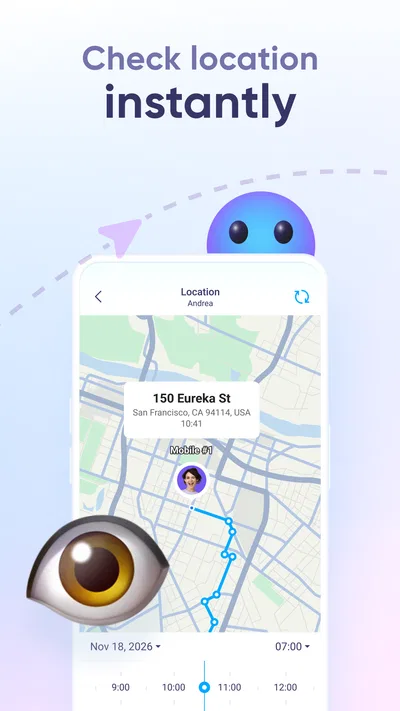
I would consider Findio: GPS phone tracker when my family needs a simple way to share locations and keep track of one another. It is a parenting app from Fortunex Limited, but its usefulness is not limited to parents and children: friends or relatives can also use location sharing to make everyday coordination less stressful. Its appeal is practical rather than elaborate. The key question is whether knowing where participating family members are is worth adding another location-sharing app to everyone’s phones.
Location sharing as a family routine
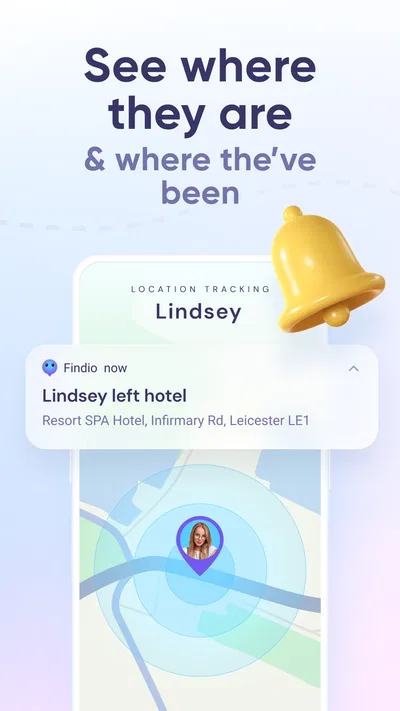
In my view, a location tool works best when it supports a clear routine, not when it becomes a reason to monitor someone constantly. Findio is designed around parental control and live location sharing, so the natural use is checking a family member’s location when a journey is taking longer than expected or coordinating a meeting place. That can be reassuring, but only when everyone involved understands why the app is being used.
A realistic example is a parent waiting for a teenager who is travelling home. Instead of sending repeated “Where are you?” messages, the parent can check the shared location and decide whether there is a genuine reason to call. The benefit is not that a map replaces conversation; it is that it can answer a narrow, practical question quickly. I would still agree in advance about when location checks are appropriate, especially with older children.
The app’s name suggests a GPS phone tracker, but I would think of it as a shared-location tool rather than a guarantee of perfect, continuous awareness. A phone’s location can be less useful when the device is not being carried, is unavailable, or cannot provide a current position. That distinction matters: a map can reduce uncertainty, but it cannot tell you why someone has stopped moving or whether they are safe.
What free access means in practice
Findio is free to install, which makes it easy to try without committing to an upfront purchase. The app has a 4.1 average from around 7,400 ratings, with more than 1 million installs. Those figures suggest that it has found a substantial audience, though they cannot tell me whether its particular approach will suit my household. The content rating is Everyone, and the app is listed for devices running Android 8.0 or later.
There are in-app purchases ranging from $2.99 to $99.99 per item. That is a wide span, so I would check the purchase details inside the app before treating any paid option as necessary. The free install and paid items are separate considerations: installing it does not itself establish what a household will need to spend, while the presence of purchases means I would not assume every capability is free.
For someone comparing family location apps, this is the most useful way to approach the cost: start by deciding whether the free experience answers the family’s actual question. If it lets everyone share locations in a way they find understandable and dependable, that may be enough. If a feature behind a purchase seems appealing, I would first identify the specific problem it solves and compare that benefit with the displayed price, rather than buying simply because it is presented as an upgrade.
Findio is currently version 2.0.1. I would treat that as a practical compatibility detail, not a reason by itself to choose or reject the app. The more important test is whether the people who need to share their locations can use it comfortably and agree on the boundaries. Location sharing depends on participation; installing the app on only one person’s phone does not create a useful family network.
Where the app can earn its place
The clearest value is reducing small coordination hassles. For instance, if family members are meeting after school or work, a shared location can help the person waiting judge whether to stay put, move to a different entrance, or send a message. That is a modest benefit, but it can be meaningful on a busy day. I find this kind of practical use more convincing than treating a tracker as a substitute for checking in directly.
A less obvious advantage is that a shared map can help families agree on a communication rule. Rather than expecting a child to respond instantly to every message, a parent might use location as a first check and reserve a call for situations where the location or timing raises a real concern. This can reduce unnecessary interruptions. It can also go wrong if the map becomes a tool for questioning every detour, so the household agreement matters as much as the software.
Another useful workflow is to make location checking specific and occasional. Before a family outing, for example, everyone can agree that the app is for finding one another if the group gets separated, not for keeping a running account of every stop. A shared purpose makes the app easier to explain and less likely to feel intrusive. That is especially important when children are old enough to understand privacy but still need help coordinating safe journeys.
Findio may also be useful among adults who voluntarily share locations, such as relatives trying to meet at a crowded venue. In that setting, the parenting label is less important than the basic idea of letting trusted people find one another. I would not assume that every friend or family member wants to share continuously, though. The app is only valuable to the extent that its users opt in and are comfortable with the arrangement.
The tradeoffs I would weigh
Location sharing brings a real privacy tradeoff. A parent may see reassurance; a child may experience the same check as being watched. I would explain what the app is for, who can see a location, and when it is reasonable to look before making it part of a family routine. If the household cannot agree on those boundaries, a location app may create more arguments than it prevents.
There is also a practical dependency: the information is tied to a phone and its availability. If someone leaves a device behind, has a dead battery, or cannot provide an up-to-date position, the map may not answer the question at hand. I would avoid relying on any phone tracker as an emergency service or as proof that a person is safe. A direct call, a planned check-in, or contacting someone nearby can be more appropriate when the situation is serious.
Compared with ordinary messaging, Findio’s central advantage is that it focuses on location rather than requiring a conversation for every update. Messaging is better when the important thing is context—“I’m delayed,” “meet me at the north entrance,” or “plans have changed.” A location map can show where a phone appears to be, but it does not explain what is happening. In practice, I would use location sharing and messages as complementary tools, not expect one to replace the other.
Compared with a built-in location-sharing option already available on a family’s phones, Findio has to justify being an additional app. If everyone already uses a tool they trust and understand, switching may add setup and another place to manage without solving a new problem. On the other hand, a household that specifically wants an app framed around parental control may prefer trying Findio and judging its fit directly. The right comparison is not a list of features in isolation; it is whether the family can use one shared approach consistently.
Because the app offers in-app purchases, I would also be deliberate about checking what any paid item includes before spending. The listed range runs from $2.99 to $99.99 per item, so the upper end is significant enough that I would want a clear, household-specific reason to buy. I would not pay for an upgrade merely to make the app feel more complete. First establish that the core location-sharing routine is useful, then assess any purchase on its own terms.
Who is likely to get value
I would recommend trying Findio to parents who want a location-sharing option for family coordination and are ready to discuss privacy openly. It is also a reasonable candidate for relatives or friends who want to find one another during outings and are comfortable sharing their locations. The free installation lowers the barrier to evaluating it, while the range of paid items makes it sensible to review purchase screens carefully before choosing anything extra.
It is less suitable for someone who wants a completely hands-off safety guarantee, or who expects a map to replace calls, check-ins, and common sense. It may also be the wrong choice for a family where one person does not consent to sharing or where a built-in phone feature already meets the need. For younger children, a parent should make the arrangement age-appropriate; for teenagers, I would involve them in setting the rules instead of treating tracking as an unspoken default.
Before relying on it for a regular routine, I would test the app with the people who will actually use it. Agree on a simple scenario—such as finding one another after an activity—and see whether everyone can interpret the shared location and knows what to do if it is not current. This small trial can reveal whether the app improves coordination or simply adds another notification and expectation. It is a more useful test than judging the app by its category alone.
My verdict on trying Findio
Findio: GPS phone tracker makes the most sense as a practical family location-sharing aid, not as an all-purpose safety system. I like the straightforward purpose: it can help answer where a participating relative’s phone is when coordination gets awkward. Its free install gives families a way to evaluate that use, while the in-app purchase range means I would keep spending decisions tied to a clear need.
My recommendation is to try it if your household has a specific reason to share locations and can agree on respectful limits. Skip it if you need emergency-grade certainty, dislike ongoing location sharing, or already have a routine that works well through messaging or a built-in phone service. For the right family, the value is less about watching a map all day and more about making occasional check-ins quicker and calmer.
Developed by Fortunex Limited, Findio has a substantial installed audience and a solid average rating, but neither tells me how well it will fit a particular family’s habits. I would make the decision through a small, transparent trial: use it for one genuine coordination problem, keep conversations in the loop, and spend only if a paid option clearly improves that experience. That is the fairest way to find out whether this app earns a place on your phones.
Pros
- Shows a phone’s location on a map when location sharing is enabled.
- Can help family members coordinate meetups.
- Location updates can make it easier to check on a shared device.
- A map view is more intuitive than sharing written directions.
- Useful for finding a misplaced phone if tracking is already set up.
Cons
- Accurate tracking depends on GPS access and a reliable network connection.
- Background location use can increase battery consumption.
- People must agree to share their location for tracking to work appropriately.
- Location data can be sensitive and should be shared selectively.
- Indoor positioning may be less accurate than outdoor GPS tracking.
Best Parenting App 2026
Our verdict
Parental control app with live location sharing. Find friends & family location.
Frequently Asked Questions
What is Findio: GPS phone tracker used for?
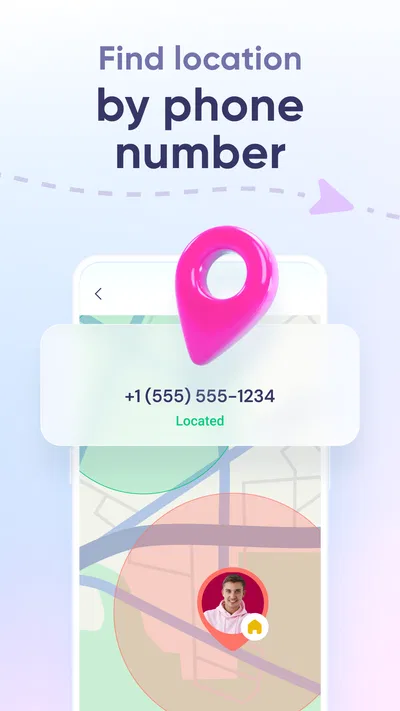
Findio is designed to help users locate a phone or view the location of people who have agreed to share it, depending on the app’s available features and setup. Location tracking generally requires an internet connection and location services to be enabled. Before relying on it, check the current app listing and settings to confirm exactly which tracking features are supported on your device.
How accurate is Findio’s location tracking?
Location accuracy can vary with GPS reception, network coverage, device settings, and the surrounding environment. Open areas usually provide a clearer GPS signal, while buildings, underground spaces, or weak connectivity can make a location less precise or delay updates. Treat the displayed position as an estimate rather than a guarantee, and check that the phone has permission to access location in the background if continuous updates are needed.
Does Findio track a phone without the owner knowing?
A location-tracking app should be used transparently and only with the informed consent of the person being located. Findio may require permissions, account setup, or location sharing on the device being tracked; do not assume it can legitimately locate someone without their participation. Secretly monitoring another person can violate their privacy and may break local laws, so review the app’s consent requirements and use it responsibly.
What permissions and internet access does Findio need?
A GPS tracker typically needs location access on the device that shares its position, along with an internet connection to send updates. Depending on how Findio works, it may also request notifications or other permissions for alerts and account features. Grant only permissions that make sense for the functions you intend to use, review them in your phone’s settings, and consult the app’s privacy information before sharing sensitive location data.
Is Findio: GPS phone tracker free, and is it available for Android and iOS?
Pricing, in-app purchases, subscription terms, and platform availability can change, so check the official Google Play or Apple App Store listing for the latest details before installing. Confirm that the publisher, supported operating system, and required features match your needs. Also review cancellation terms if a trial or subscription is offered, and avoid assuming that every feature is included in a free download.

Download Findio: GPS phone tracker
Similar apps
View all 9.7
FamilyAlbum - Photo Sharing
Parenting
 9.7
Pregnancy App & Baby Tracker
Parenting
 9.2
Speech Blubs: Language Therapy
Parenting
 8.6
AppClose: Co-Parent Essentials
Parenting