
Award score
- Award score
- 4.7Rating
- 1,000,000,000+installs
- Free
App information
- Version
- VARY
- Updated
- Requires
- Varies with device
- Price
- Free
- Developer
- Uber Technologies, Inc.
- Content rating
- Everyone
Screenshots

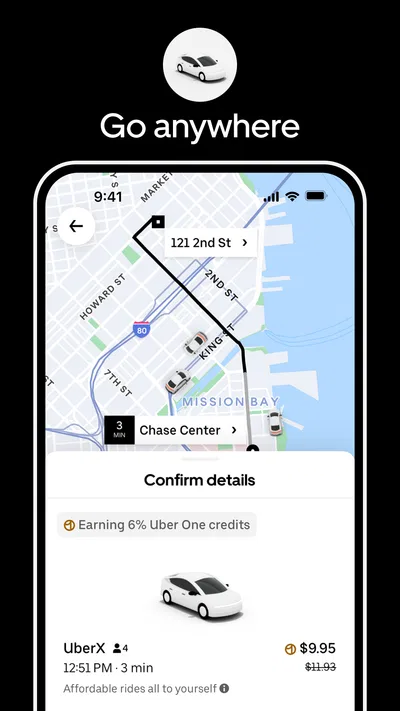
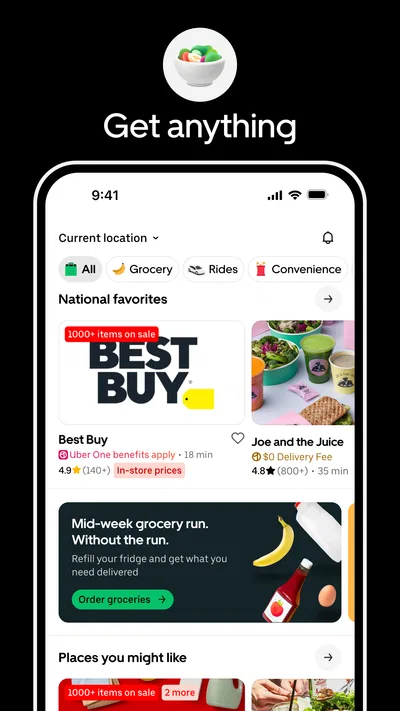
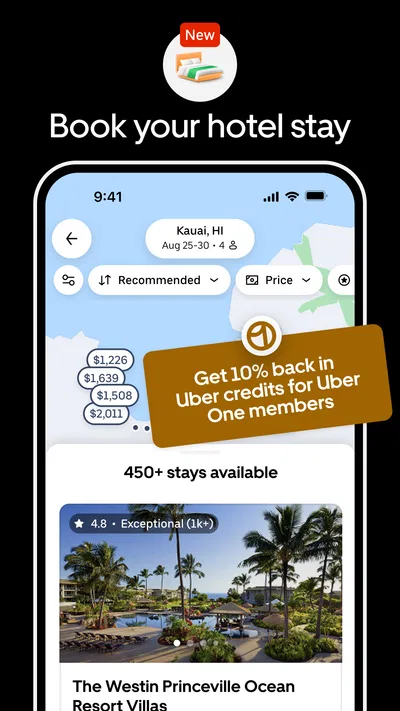
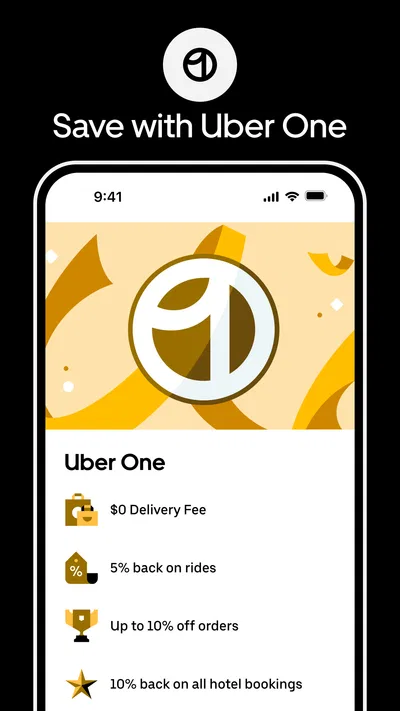
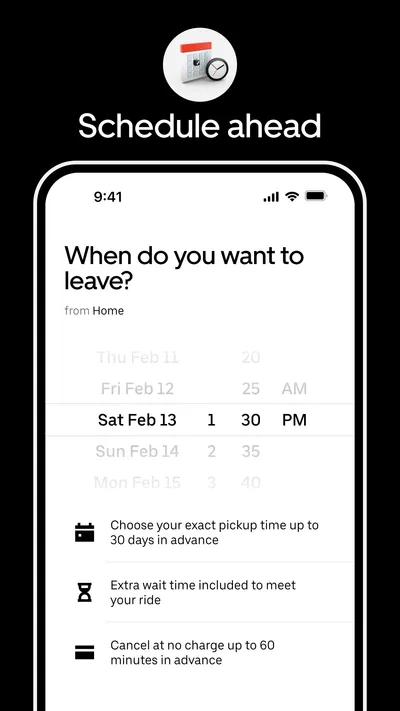
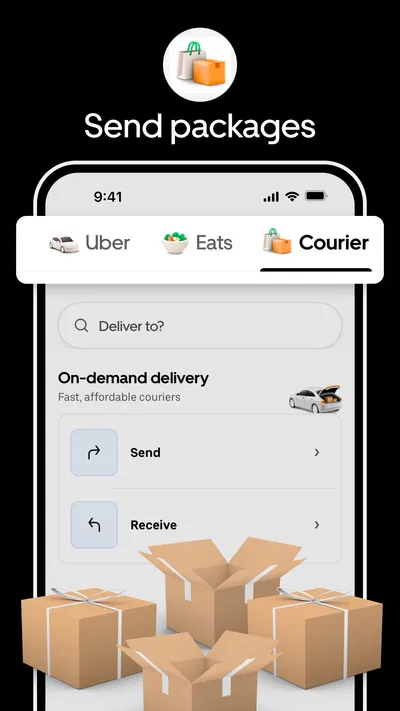
 Analysis byAppsAward
Our review of Uber - Request a ride
Uber is built around a simple promise: make it easier to arrange a ride when you need one, whether you are heading to the airport or making an everyday trip. In my view, that clear focus is the app’s biggest strength. It turns a common travel task into a straightforward phone-based process, while its broad popularity makes it a familiar option for many people. Still, a convenient way to request a ride is not the same as a perfect travel experience; the app can help organize a trip, but it cannot make every journey equally smooth.
A familiar way to arrange a ride
As a maps and navigation app, Uber sits at the point where planning a route meets getting a vehicle to travel it. The service covers rideshare and taxi cab requests, with airport journeys and ordinary trips both part of its intended use. That range gives the app an approachable role in a travel routine: instead of treating a ride as an unusual arrangement, you can turn to the same service for a trip across town or a journey to catch a flight.
I like how easy the idea is to understand. You open the app because you want transportation, rather than because you are looking for a complicated travel-planning system. That makes it useful to people who already know where they need to go and simply want a way to arrange a ride. It also gives the app a clear identity: it is not trying to be every part of a trip, but to help connect the need for a journey with a ride request.
Articles related to Uber - Request a ride
The app’s reach is hard to overlook. Uber has been available since October 28, 2010, and its presence has grown to more than one billion installs. It has an average rating of 4.7 from around 20 million ratings, with roughly 438,000 written reviews. Those figures suggest that many people have tried it and that its role in everyday transportation is well established. They do not mean every ride will suit every passenger, but they do help explain why the name is so widely recognized.
What makes the experience appealing
The strongest case for Uber is practical convenience. When you want a ride, having a dedicated app for making that request can feel simpler than working out transportation from scratch. The service’s focus on rideshare and taxi cabs gives it a useful breadth, while the inclusion of airport travel alongside everyday trips makes it relevant to more than one kind of outing. I see that flexibility as the main reason to keep it in mind.
It is also appealing because the concept works for both routine and occasional needs. A person may use a ride service regularly, while another may only want one for a particular journey or airport transfer. The app’s central purpose remains easy to grasp in either case. That low barrier to understanding matters: a travel app is most useful when its basic job is clear before you need to rely on it.
There is a reassuring familiarity to choosing a well-known service, too. Uber’s large user base makes it a recognizable option for people who already know the name, and the app’s scale suggests it has become part of how many travelers think about getting around. Familiarity does not guarantee that a particular trip will be ideal, but it can make the decision to try the service feel less daunting than using an unknown alternative.
For airport travel, the value is especially easy to see. Getting to or from an airport is often one part of a larger plan, and arranging a ride through a single app can be an appealing way to handle that leg of the journey. The same basic convenience applies to daily travel: if you need transportation for an ordinary trip, a purpose-built ride app offers a direct route from intention to request. In both cases, Uber’s appeal lies in reducing friction around arranging a ride, not in replacing every other travel tool.
Where expectations need to stay realistic
The most important limitation is that an app can arrange a ride, but the overall journey depends on more than the interface. A ride service is only one piece of transportation, and the experience of using it can vary with the needs of the trip and the circumstances around it. I would treat Uber as a convenient option rather than a guarantee that every journey will be effortless. That distinction keeps expectations sensible and helps avoid treating a familiar app as a complete travel solution.
Its focus is also a boundary. Uber is useful when you want to request rideshare or a taxi, but that does not make it a general-purpose guide to every way of getting around. Someone looking for a broader travel-planning experience may still need to think about other parts of a route separately. The app’s straightforward purpose is a strength, but it also means that users should choose it for the task it is designed to handle.
Another point worth considering is personal preference. Some travelers are comfortable arranging transportation through an app, while others may prefer a different way of organizing a ride. Neither approach is inherently better for everyone. If you value a phone-based request process, Uber’s central idea will make sense; if you would rather rely on another transportation routine, its convenience may matter less. The right fit depends on how you like to travel, not just on the app’s popularity.
I would also avoid confusing a strong reputation with a promise about an individual trip. A high average rating and a large number of users are useful context, but they cannot tell you exactly how a ride will feel in your situation. The sensible approach is to see the rating as a broad sign of the app’s reception, then judge whether the service suits your own travel habits. That is a more helpful way to assess a ride app than expecting one score to settle every question.
Who is likely to get the most from it?
Uber is a natural fit for people who want a familiar way to arrange rideshare or taxi transportation from their phone. It is particularly relevant if you often need rides for everyday trips, or if you want an app that also addresses airport travel. For those users, the straightforward purpose and widespread recognition are compelling advantages. You do not need to be a frequent traveler to understand the appeal; occasional passengers can benefit from having a known ride option available as well.
It may also suit travelers who like keeping transportation arrangements simple. Rather than treating every ride as a separate research project, they can turn to a service built specifically around ride requests. That does not remove the need to think about the journey itself, but it can make the act of arranging transportation feel more direct. In my opinion, this is the audience most likely to appreciate the app: people who value convenience and want a familiar tool for getting from one place to another.
On the other hand, people who rarely use rideshare or taxi services may find that the app is less central to their routine. Its value depends on whether ride requests are a meaningful part of how you travel. If your usual transportation needs are already covered in another way, a dedicated ride app may be something you use only occasionally. That is not a flaw so much as a reminder that the service is best judged by the situations in which it is useful.
The app is free to download and is rated for Everyone. Those details make it broadly accessible as a product, though the choice to use a ride service still depends on individual circumstances and preferences. The important question is whether you want a phone-based way to request rides for daily travel or airport journeys. If the answer is yes, Uber’s clear purpose makes it easy to consider.
A balanced verdict on Uber
Overall, Uber succeeds because it keeps its central job easy to understand: it helps people arrange rideshare and taxi trips, including airport travel and everyday journeys. Its established presence, broad recognition, and straightforward appeal make it a useful option for travelers who want a familiar service at hand. I appreciate that the app serves both routine needs and more occasional trips without requiring users to think of it as an all-in-one travel planner.
The trade-off is that convenience should not be mistaken for certainty. The app can help with the request, but the value of any ride service depends on the trip and on what the passenger wants from the experience. Uber is therefore best seen as a practical transportation tool, not a universal answer to every travel problem. That is a fair limitation for an app with a focused purpose, and it helps set a realistic standard for judging it.
My recommendation is simple: if you want a familiar way to request rideshare or taxi transportation, especially for everyday trips or airport travel, Uber is well worth considering. If you are looking for a complete guide to every mode of transport, you may need more than a ride-request app. As a focused option for arranging a ride, though, it makes a strong case for itself. The overall verdict is positive: Uber is a convenient, widely recognized choice for people whose travel plans regularly include a ride.
Pros
- Fare estimates appear before you confirm a ride.
- Live trip tracking helps you follow the driver’s approach.
- You can share trip details with trusted contacts.
- Multiple vehicle options suit different budgets and group sizes.
- In-app support makes it easier to report a trip issue.
Cons
- Prices can rise sharply during periods of high demand.
- Pickup times and availability vary by location.
- Cancellations may incur a fee in some situations.
- The app requires location access for convenient ride requests.
- A stable internet connection is needed to book and track rides.
Best Maps & Navigation App 2026
Our verdict
Rideshare, taxi cabs, and more for your airport travels and everyday trips.
Frequently Asked Questions
What is Uber, and how does requesting a ride work?
Uber is a ride-hailing app that connects passengers with drivers in their area. To request a ride, enter your destination, review the available ride options and estimated prices, then confirm your pickup location and request. The app shows driver and vehicle details when a driver accepts, along with the trip’s progress. Availability, ride types, and the exact steps can vary by city.
How much does an Uber ride cost, and can the price change?
Before confirming a ride, Uber generally displays an upfront fare or an estimate based on the route, ride option, local demand, and other factors. The amount can differ if the trip changes, such as when you add a stop or change the destination, and extra charges may apply for tolls or other local fees. Check the price shown in the app before requesting, since fares and pricing rules vary by location.
What payment methods can I use with Uber?
Payment options depend on your country and may include a credit or debit card, digital wallets, cash in some locations, or other locally supported methods. Add or select a payment method in the app before requesting a ride, and check that it is valid. After the trip, the fare is typically charged through the selected option, while tips or adjustments may appear separately. Available methods can vary by account and market.
What safety features are available during an Uber ride?
Uber provides in-app trip details and features intended to help passengers follow and share their journey, although specific tools vary by location. You can review the driver and vehicle information shown in the app and check that they match before getting in. The app may also offer options such as sharing trip status or contacting support. These features do not guarantee safety, so use good judgment and contact local emergency services in an emergency.
Is Uber available everywhere, and what should I check before downloading it?
Uber operates in many cities, but service coverage, vehicle choices, and operating hours differ by location. Check whether rides are available where you plan to travel, and confirm that your phone meets the app’s current requirements. You will generally need an internet connection and a way to pay accepted in your market. Review the app’s permissions and privacy information, and download it from the official app store for your device.

Download Uber - Request a ride
Similar apps
View all 8.7
Waze Navigation & Live Traffic
Maps & Navigation
 9.6
Lyft
Maps & Navigation
 8.7
MapQuest: Get Directions
Maps & Navigation
 7.8
GPS Location Tracker Plus
Maps & Navigation